
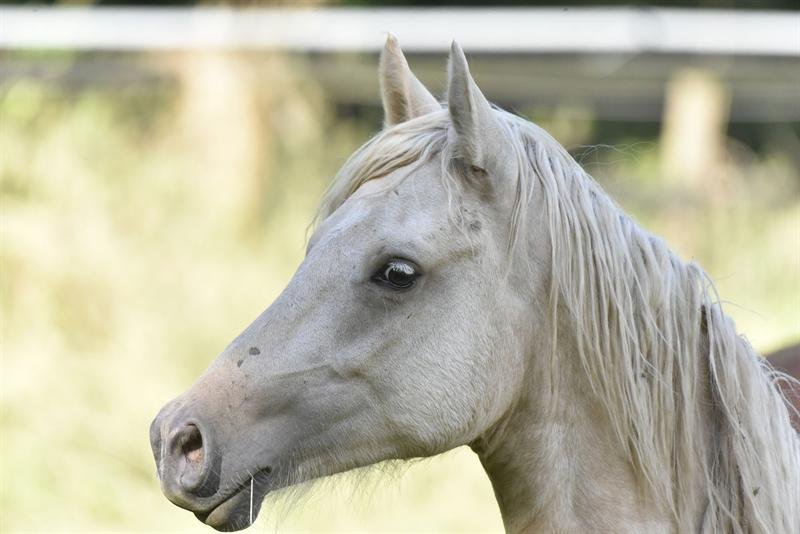
The Arabian horse is one of the oldest horse breeds in the world, instantly recognisable by its dished face, high tail carriage and extraordinary stamina. Small, bold and intensely people-oriented, it excels at endurance and makes an affectionate partner for a rider who enjoys a thinking horse.
| At a glance | |
|---|---|
| Height | 14.1 to 15.1 hands |
| Typical weight | Roughly 350 to 450 kg |
| Temperament | Intelligent, spirited, sensitive, bonds closely |
| Common colours | Grey, bay, chestnut, black |
| Best for | Endurance, pleasure riding, showing, lighter riders |
| Origin | Arabian Peninsula |
Arabian horse height and appearance
Arabian horse height is usually between 14.1 and 15.1 hands, which puts it at the upper end of pony size or the smaller end of horse size. Despite this, many Arabians feel bigger than their measurement because of their upright neck, high-set tail and proud carriage. The breed has a refined, wedge-shaped head with a dished profile, large eyes, wide nostrils and fine skin.
The skeleton is distinctive too. Many Arabians have a short back and a rounded barrel, and some have fewer vertebrae or ribs than other breeds. This gives a compact, strong build and is one reason that saddle fitting needs care. Grey is the most common colour, and most grey Arabians are born darker and lighten with age.
History of the Arabian
Bedouin tribes bred Arabians for centuries as war and desert horses, selecting for endurance, soundness and a close bond with people. Their blood shaped the Thoroughbred and many other breeds, and Arabian stallions are still used to add refinement and stamina. In the UK the Arab Horse Society maintains the stud book and runs a busy show and endurance calendar, alongside regional clubs.
Arabian horse temperament
Arabians learn quickly, which cuts both ways: they pick up good habits fast, but they also remember being frightened or bored. They are rarely dull. Many are happiest with plenty of variety, consistent handling and a rider who explains rather than forces. They often form strong bonds with one person and can be stressed by yard changes or lots of turnover in handlers. Kindly raised ones are gentle and polite on the ground.
The old reputation as "hot" or flighty is only partly true. Many Arabians are sensitive rather than silly, and they respond best to calm, steady riders. A horse that is under-worked or rushed through its training is far more likely to be tense. Early groundwork, patient backing and a varied routine usually help. See groundwork and spooking for advice.
Arab horse endurance and other uses
Arab horse endurance is where the breed truly shines. Arabians are efficient movers with strong feet, good recovery and the ability to keep going over long distances. They dominate the sport worldwide. Many UK riders start in shorter training rides and build up gradually. Our guide to endurance riding explains how the sport works.
- Endurance, from beginner pleasure rides to international competition.
- Pleasure riding and hacking for lighter riders.
- Showing, both in-hand and ridden, in dedicated Arab classes.
- Driving, and crossing to create part-bred riding horses and ponies.
- Trick riding, display and liberty work, where the breed's willingness and intelligence shine.
Arabian horse health
Several inherited conditions are recognised in the breed, including Severe Combined Immunodeficiency (SCID), cerebellar abiotrophy and lavender foal syndrome. DNA tests exist, and responsible breeders test breeding stock so that affected foals are never born. If you are buying a young or unproven horse, ask for evidence of testing in its parents.
Beyond genetics, Arabians generally have fine skin, so can be prone to sunburn on pink noses and to skin sensitivities. They often cope well on forage but can be sensitive to rich grass, so watch for laminitis risk. Endurance horses need careful monitoring for dehydration, lameness and metabolic problems after hard work.
Arabian care guide
Arabians are often easy keepers, so be careful not to over-feed, and match work to the horse rather than to your diary. They enjoy company and activity, so combine good turnout with varied work.
- Feeding: base the diet on forage, add a balancer if needed and adjust hard feed to workload.
- Tack: a lighter, well-fitting saddle matters, as many Arabians have a short back and a rounded barrel. Proper saddle fitting is vital.
- Rugging: winter coats can be fine, so assess rugging individually and avoid overheating.
- Skin and sun: use fly protection and consider sun protection for pink skin.
- Mental health: offer company, variety and forage to prevent boredom and stable vices.
Arabian horse for sale UK: how to buy well
Prices span a wide range depending on breeding, age, training and type, and vary by region. A part-bred or older companion may cost far less than a young, well-bred show or endurance prospect. Treat any quoted figure as a guide only.
- Decide your purpose: endurance, pleasure riding, showing or breeding.
- Ask for the registered pedigree and evidence of DNA testing.
- Check passport and microchip details against the horse in front of you.
- See the horse ridden, handled and loaded, and ride it yourself if possible.
- Choose a sensible, well-handled horse rather than the flashiest mover.
- Have a full vetting.
Beware of very young horses sold to novice owners with no support, and always ask why the horse is for sale.
Starting out in endurance with an Arabian
If you are tempted by the sport, a sensible first season is about patience rather than speed. Build a base of steady hacking, hill work and varied surfaces before entering a first ride, and choose a short, friendly event where you can learn how vet checks, pacing and recovery work. Many Arabians are keen to go faster than is wise, so learning to ride to the horse's heart rate and recovery rather than to the clock matters. Keep feet well balanced, check tack fit often and plan electrolyte and water strategies with your vet. A good trainer or local endurance group will save you from many early mistakes.
Not every Arabian wants to be an endurance horse. Plenty of owners are perfectly happy with relaxed weekend hacks, a bit of showing and a lot of time spent enjoying a clever, affectionate companion.
FAQs
How tall is an Arabian horse?
Most stand between 14.1 and 15.1 hands, although individuals vary.
Are Arabians suitable for children?
Some are, particularly well-schooled older ones, but many are sharp. Choose by individual temperament and be careful about size and speed.
Are Arabians good for beginners?
Some are, but many are sensitive and quick to react, so a beginner is usually better with a calm, experienced Arabian and an instructor's help.
Why do Arabians have a different back?
Many have fewer vertebrae in the back and loins than other breeds, giving a shorter, compact build. Saddle fit therefore needs particular care.
Can Arabians carry heavier riders?
They are strong for their size, but weight carried should suit the individual horse. Take advice from your vet or an instructor.
What genetic tests should an Arabian have?
Breeders commonly test for conditions such as SCID, cerebellar abiotrophy and lavender foal syndrome. Ask your vet and the breed society which tests are relevant.
Useful official resources
- The British Horse Society Owning and caring for horses of every type.
- World Horse Welfare Rehoming and welfare charity.