
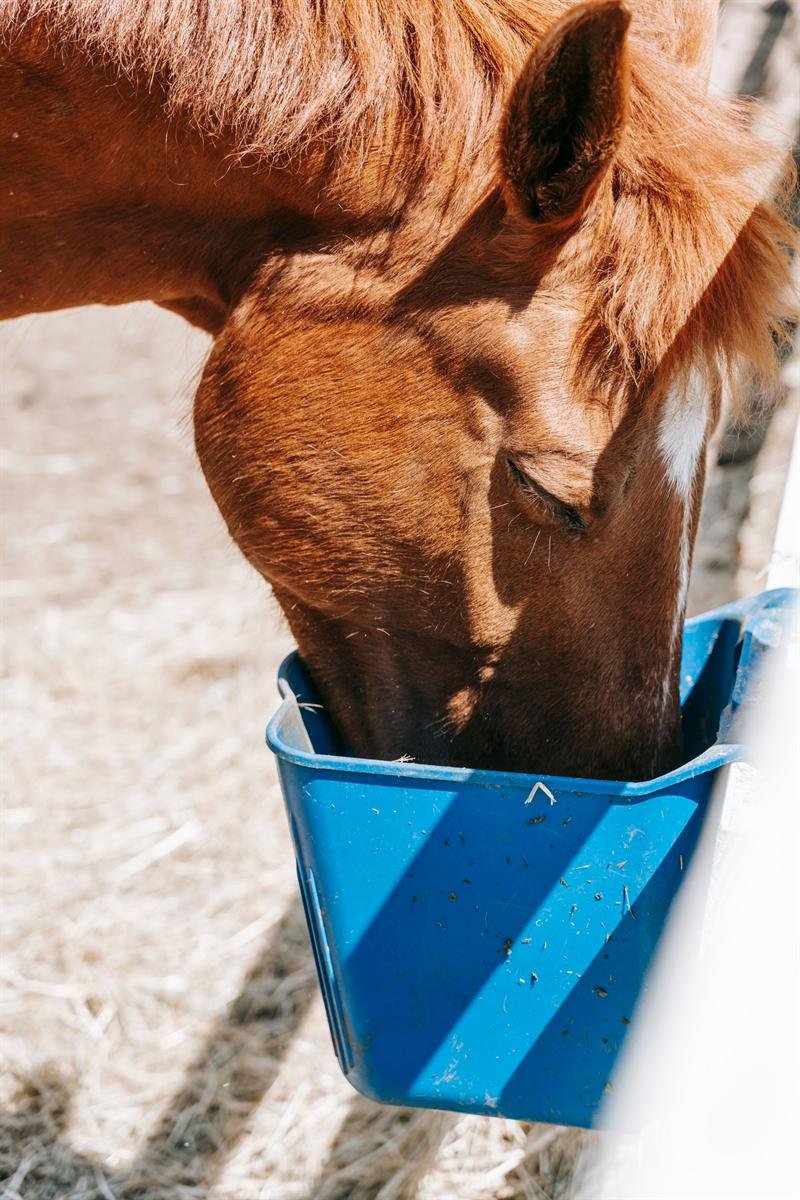
Horse hard feed is any concentrated feed given in addition to forage, such as mixes, cubes, balancers, chaffs and mashes, and many horses need very little of it or none at all. A horse's diet should be built on forage first, with hard feed used only to fill a genuine gap in energy, protein, vitamins or minerals.
Do horses need hard feed?
Many do not. A horse in light work or at rest, living on good grazing or a decent hay supply, can often maintain condition on forage alone. The widely accepted starting point is to feed roughly 1.5–2.5% of bodyweight in dry matter forage every day, then ask whether anything is missing. Hard feed earns its place when forage cannot meet the horse's needs, for example:
- Horses in regular, demanding work that burn more energy than forage supplies.
- Poor-doers, growing youngstock, and pregnant or lactating mares with higher requirements.
- Older horses who struggle to chew or hold weight (see feeding older horses).
- Easy keepers on restricted forage or poor-quality hay that still need a vitamin and mineral top-up.
Feeding more concentrate than a horse needs is a common and avoidable mistake. It adds cost, can contribute to excess weight, and in some horses is linked to digestive upset or excitable behaviour.
Types of hard feed explained
The names vary between companies, but most products fall into a handful of categories. Always read the feeding guidelines on the bag, which are written for a typical horse and may not suit yours.
| Type | What it is | Often suits |
|---|---|---|
| Mix (muesli-style) | Loose blend of cereals, pellets and flakes | Horses in work that are fussy eaters |
| Cubes / pencils / nuts | Compressed pellets with a consistent, balanced recipe | Horses needing predictable nutrition with less picking |
| Feed balancer | Low-volume pellet providing protein, vitamins and minerals | Good doers and horses on forage-only diets |
| Fibre feed / chaff | Chopped forage, sometimes with molasses or oil | Bulking up meals, slowing eating, encouraging chewing |
| Mash / soaked feed | Fibre pellets or beet soaked in water | Older horses, poor teeth, adding moisture |
| Conditioning feed | Higher oil and fibre, lower starch | Horses needing weight without a fizzy response |
Horse mix vs cubes
Mixes look appealing and many horses love them, but because the ingredients are loose, a fussy horse can pick out favourites and leave the rest, meaning it does not get the balanced vitamins and minerals intended. Cubes (also called nuts or pencils) are compressed so each mouthful is the same, which makes it easier to guarantee the horse actually eats what you intended. Neither is automatically better: the right choice depends on your horse's workload, temperament, teeth and appetite. What matters most is the nutritional content, particularly the starch and sugar level, the oil and fibre content, and whether the feed is designed to be fed at a reasonable quantity.
Feed balancers for horses
A balancer is a concentrated pellet designed to supply vitamins, minerals and good-quality protein in a small daily scoop, without adding many calories. They are often chosen for easy keepers, ponies on restricted diets and horses who eat mainly hay or grass, because forage alone can be low in certain nutrients such as copper, zinc, selenium and vitamin E, depending on the area and the forage. If you are wondering “do I need a feed balancer?”, the honest answer is that it depends on what else your horse eats. If you already feed the recommended quantity of a fully fortified compound feed, a balancer duplicates it. If your horse eats little or no hard feed, a balancer is a simple way to fill gaps. A forage analysis or advice from an independent equine nutritionist can show what is genuinely missing.
How much hard feed to give
There is no single figure, because it depends on the product, the horse's size, workload and condition. The sensible approach is to follow these steps:
- Estimate bodyweight with a weigh tape or weighbridge, and score body condition.
- Work out the forage allowance first (roughly 1.5–2.5% of bodyweight in dry matter daily) and make sure it is of good quality.
- Decide whether the horse is maintaining, losing or gaining weight on forage and current work.
- Only add hard feed if needed, and start with the manufacturer's minimum recommendation for the horse's weight and workload.
- Adjust slowly and review condition every two to four weeks.
Feed guidelines are generally quoted per bodyweight and per workload, so a 500kg horse in light work receives a different amount to the same horse in hard work. Underfeeding a fortified feed below the recommended minimum means the horse will not get the vitamins and minerals it is designed to provide, so if the amount you need is tiny, a balancer may be a better fit than a full compound feed.
Feeding hard feed safely
- Small, frequent meals. A horse's stomach is relatively small, so feed little and often rather than giving large meals. Many nutritionists suggest keeping individual concentrate meals modest in size, and splitting feeds when the daily total is higher.
- Forage first. Offer hay or haylage before or alongside hard feed, and never let forage run out overnight.
- Change gradually. Introduce any new feed over roughly seven to ten days, replacing a little of the old each day, to protect the gut.
- Weigh, don't scoop by eye. Scoops vary hugely in weight depending on the feed, so weigh your usual scoop once and note the weight.
- Keep feed fresh. Store in a sealed, clean, vermin-proof bin and discard anything mouldy or damp.
- Allow rest after feeding. Avoid hard work immediately after a large feed.
Starch, sugar and special cases
Cereals such as oats, barley and maize are higher in starch, while fibre-based feeds usually rely more on digestible fibre and oil for energy. Horses with a history of laminitis, equine metabolic syndrome, PPID or tying-up often need low starch and sugar feeds, and your vet may recommend specific products or a tailored plan. See our guides to laminitis and weight loss for the wider picture. Excitable behaviour is sometimes blamed on feed, but it is often down to a lack of turnout, lack of work or temperament, so look at the whole routine before making big changes.
What to look for when buying hard feed
- A clear analysis showing protein, oil, fibre and starch/sugar levels, plus a list of ingredients.
- Feeding guidelines that match your horse's size and workload, and a minimum daily quantity you can realistically reach.
- A feed designed for your horse's situation, such as veteran, performance, breeding or low-sugar.
- Reputable manufacturers who offer a free nutrition helpline staffed by qualified nutritionists.
- Bag size that you will use within the date shown, and freshness at purchase.
- Value measured per day of feeding, not just price per bag.
Reading a feed label
Labels look intimidating, but a few pieces of information matter most. The analytical constituents tell you the protein, oil, fibre and ash percentages. Starch and sugar are often listed together or provided on request, and are the figures to check for any horse prone to laminitis or excitability. The digestible energy figure helps you compare feeds for calories. The ingredient list is shown in descending order by weight, though some feeds are sold as “open” or “closed” formulations, so the detail varies. Finally, check the date, the storage advice and the recommended daily amount. If you cannot find what you need, ring the manufacturer's helpline or ask an independent nutritionist.
FAQs
Do all horses need hard feed?
No. Many horses in light work do well on good forage plus a balancer or mineral supplement. Hard feed is for horses whose energy or nutrient needs are not met by forage.
Is a mix or a cube better?
Neither is better for every horse. Cubes ensure each mouthful is balanced, while mixes can suit fussy eaters but may be picked through. Choose on nutrition and your horse's needs.
What is a feed balancer?
A low-volume pellet providing vitamins, minerals and protein without many calories, often used for good doers or horses on mostly forage diets.
How much hard feed should I give?
It depends on the product, bodyweight, workload and condition. Follow the manufacturer's guidelines, start at the lower end, and adjust based on condition.
How quickly can I change feeds?
Gradually, over about seven to ten days, so the gut bacteria can adapt.
Can too much hard feed be harmful?
Yes. Too much starch or sugar, or feeding large meals, is linked to digestive upset and can contribute to weight gain and metabolic problems.
Useful official resources
- World Horse Welfare: advice Body condition scoring and feeding guidance.
- British Equine Veterinary Association The professional body for equine vets.
- Code of Practice for the Welfare of Horses (gov.uk) Legal standards for feeding and care.