
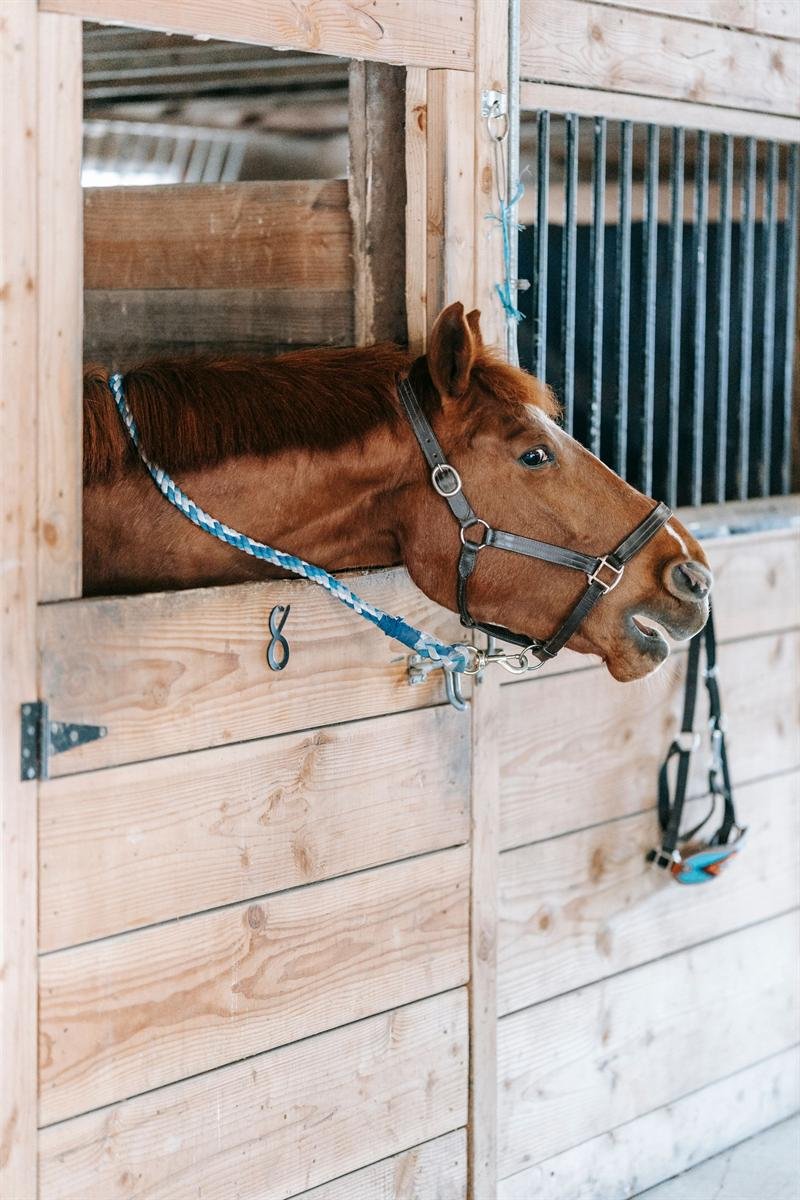
Horse kicking is a defence and communication tool, and it can cause serious injury to people and other horses. Most kicking has a cause such as pain, fear, protecting resources or poor social skills, and finding the cause is the way to reduce it. Safety comes first, then a vet check, then calm, consistent retraining with professional help where needed.
Why do horses kick?
- Pain. A horse may kick out at the girth, flank or hind legs because of back pain, sore skin, ulcers, hind-limb discomfort or being touched somewhere sore.
- Fear and surprise. Approaching from behind or out of sight, or touching a nervy horse suddenly.
- Warning. A pinned-ear, raised-hind-leg warning is a polite request for space. Punishing it teaches the horse to skip the warning and go straight to the kick.
- Resource guarding. Defence of feed, hay, stable or a field mate.
- Frustration or learned habit. Kicking the stable wall, often at feed time, can become a habit.
- Social conflict. Horses kick each other to set space, and in turnout groups this can cause injury.
- Mares in season, and stallions. Hormones may make some horses more reactive. See mare care and stallion care.
Reading the warning signs
Horses rarely kick without any notice. Learn to spot the build-up: ears pinned flat, a swishing or clamped tail, tensing of the hindquarters, a lifted hind leg, a swung quarter towards you, or a sharp look back. Respond by backing off, giving space and changing what you are doing, rather than pushing on. A horse that learns its warnings work will not need to escalate. A horse that is punished for warning often learns to kick without any signal, which is far more dangerous.
Staying safe around a kicking horse
- Always make sure the horse knows where you are: speak, and touch a shoulder or hip as you move around it, staying close in rather than at kicking range.
- Do not stand directly behind, and never duck under the horse's neck or between its legs.
- Tie with a quick-release knot and a breakable loop. See lead ropes.
- Wear a hat, gloves and boots, and keep an exit route.
- Have a second person present for farriery, clipping or treatment if the horse is known to kick, and let the farrier, vet and yard staff know in advance.
- Put a clear sign on the stable or a red tail ribbon when the horse is out in company, as a courtesy to others (it is a warning, not a solution).
Finding the cause and changing it
Begin with your vet. Ask them to check the back, hindquarters, hocks and stifles, and ask whether gastric ulcers, a skin problem or a sore area could be involved. Next, check the saddle and girth fit. Then look at the horse's lifestyle: is it kept in with no company, fed in a way that causes frustration or competition, or turned out with horses it is incompatible with? Pain should always be ruled out before you assume it is a training problem.
For handling-related kicking, break the task into small steps. Using calm, repeated touch, desensitise areas such as the hindquarters and flanks, rewarding relaxation. Work from a safe position, and stop before the horse needs to react. For a horse that kicks at feed time, feed from a position where you are safe, or through a feeding hatch, rather than entering the stable. Where kicking happens between turnout companions, look at group size, space, hay piles and gates. Moving to smaller, stable groups with ample space often helps.
Kicking in different situations
| Situation | Common reasons | What to try |
|---|---|---|
| Kicking the stable wall | Boredom, frustration, anticipation of feed | More turnout, forage and company; vet check for discomfort |
| Kicking when handled behind | Fear, pain or a poor past experience | Vet check, slow desensitisation, safe working position |
| Kicking when girthed or rugged | Sore back, ulcers, tight tack | Vet and saddle fit check, gradual girthing |
| Kicking other horses in the field | Space, resources, personality clash | Smaller stable groups, more space, extra hay piles |
| Kicking at the farrier or vet | Fear, pain, lack of training | Groundwork, practice, professional help |
| Kicking out when ridden | Pain, discomfort or being pushed too hard | Vet, saddle fitter and trainer check |
Kicking out in the field and in the stable
If a horse kicks other horses in a group, introduce companions over a fence first, avoid overcrowded gateways and feed areas, and give each horse plenty of space and a way to move away. Remove shoes on the hind feet if your vet or farrier advises it for a known kicker, as it reduces injury to other horses (this is a decision for you, the farrier and the vet). In a stable, horses that kick at the wall can injure their legs and damage the building. Padding or a kick-board protects, but the cause still needs addressing. See stable design and problem horses.
Preventing kicking in young horses
Good early handling prevents many problems. Teach foals and youngsters to accept being touched all over, including the hindquarters and legs, in a calm and gentle way, and to step away from pressure. Do not let a young horse swing its quarters at people as a game. Consistent, kind handling from the start gives you a horse that trusts you and gives a warning before it reacts. See foal care.
Dangerous kicking and professional help
A horse that kicks at people with intent, or has injured someone, should not be handled alone. Keep everyone safe, ask your vet to rule out pain, and then call in a qualified equine behaviourist or an experienced, insured trainer who uses humane, reward-based methods. Ask what training and insurance they hold, and be honest about the horse's history with anyone who handles it, including grooms and farriers. If a horse cannot be made safe, discuss options with your vet and the professionals involved, rather than selling the problem on.
Frequently asked questions
Why does my horse kick the stable wall?
It may be boredom, frustration, anticipation of feed, or a way of seeking attention. More turnout, more forage and company often help. Padding the wall protects the horse's legs but does not solve the cause.
Can I turn out a horse that kicks other horses?
Often yes, with the right companions and space. Introduce horses over a fence first and avoid overcrowded gateways and feed areas.
Should I put red ribbons in the tail?
A red ribbon is a courtesy warning to others that the horse may kick, not a solution. Keep a safe distance in any case.
Why does my horse kick when I touch its back legs?
It may be fear, a past bad experience or pain in the hind limb. Check with your vet, then desensitise slowly with calm touch, working from a safe position.
Is kicking a sign of aggression?
Not always. Many horses kick out of fear, pain or as a warning. Aggressive kicking with intent is a different matter and needs professional help.
Can pain cause a horse to kick?
Yes. Back pain, ulcers, hock or stifle problems, and sore skin can all make a horse kick. A vet check is the first step.
Useful official resources
- World Horse Welfare: advice Behaviour and welfare guidance.
- RCVS Find a Vet Rule out pain with an equine vet.
- British Horse Society: horse care and welfare Handling and behaviour advice.