
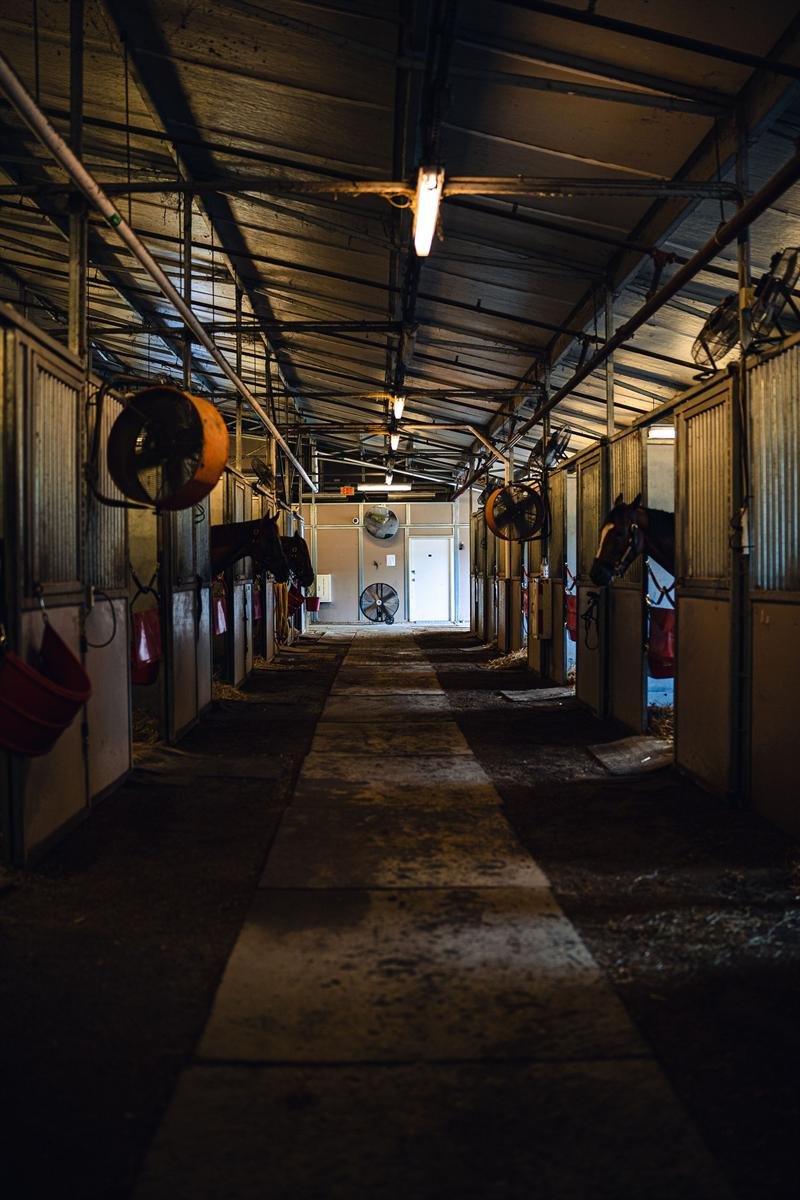
Stable rubber mats give a floor that is non-slip, supportive and easy to keep clean, and they can reduce the amount of bedding you use. They are one of the most common upgrades on UK yards. Used well, horse stable mats pay back over time; used badly, they can trap urine and smell, so fitting and day-to-day management matter.
How stable mats work and their benefits
A rubber mat sits between the horse and the base, usually concrete, giving a cushioned, grippy surface. A bed then goes on top, normally much thinner than you would need on bare concrete.
- A non-slip, cushioned surface that is kinder on legs and joints than bare concrete.
- Insulation from a cold floor, which helps horses lying down in winter.
- Reduced bedding use, because a thinner bed can be used on top.
- Easier mucking out, with a base that can be swept and hosed.
- A hard-wearing surface that can last many years if looked after.
Mats do not replace bedding. Horses still need a reasonable bed to lie on, to absorb urine and to reduce pressure on joints. A bare matted floor is not enough, particularly for horses that lie down a lot or are older, stiff or recovering from injury. For options, see bedding.
Are stable mats worth it?
For most owners who keep a horse in regularly, yes, but the answer depends on your numbers. The savings come from using less bedding and spending less time mucking out; the cost is the outlay on mats and fitting. A single stable of around 12ft x 12ft needs a fair amount of rubber, and prices vary by region and supplier, so get several quotes for the whole floor rather than comparing a price per sheet.
A practical way to decide is to note your weekly bedding spend now, estimate how much less you would use on mats, and see how long the outlay would take to recover. Mats make most sense for stables used all winter, for horses that churn up beds, and for yards where bedding disposal is costly. They matter less for a field shelter used for a few hours a week.
Types, thickness and drainage
Stable mats are typically sold as large sheets or interlocking panels, often around 17–20mm thick for stables, with thicker types sometimes used for trailers, wash areas or high-wear sections. Choices include a flat, studded or ribbed underside, solid or drainage-hole designs, and interlocking edges that reduce gaps.
| Option | Suits | Watch out for |
|---|---|---|
| Solid sheet mats | Level concrete floors; easy to clean over a sealed surface | Urine can run to the edges and seep underneath if seams are not sealed |
| Interlocking mats | Fewer gaps, quicker to fit, good for DIY | Joints can still trap moisture; check they lie flat |
| Drainage or channel mats | Floors with a fall or drain, wetter set-ups | Need a properly planned base and regular cleaning underneath |
| Thicker mats | Trailers, wash areas and high-wear spots | Heavier and harder to cut and handle |
Your base matters as much as the mat. A level, firm floor with a gentle fall to a drain is ideal; see stable design for floor and drainage guidance.
How to fit stable mats
- Prepare a firm, level base, clear of debris, with any drainage planned. Sloping slightly to a drain helps liquid run off.
- Measure the stable. In a typical 12ft x 12ft box you will need several large mats, trimmed to fit.
- Lay the mats tight with minimal gaps, trimming with a sharp knife or specialist cutter. Heavy mats need two people.
- Seal or fill edges and seams to stop urine seeping underneath, following the maker's instructions.
- Check there are no raised edges or lips a horse could trip on.
- Bed lightly but thoroughly on top, covering the whole floor.
Cleaning and care
Lift the mats occasionally, particularly in the first few weeks, and check underneath for damp. If the floor beneath is wet or smelly, clean it with a suitable disinfectant and let it dry before relaying. Scrub and rinse the surface regularly; on a busy yard, do this on rotation. A damp, dirty gap can smell strongly, and trapped ammonia can affect the horse's airway. Daily, skip out wet patches properly and bank the bed so the urine-prone area can dry. See stable hygiene and stable cleaning.
What to look for when buying
- Thickness appropriate for stable use, and a density that does not wear or tear easily.
- A non-slip surface in both wet and dry conditions.
- Whether the mats interlock or need edge sealing, and how easily they can be cut and fitted.
- Smell: new rubber has an odour that should fade; a persistent strong chemical smell is a warning sign.
- Weight and sheet size, and whether you can handle them or need delivery help.
- Warranty and, where relevant, whether the supplier offers cutting or fitting.
- Total cost across the whole stable, including sealant, tools and delivery, not just a per-sheet price.
- Whether the mats suit your floor: level concrete, a drained base or a field shelter.
Common problems with stable mats
Most problems with rubber matting for stables come down to fitting and daily management rather than the mats themselves. Here is what owners most often run into and how to deal with it.
- Smell and ammonia: usually urine has found its way under or between the sheets. Lift the mats, wash and dry the base, and reseal the seams. Make sure the bed is deep enough in the area where the horse stales.
- Mats creeping or lifting: often caused by an uneven base or gaps at the walls. Relay on a level surface and fit snugly against the wall so edges cannot ride up.
- Wet beds: a thin bed over mats can become soaked quickly. Use a more absorbent bedding in the wet corner, and skip out wet patches daily.
- Slippery patches: keep the surface clean of dung, wet bedding and spilled water, and replace worn or polished sheets.
- Tripping hazards: check for curled corners, raised joints and gaps at the door, and fix them straight away.
Horses that paw, box-walk or dig can wear mats unevenly, and a bored horse in a stable may also develop habits that damage a floor; see stable vices. Mats can also be fitted in a wash area, tack room or horsebox, but check the thickness and grip suit the job.
Matting in a field shelter or temporary stable
A shelter used regularly benefits from a firm base with mats on top, because bare earth quickly turns to mud under standing horses. Use a free-draining sub-base such as compacted hardcore, make sure the mats cannot be pushed out by hooves, and keep the area picked out. Check with your local planning authority before building or changing a shelter, as covered in field shelters.
FAQs
Do I still need bedding with mats?
Yes. A bed is needed for comfort and to absorb urine, although it can be thinner than on bare concrete.
Are mats slippery when wet?
Good-quality studded or textured mats grip well, but keep wet patches under control and do not let urine pool.
How thick should stable mats be?
Mats of around 17–20mm are typical for stables. Thicker types are sometimes chosen for high-wear areas.
Can mats go in a field shelter?
Yes, on a levelled, drained base; see field shelters.
Why does my matted stable smell?
Usually urine has seeped under or between the mats. Lift them, clean and dry the base, and seal the seams when relaying.
Can I fit mats myself?
Many owners do, with a sharp cutting tool and a helper, because the sheets are heavy. A professional fit can be worth it for awkward or drained floors.
Useful official resources
- Code of Practice for the Welfare of Horses (gov.uk) Legal standards for shelter, space and care.
- Ragwort code of practice (gov.uk) How to control ragwort on your land.
- British Horse Society: horse care and welfare Yard and grazing advice.