
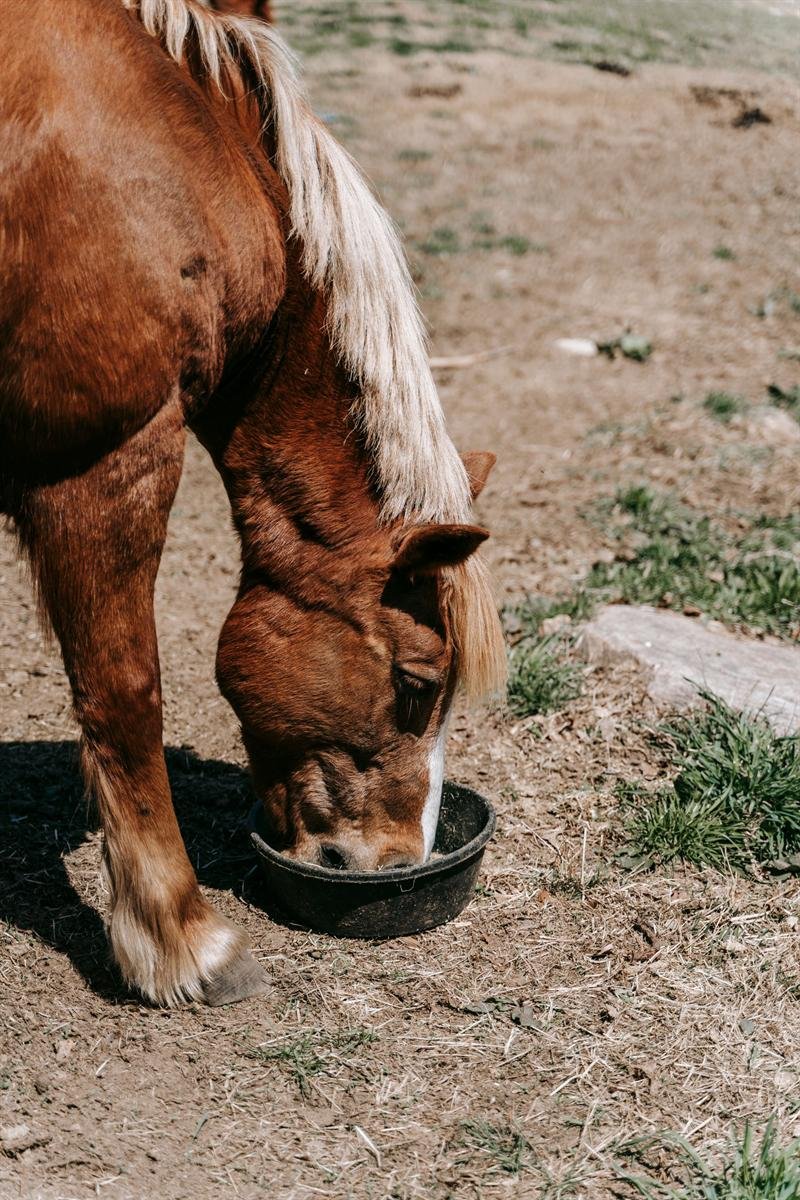
Vitamins for horses are needed in tiny amounts, and most horses get a good proportion from fresh grass. The risk of shortfall rises when they are stabled, fed mostly hay, on restricted diets or in hard work, which is why a balancer or fortified feed is a common solution. More is not better, though: some vitamins can be harmful in excess.
Where horses get their vitamins
Fresh grass is rich in vitamin E and beta-carotene (which the horse converts to vitamin A), and sunlight lets the horse make its own vitamin D. Hindgut microbes produce B vitamins and vitamin K, and horses make vitamin C in the body. Once grass is cut and stored, vitamin E and carotene drop steadily, so hay fed over winter is a poor source. Haylage retains somewhat more but also declines; see hay and haylage. The practical outcome: horses off grass for months, or on limited grazing, are the ones most likely to need a source of vitamin E and others.
The main vitamins
| Vitamin | Role | Notes |
|---|---|---|
| A | Vision, skin, immunity, reproduction | Made from carotene in fresh grass; excess is harmful |
| D | Calcium and bone | Made through sunlight on skin; rugs and housing reduce exposure |
| E | Antioxidant, muscle and nerve health | Falls in stored forage; important for horses with muscle or neurological concerns, so ask your vet |
| B group | Energy metabolism, appetite | Mostly produced in the hindgut; may be useful in stress, hard work or poor appetite |
| C | Antioxidant | Made by the horse; supplementation is of unclear value |
| K | Blood clotting | Made in the gut; deficiency rare |
Vitamin E for horses
Vitamin E is the one most often discussed, because it acts as an antioxidant and supports muscle and nerve health, and because it is the one most likely to fall short on a winter diet of hay with little grass. Horses with certain muscle or neurological conditions can have particular requirements, and your vet may recommend testing and a specific plan. Vitamin E works alongside selenium, so the two should be considered together; see minerals. Natural forms are generally considered better absorbed than synthetic ones, but ask the manufacturer for details.
Vitamin A and B for horses
Vitamin A comes from carotene in fresh grass, and good-quality fresh grazing usually provides plenty. Because the horse stores vitamin A, over-supplementing can cause problems, so avoid stacking several fortified products. B vitamins are mostly made by the microbes in the hindgut, so deficiency is uncommon in healthy horses on a forage-based diet. Extra B vitamins are sometimes given during stress, illness, hard work or poor appetite, but the evidence for routine use is limited, and a horse with a poor appetite needs a veterinary check rather than a vitamin.
Horse vitamin deficiency: signs of a problem
Vitamin deficiency can be subtle, such as a dull coat, poor appetite, slow wound healing or reduced stamina, but those signs are non-specific and have many other causes. Worms, dental pain, ulcers, worm burden and general illness are far more common. A blood test and veterinary examination are better than guessing. Where a deficiency or over-supplementation is suspected, tests for specific vitamin levels can be arranged by your vet.
Vitamin D, C and K
Vitamin D is made in the skin through sunlight and helps the body to use calcium. Horses turned out regularly make enough, but horses that are stabled most of the time or rugged heavily may get less sun on their skin. Because it is stored, excess is harmful, so do not add extra without advice. Vitamin C is made by the horse itself, so supplements are of unclear value, though your vet may suggest it in particular cases. Vitamin K is produced in the gut and helps blood to clot, and deficiency is rare in healthy horses.
Fortified feeds, balancers and supplements
Most compound feeds and balancers contain added vitamins, and the amounts are based on feeding the recommended quantity. This is why feeding a small amount of a fortified feed, well below the label amount, can leave the diet short of vitamins and minerals, and why a balancer is often recommended for good doers and horses on forage only. Adding a separate vitamin supplement on top is rarely necessary unless your vet or nutritionist has identified a gap. See supplements for how to judge whether a product is worth buying.
Vitamins in winter, spring and summer
Through the year the sources change. In spring and summer, fresh grass gives plenty of vitamin E and carotene, so horses at pasture often need little extra. In autumn and winter, grass quality falls and horses may eat hay or haylage instead, which provides less. Horses that are stabled all year, restricted from grazing because of laminitis or weight management, or ill, may need a planned source of vitamins all year round. Planning ahead for winter is easier than correcting a gap later.
Does my horse need vitamins?
- Look at what your horse eats now: how much grass, how much hay or haylage, and which feeds and supplements.
- Check whether the horse is on a balancer or fortified feed at the recommended amount, since this may already cover vitamins.
- Consider the season and the type of work: winter stabling, limited turnout and hard work raise the chance of gaps.
- Consider the individual: young, old, breeding, sick or metabolic horses may need tailored advice.
- Ask your vet or a qualified nutritionist to review the whole ration before adding anything.
Many horses on good grazing with a balancer need nothing extra. Horses on hay only, with no balancer, are the most likely to benefit from a planned source.
What to look for when buying
- Declared amounts per serving (in IU or mg), not just a list of names.
- Natural vs synthetic vitamin E: natural forms are generally better absorbed, but ask the manufacturer.
- A match with your horse's actual diet: grazing horses on fresh grass rarely need extra vitamin E, but stabled horses on hay often do.
- A serving size that fits your horse's weight and a sensible shelf life, because vitamins degrade over time and in heat.
- A company with a nutritionist helpline.
Frequently asked questions
Do horses need vitamins in winter?
Often a little extra of vitamins A and E is helpful, which is why most balancers contain them.
Can a horse have too many vitamins?
Yes, particularly the fat-soluble vitamins A and D, which are stored in the body.
Are B vitamins a "calmer"?
There is little reliable evidence for that; consider pain, diet and workload first.
Does my horse need vitamin E?
Horses with plenty of fresh grass rarely do. Stabled horses on hay may, and horses with muscle or nerve conditions should be guided by their vet.
How do I know if my horse has a vitamin deficiency?
You cannot tell from appearance alone, because the signs are vague. Your vet can examine your horse and arrange blood tests.
Is a balancer enough for vitamins?
For most horses on forage, a balancer fed at the recommended amount covers the main vitamins. Check the label and ask a nutritionist if unsure.
Useful official resources
- World Horse Welfare: advice Body condition scoring and feeding guidance.
- British Equine Veterinary Association The professional body for equine vets.
- Code of Practice for the Welfare of Horses (gov.uk) Legal standards for feeding and care.