
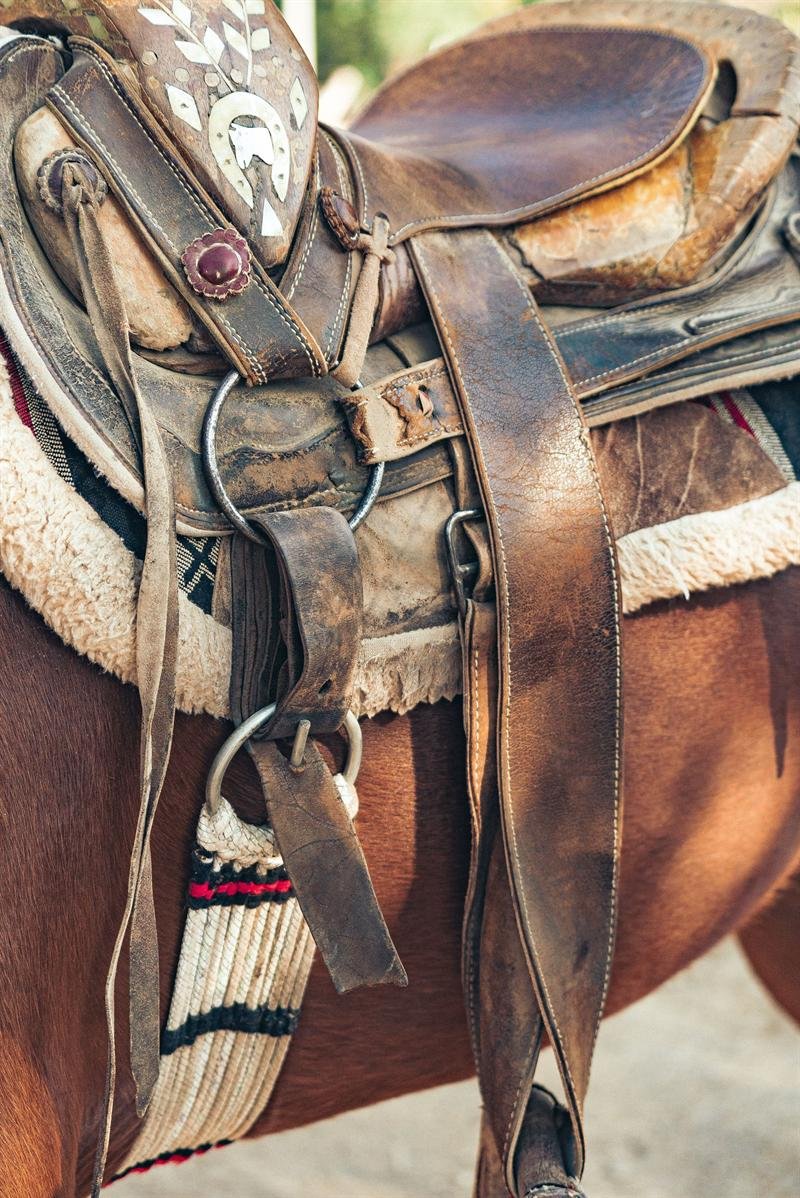
Horse saddles are the single most important piece of tack you will buy: a good one spreads your weight evenly over the horse's back and lets you sit balanced, while a poor one can cause pain, resistance and long-term damage. This guide explains the main saddle types, how to fit a saddle, what tree width means and how to buy with confidence in the UK.
What a saddle does and how it is built
A saddle has one job from the horse's point of view: to carry your weight without creating pressure points or restricting movement. From your point of view, it must put you in a secure, balanced position. Most English saddles share the same basic parts.
- The tree: the internal frame, traditionally wood and now often laminated wood or synthetic. It sets the shape and width of the saddle and is what makes it fit (or not) a particular back.
- The panels: the padded cushions under the saddle that sit either side of the spine. They are usually wool flocking or foam, and they carry the weight.
- The gullet: the channel running down the middle, which keeps pressure off the spine and the muscles close to it.
- The seat, flaps and knee rolls: the parts the rider sits on and rests against. These determine the rider's position and the discipline the saddle suits.
- The stirrup bars and girth straps: where the stirrups and girth attach.
Saddle types explained
The right saddle type depends on what you do most of the time. Saddle types differ mainly in seat depth, flap length and cut, and where the rider's weight is encouraged to sit.
| Type | Typical shape | Best suited to |
|---|---|---|
| General purpose | Moderately deep seat, slightly forward flap | Hacking, lessons, mixed schooling and small jumps |
| Dressage | Deep seat, long straight flap, long girth straps | Flatwork where a long, vertical leg is wanted |
| Jumping | Flatter seat, forward-cut flap, supportive knee rolls | Showjumping and cross-country, with a shorter stirrup |
| Event / cross-country | Forward flap, secure thigh support | Riders jumping varied fences across country |
| Pony and child's saddles | Smaller seat and shorter flap | Children, matched to the pony's back and the child's leg |
| Treeless | Flexible base with no rigid tree | Some riders and horses, though fit still matters greatly |
A general purpose saddle is the usual starting point for riding school graduates, leisure riders and anyone who does a bit of everything. It is a sensible compromise rather than a perfect specialist. If you later focus on one discipline, a dressage or jumping saddle will usually make that work easier. If you are new to riding, our beginner riding guide explains the basics of position that a saddle should support.
Saddle tree width and gullet width
Saddle tree width is the most misunderstood part of saddle choice. Saddles are commonly described as narrow, medium, medium-wide, wide and extra-wide, and some use fitting numbers or a measurement in centimetres. These labels are not standardised between makers, so a medium in one saddle can fit differently from a medium in another.
The width is measured at the front of the tree, over the withers, and the saddle must match the shape of your horse's back there, not just the horse's overall size. Points to remember:
- Too narrow a tree pinches the shoulders and withers and can restrict the stride.
- Too wide a tree drops the pommel onto the withers and tips the rider back.
- Width is only one part of fit. The curve of the tree from front to back (its rocker) must also suit the horse's profile.
- A horse's shape changes with fitness, age, weight and season, so a saddle that fitted last year may not fit now.
Never judge fit by the horse's breed or by how a saddle looked on another horse. Two horses of the same type can need very different trees.
How to fit a saddle
The only reliable way to fit a saddle is to have a qualified saddle fitter assess the horse, the saddle and the rider together. In the UK, look for a fitter who is qualified through the Society of Master Saddlers (SMS) scheme. You can find out more in our guides to the saddle fitter career and the saddle fitters directory.
While a fitter will do the detailed work, you can do a basic check yourself with the saddle on a clean, level, well-groomed horse standing square, without a pad:
- Clearance at the withers: there should be a clear gap between the pommel and the withers, with room for a few fingers when you are mounted.
- Gullet clearance: you should be able to see daylight along the channel from the back, with nothing touching the spine.
- Even contact: the panels should sit evenly on both sides, with no rocking when you push gently on the pommel and cantle.
- Balance: the lowest point of the seat should be in the middle, not tipped up at the back or tilted down at the front.
- Length: the panels should not extend beyond the horse's last rib, as the loin cannot carry weight.
- Symmetry: check that the saddle sits straight and the horse's back is even, because uneven muscle can make a straight saddle look crooked.
Signs of poor saddle fit
Horses cannot tell us a saddle hurts, but they often show it. Watch for:
- Pinned ears, tail swishing or flinching when you tack up or mount.
- Resistance to going forward, napping, bucking or rushing.
- Short strides, reluctance to bend or hollow carriage.
- Dry patches in a sweaty coat, white hairs, or uneven sweat marks under the saddle.
- Soreness, swelling or muscle wastage behind the shoulder blade or along the back.
- The rider feeling tipped forward or back, or sitting crookedly.
Behaviour changes can have many causes, so if your horse is showing any of these, ask your vet to rule out pain or lameness and get the saddle checked. Do not keep riding in a saddle you suspect is hurting the horse.
What to look for when buying a saddle
- Get a fitter involved first. Book a qualified saddle fitter before you buy, whether new or secondhand.
- Match the discipline. Choose the type you will use most, not the one you hope to use one day.
- Check the rider's fit too. Seat size is usually measured in inches and should leave a hand's width behind you on the cantle. A saddle that is too small pushes you onto the back.
- Try before you buy. Reputable suppliers will offer a trial period. Ride in the saddle on the horse you own, ideally in front of the fitter.
- Inspect secondhand saddles carefully. Look for a broken or twisted tree, worn or lumpy panels, cracked leather, and perished or frayed stitching.
- Consider a budget. A new saddle in 2026 can cost from several hundred pounds to well over £2,000 depending on type and materials, and prices vary by region. Secondhand saddles cost less but still need checking by a fitter.
- Check the warranty and adjustability. Ask whether panels can be reflocked or adjusted as your horse changes.
Looking after your saddle
Good care makes a saddle last for many years and keeps it safe. Wipe it down after each ride, clean and condition the leather regularly, and check the stitching, billets and girth straps for wear. Store it on a proper saddle rack in a dry, ventilated room. Our tack care and leather care guides cover this in detail. Always use a suitable saddle pad only as the fitter advises, because a thick pad can make a correctly fitted saddle too tight.
Frequently asked questions
What is the best saddle for a beginner?
A well-fitted general purpose saddle is usually best. It suits lessons, hacking and small jumps, and it supports a balanced position. Fit for the horse matters more than the saddle's price.
How often should a saddle be checked?
At least once a year by a qualified saddle fitter, and sooner if your horse changes shape, you start new work, or you notice any signs of discomfort.
Can one saddle fit several horses?
Sometimes, if the horses have very similar backs, but it is not safe to assume so. Each horse should be assessed separately, and adjustments may be needed.
What does saddle tree width mean?
It is the width of the saddle's internal frame at the front, which has to match the shape of the horse's withers and shoulders. Labels such as medium or wide are not standardised, so a fitter's assessment is more reliable than the label.
Is a secondhand saddle a good idea?
It can be, provided the tree is sound, the panels are in good condition and a fitter confirms it suits your horse. A cheap saddle that does not fit is poor value.
How do I know if my saddle is too tight or too wide?
A saddle that is too tight pinches at the withers and shoulders, while one that is too wide drops onto the withers and tips you back. Uneven sweat marks, sore areas or behaviour changes are all clues, and a fitter can confirm which applies.
Useful official resources
- BETA The British Equestrian Trade Association.