
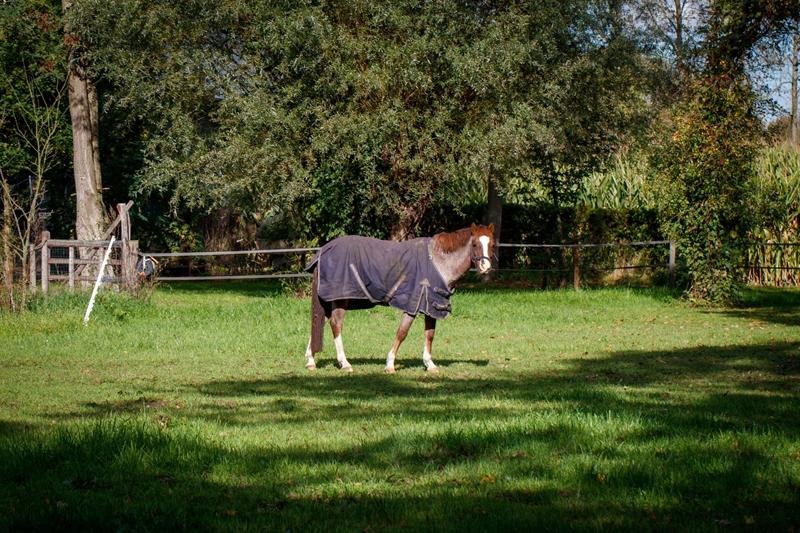
To rug a horse well, decide first whether he needs a rug at all, then match the weight to the individual horse, the weather and whether he is clipped, and check fit and temperature by hand every day. Many healthy, unclipped horses with good shelter and plenty of forage need nothing more than a waterproof sheet in a cold downpour, while clipped, thin or elderly horses may need substantial cover.
Does my horse need a rug?
Rug according to the individual horse, not the thermometer or the calendar. Ask these questions:
- Is he clipped? A clipped horse has lost much of his natural insulation.
- Is he old, thin, ill or an underweight youngster?
- Does he have a fine coat, as many Thoroughbred types do?
- Does he have shelter, and plenty of hay or other forage?
- Is he a good-doer in good condition with a thick native coat?
A "yes" to the first three suggests rugging is likely. A native pony in good body condition with a full coat and shelter will often be happier without one. Horses keep warm mostly through their coat and by fermenting fibre in the gut, and their comfortable temperature range is lower than most people expect. They also sweat and overheat easily under layers they do not need.
Choosing the right rug weight
Rug fill is usually described in grams. There are no strict rules, and manufacturers differ, so use the table as a rough starting point for a clipped horse in the UK and adjust for your own horse.
| Fill | Typical use |
|---|---|
| No fill (sheet) | Rain protection, mild days, layering |
| 50-100g | Cool autumn and spring days, lightly clipped |
| 150-250g | Cold days for clipped or thin horses |
| 300g and above | Very cold weather, frost, clipped veterans |
Layering with a liner or neck cover lets you adjust without owning a rug for every temperature. Choose waterproof turnout rugs for the field and breathable, non-waterproof stable rugs for indoors.
Rug weight by temperature
This table gives approximate temperature bands only. Wind, rain, shelter, age and condition all change what is right, so treat it as a starting point. Wet and windy weather feels far colder to a horse than the thermometer suggests.
| Temperature (approx.) | Unclipped horse | Clipped horse |
|---|---|---|
| Above about 15C | No rug | No rug, or a sheet if wet or windy |
| About 10-15C | No rug, or a waterproof sheet in rain | Sheet or lightweight (0-100g) |
| About 5-10C | Usually none, or lightweight if thin or fine-coated | Medium (150-250g) |
| Below about 5C | Lightweight to medium if needed | Medium to heavyweight (300g+) |
Horses that are thin, old, ill or short of forage generally need to sit towards the warmer end of each band, and good-doers towards the cooler end. For choosing and sizing a rug, see the rugs buying guide.
How to put a rug on, step by step
- Tie the horse or have a helper hold him, and groom off mud and dried sweat so nothing rubs underneath.
- Fold the rug in half, front over back, and approach from the near side.
- Lift it gently over the withers and unfold it so it sits evenly, with the front a little forward of where it will finally lie.
- Fasten the front straps or buckles first, then the belly straps, so that if he moves off the rug cannot swing round and trap him.
- Cross the belly surcingles, fasten the leg straps by linking each one through the other like chain links, then fasten the tail cord if the rug has one.
- Smooth the rug back so the hair lies flat underneath, and check that nothing is twisted.
To take a rug off, reverse the order: undo the leg and belly straps first and the front last, then slide the rug backwards off the quarters. A quiet horse that is used to this routine is far safer to rug than one that is rushed.
How to check rug fit
- The rug should sit forward of the withers without pressing on them, and the shoulder gussets should allow movement.
- You should be able to fit a flat hand between the rug and the withers, and the chest should be free of pressure when he lowers his head to graze.
- Leg straps should be linked like chain links and loose enough for a hand to pass between strap and leg.
- Check for rubbing, hair loss or white hairs over the shoulder, withers and hips, which show that the fit is wrong.
- Measure carefully, from the centre of the chest to the point of the buttock, and try before you buy if possible.
A rug that is too small pinches and rubs, while one that is too large slips back, pulls on the withers and is a hazard if a leg gets caught. If your horse changes shape through the season, recheck the fit when his weight changes.
Checking temperature every day
Do the hand test daily. Slide a hand under the rug behind the withers and at the flank. Warm and dry is right. Cold means add a layer, while hot or damp means take something off. Do not judge by the ears, legs or nose, which are naturally cooler. Take rugs off for a few minutes at least once a day to look at the skin and body condition, particularly if a horse is thin underneath. Rugs are a common reason weight loss goes unnoticed.
The risks of over-rugging and under-rugging
Under-rugging is the obvious worry: a cold, wet, clipped or underweight horse will shiver, tuck up and lose condition. Over-rugging is just as common and is less often noticed. A sweaty horse is uncomfortable, can develop skin problems, may fail to grow a natural winter coat and can hide the loss or gain of weight. Overweight horses and ponies in particular benefit from being allowed to feel a little cool, and over-rugging can undermine a weight loss plan.
Rugs that stay on for weeks without removal can also cause rubbing, skin infections and unnoticed injuries, so make sure each rug comes off regularly for inspection.
Looking after rugs
Wash and reproof turnout rugs before winter, repair tears promptly and let rugs dry fully before storing. A damp rug against the skin can cause irritation and skin infections, and a rug with broken straps is dangerous. A spare rug is useful, because a soaked one must be swapped for a dry one immediately. Horses with sensitive heels, scabs or sores on the back should also be checked for conditions such as mud fever and skin conditions that damp rugs can aggravate.
FAQs
Does my horse need a rug in winter?
Not always. Healthy, unclipped horses in good condition with shelter and plenty of forage often cope well. Clipped, thin, elderly or fine-coated horses usually need one.
What weight rug should my horse wear?
It depends on whether he is clipped, his age and condition, and the weather. Use the tables above as a starting point, then adjust using the hand test behind the withers.
How do I know if my horse is too hot or cold under his rug?
Feel behind the withers and at the flank. Warm and dry is right, cold means add a layer, and hot or damp means take one off.
What happens if I over-rug?
He can sweat, lose condition and become uncomfortable, and he may fail to grow a natural winter coat. It can also mask weight loss.
Should I rug a native pony?
Often not, if he is fit and well fed with shelter. Look at body condition, age and weather, and ask your vet if you are unsure.
How often should I take a rug off?
Check under it every day, and take it off regularly to look at the skin and body condition and to groom underneath.
Useful official resources
- British Horse Society: horse care and welfare Advice from the UK's largest equestrian charity.
- World Horse Welfare: advice Practical welfare and care guidance.
- Code of Practice for the Welfare of Horses (gov.uk) The legal welfare standards for horse keepers in England.