
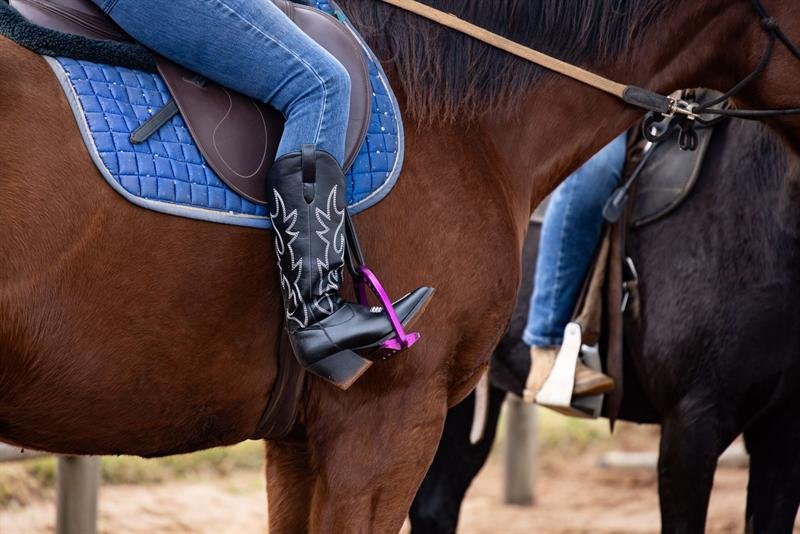
Saddle pads sit between the saddle and the horse's back to absorb sweat, protect the saddle and, in some cases, add a little cushioning or grip. Whether you call it a saddle pad, a numnah or a saddle cloth, the right choice depends on your saddle fit, your discipline and your horse, and no pad can fix a saddle that does not fit.
Saddle pad, numnah or saddle cloth: what is the difference?
These terms overlap, and different suppliers use them in different ways, but there are general differences worth knowing when comparing a numnah vs saddle pad.
- Saddle cloth: usually a fairly thin, shaped fabric cloth, often cotton, that is mainly there to keep the underside of the saddle clean and to look smart. It is common in dressage and showjumping, where it is often cut square or to match the saddle's shape.
- Numnah: traditionally a shaped pad following the outline of the saddle, often made from sheepskin, fleece, wool felt or foam. It is intended to absorb sweat and cushion slightly, and often has a front loop or girth straps to hold it in place.
- Saddle pad: a broad term for any pad under the saddle. It may include thicker cushioning, shock-absorbing or gel-based pads, or pads with built-in inserts.
In everyday use, riders often use all three words for the same thing. Check the description and materials rather than relying on the name.
Types of saddle pad and what they are for
| Type | Typical use | Points to consider |
|---|---|---|
| Cotton or quilted cloth | Everyday protection and appearance | Easy to wash and thin enough not to alter fit much |
| Fleece or sheepskin | Sweat absorption and a soft feel | Needs regular brushing and washing to stay hygienic |
| Wool felt | Moisture wicking and moulding to the back over time | Can compress and may need replacing |
| Foam or shock-absorbing pad | Cushioning, particularly for jumping | Can trap heat and may make a saddle tight if too thick |
| Gel saddle pad | Pressure distribution or cushioning in some designs | Needs to suit the saddle; heat build-up is possible |
| Correction or riser pad | Used under fitter's guidance to adjust balance | A short-term aid, not a replacement for fit |
Do you need a saddle pad at all?
Not every horse needs a pad under every saddle, though most riders use something. A pad is generally useful to keep sweat and hair off the saddle panels, which makes cleaning easier and protects the lining. It also gives a clean surface that can be washed more easily than the saddle itself.
What a pad cannot do is cure poor fit. If a saddle pinches, rocks, or sits unevenly, adding a thick pad may only squeeze the horse more. A thick pad takes up space under the saddle, which narrows the effective fit at the withers and can make a well-fitted saddle too tight. If your horse seems uncomfortable, ask a qualified saddle fitter, for example one qualified through the Society of Master Saddlers, rather than reaching for more padding.
Gel saddle pads and shock-absorbing options
A gel saddle pad or other shock-absorbing pad is designed to cushion the impact of the rider's weight and, in some designs, to spread pressure more evenly. Riders sometimes choose them for jumping, for horses with sensitive backs or for older horses. They can help in certain situations, but they come with trade-offs:
- They add thickness and can change how the saddle sits.
- Some materials hold heat, so check the horse's back after work.
- They can mask a fit problem rather than solve it.
- If your horse has a sore back, the first step is a vet check, not a new pad.
Ask your saddle fitter whether a particular type of pad suits your horse and saddle before you buy.
How a pad affects saddle fit
A pad changes the volume between the saddle and the horse, so it is part of the fit. Always have your saddle checked with the pad you normally ride in, and recheck it if you change to a different thickness or material.
Make sure the pad:
- Is pulled up into the gullet of the saddle so it does not press on the withers or spine.
- Lies flat with no wrinkles or folds under the panels.
- Does not slip back or rub where it is held down by the girth.
- Is the right size and shape for the saddle, extending slightly beyond the panels without hanging far past them.
Our saddles guide explains how to check the saddle's fit more fully.
How to wash a saddle pad
Dirty, stiff or sweaty pads can rub the horse and cause sore patches, so wash them regularly. A good routine is to brush off hair and dried sweat after each ride and wash the pad every week or two, depending on how often and how hard you ride.
- Brush or shake off loose hair and dirt, or remove it with a stiff brush.
- Check the care label. Many cotton pads can go in a machine, but sheepskin, wool and gel pads often need gentler treatment.
- Wash at the recommended temperature with a mild, non-biological detergent. Strong detergents can irritate sensitive skin.
- Rinse thoroughly so no soap remains in the fibres.
- Dry away from direct heat, such as radiators, which can harden fleece and damage foam or gel layers.
- Brush up fleece or wool once it is dry to restore the pile.
What to look for when buying a saddle pad
- Fit to your saddle: choose a shape and size that matches your saddle and does not stick out awkwardly.
- Breathable materials: look for fabrics that wick moisture and allow airflow, especially in warm weather.
- Appropriate thickness: thin enough not to alter fit, unless your fitter advises otherwise.
- Washability: machine washable options make regular cleaning easier.
- Discipline: a dressage cloth and a jumping pad have different shapes and levels of cushioning.
- Quality construction: check for flat seams that will not rub and sturdy girth loops.
- Budget: prices run from a few pounds for a basic cloth to a considerable sum for specialist pads, and vary by region and supplier.
Signs a pad is causing problems
Look at your horse's back after you untack. Heat, dry patches, ruffled hair, sweat marks that are uneven, or lumps and sore spots all suggest the pad or saddle is not suiting the horse. Pads that slip, bunch or have hardened with old sweat can also cause rubbing. If you see any of these, stop using the pad, check the saddle fit and contact your vet if the horse seems sore.
Frequently asked questions
What is the difference between a numnah and a saddle pad?
The words overlap. A numnah is traditionally a shaped pad that follows the saddle outline, while saddle pad is a broader term for any pad under the saddle. Check the material and thickness rather than the name.
Can a saddle pad fix a badly fitting saddle?
No. A pad may soften pressure slightly, but it cannot correct a tree that is the wrong shape or width. Have a qualified saddle fitter assess the saddle.
Are gel pads better than other pads?
Not necessarily. They suit some horses and situations, but they add thickness and may hold heat. Which pad is best depends on the horse, the saddle and the work.
How often should I wash my saddle pad?
Brush it after every ride and wash it every week or two, or sooner if it gets very sweaty or muddy.
Can I use a thick pad to make a saddle fit better?
Not without advice. A thick pad can make the saddle tighter and narrower. Ask a saddle fitter before using a thicker pad or a correction pad.
Should a saddle cloth go under the numnah or over it?
Usually only one pad is used. If you do use two, make sure the combined thickness does not make the saddle tight, and check there are no wrinkles.
Useful official resources
- BETA The British Equestrian Trade Association.