
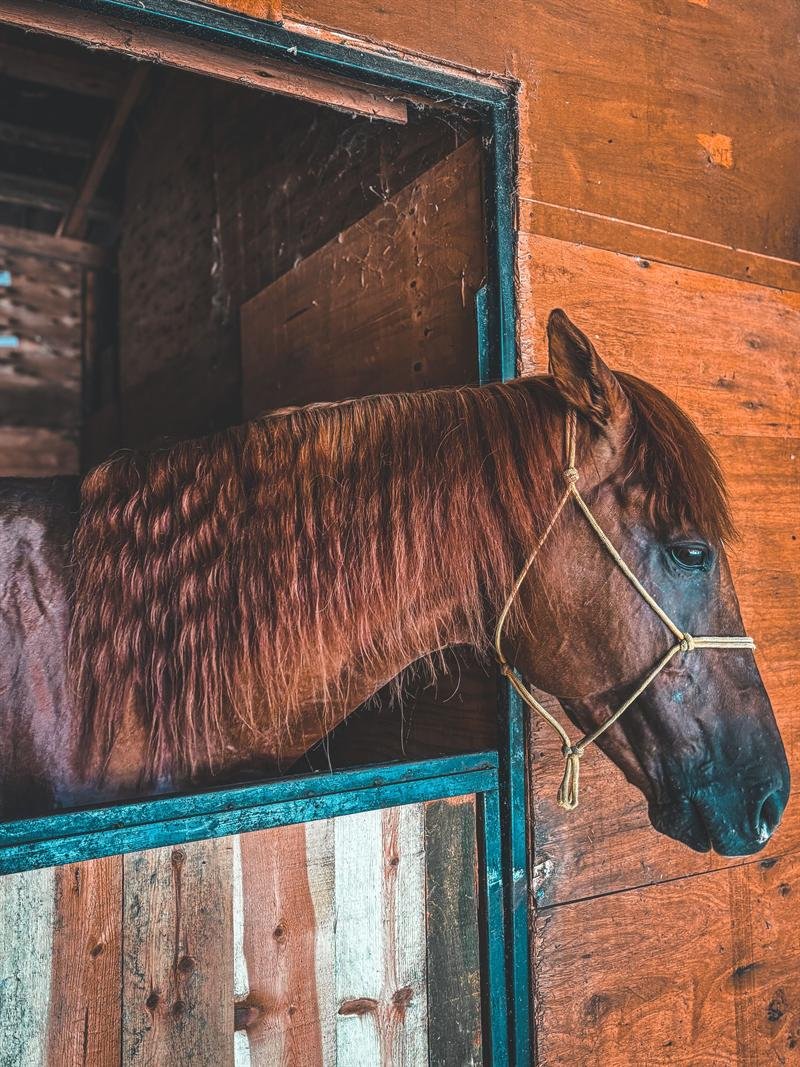
How a horse is housed and how land is managed affect health almost as much as feed and vet care. This section covers the practical side of keeping horses in the UK, from stable size, bedding and ventilation to fencing, field shelters, water supply and hygiene. It is written for owners with a few acres, DIY and part-livery keepers, and anyone setting up or judging a yard.
Explore stable management
Designing for how horses live
Horses are herd animals designed to walk, graze and watch their surroundings for much of the day. The best set-ups are those that allow as much freedom, company and forage as possible, with housing used where it is useful, rather than as a default. Many UK owners now use some form of combined or "mixed" system, keeping horses out as much as the ground and weather allow, with a stable for rest, injury, bad weather or limited turnout.
When planning, consider the ground, drainage, access for vehicles, and your own daily workload. A yard that is awkward to muck out, or a field with no all-weather gateway, becomes a chore that tempts corners to be cut. The best investment is usually in the things you use every day: good footing at gates, a sensible muck heap, secure feed storage and reliable water.
Space, light and air
As a practical guide, a stable of around 12ft x 12ft (3.6m x 3.6m) suits most horses, while ponies often manage in 12ft x 10ft or smaller, and large horses and mares with foals need more, around 12ft x 14ft or bigger. Stables should allow the horse to turn, lie down and roll without difficulty, and have a roof high enough to prevent head injuries and encourage air circulation. Horses also need to see out, at least over a half-door, as this reduces boredom and stress. We cover dimensions, flooring, doors and layout in stable design, and airflow in stable ventilation.
Keeping land productive and safe
Land needs care to remain safe and nutritious. Poo-picking, resting, harrowing and topping weeds are essential; overgrazed, sour paddocks become muddy and harbour parasites. As a rule of thumb, a horse will generally need around 1–1.5 acres to be at least partly supported by grazing in the UK, and often more without supplementary forage. Boundaries should be sound, visible and free from hazards such as barbed wire, loose wire or protruding nails, as injuries from poor fencing are a leading preventable cause of vet calls. Our guides on fencing, pasture rotation and field shelters go into detail, while pasture care covers daily field upkeep.
Water, hygiene and routine
Horses typically drink somewhere in the region of 25–50 litres a day depending on weight, feed, work and weather, and need clean water at all times; see water systems. Alongside this, consistent hygiene lowers disease pressure and respiratory problems. Skip out droppings daily, wash and refill water containers, disinfect on a schedule, and store bedding and forage away from the stable where possible. See stable hygiene.
Safety planning matters too: have a clear fire plan with extinguishers, no smoking, tidy electrical fittings, hay stored apart from stables, and a means of getting horses out quickly. A yard that is regularly checked, with emergency numbers displayed, makes all the difference.
Choosing bedding: a quick comparison
There is no perfect bedding, only the best compromise for your horse, budget and muck disposal. This general comparison is a starting point; see the bedding guide for detail.
| Type | Strengths | Things to consider |
|---|---|---|
| Straw | Warm, natural and often easy to source | Can be dusty or contain spores, and some horses eat it |
| Wood shavings | Absorbent and comfortable, usually lower in dust | Muck heap may need space, and quality varies |
| Paper or hemp | Low dust, often useful for horses with respiratory problems | Can be heavier to handle and cost more |
| Rubber mats with a thin bed | Easy to clean and saves bedding over time | Needs enough bed for comfort; see rubber mats |
A weekly yard check routine
Most stable problems are cheaper to fix when you catch them early. A short routine, done on the same day each week, helps. Use this list.
- Walk every fence line and check rails, posts, wire and gates for damage or sharp points.
- Test electric fencing, if you use it, and trim vegetation touching it.
- Inspect stable doors, bolts, kick boards and ceilings for splinters, loose fittings and cobwebs.
- Scrub water troughs and check automatic drinkers are working and not leaking.
- Check ventilation openings are clear, and look at electrics, lights and cables for wear or chewing.
- Look at the muck heap, feed room and hay store for damp, vermin or fire hazards.
- Make sure your first aid kit, fire extinguishers and emergency numbers are in place and in date.
Weather, seasons and ground
The UK climate means mud in winter and baked ground in summer, and both bring management problems. Gateways and field entrances churn up first, so consider hard standing or well-draining surfaces. Rotate or rest wet areas to avoid poaching, which damages grass and can lead to skin problems such as mud fever. In summer, make sure there is shade and shelter from flies, and check water supplies daily during hot spells. In winter, check for frozen troughs before breakfast and again in the evening.
Planning a new yard or upgrading an existing one
Before spending money, write down how you want to manage your horses through each season, and what jobs take the most time. Prioritise safety and welfare first, such as sound fencing, reliable water and good ventilation, then time-saving features such as hard standing, a convenient muck heap and a tidy feed store. Get several quotes for building work, ask neighbours about drainage and local conditions, and check planning and any restrictions on your land before ordering anything. Costs vary by region and specification, so budget with a margin for the unexpected.
Frequently asked questions
What is the safest type of fencing for horses?
There is no single answer, but fencing should be visible, strong, and free of sharp points and loose wire. Barbed wire is not suitable. See fencing.
Should horses be stabled all the time?
Most horses do best with as much turnout and company as practical, using the stable when needed. Discuss any limits with your vet.
What size should a horse stable be?
12ft x 12ft is a common standard for horses, with 12ft x 10ft often used for ponies. Larger horses and foaling mares need more space.
Do I need planning permission for a stable or field shelter?
Often, yes, depending on size, permanence and use, and on rules for your land. Check with your local planning authority before you build or buy.
How much land does a horse need?
A common guideline is about 1–1.5 acres per horse for grazing, but quality of land, rotation and supplementary forage make a big difference.
What's the best bedding?
There is no single best type. It depends on dust sensitivity, cost, availability and muck disposal; see our bedding guide.
How often should a stable be mucked out?
Droppings and wet patches should be removed daily at minimum, with a full muck out as often as the system you use requires.
Useful official resources
- Code of Practice for the Welfare of Horses (gov.uk) Legal standards for shelter, space and care.
- Ragwort code of practice (gov.uk) How to control ragwort on your land.
- British Horse Society: horse care and welfare Yard and grazing advice.