
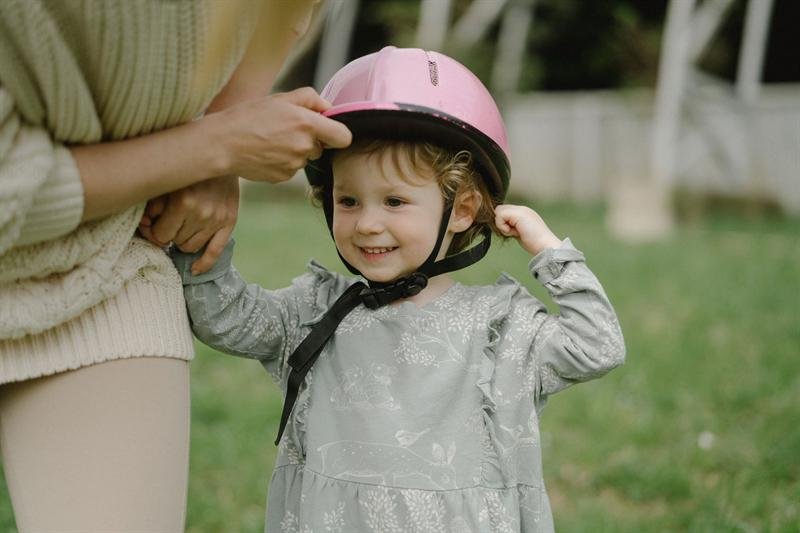
Children's riding safety comes down to adult supervision, a correctly fitted riding hat meeting a current standard, proper boots, a body protector where it is required or advised, a suitable pony and sensible habits on the ground and in the saddle. Most accidents are preventable or can be made far less serious with the right kit and routines, but none of it replaces good instruction and a responsible adult who is always in charge.
Adult supervision comes first
Every other safety measure works better when a responsible adult is present. Young children should never handle or ride ponies without an adult nearby, and the adult should know enough about ponies to spot trouble early. That means checking the pony and kit before every ride, choosing the right place and conditions, and deciding when to stop. A qualified instructor adds another layer of safety, because they can judge whether a child and pony are well matched and ready for what you are planning. See learning to ride.
Child riding hat standards and fit
A riding hat is the single most important piece of kit, so get it fitted by a trained person. In the UK, riders look for a hat that meets a current recognised standard, and examples that have been widely accepted include PAS 015 and VG1. Standards and accepted lists change over time, so always check the label against the rules of your riding school, your Pony Club branch or the organiser of any event, and ask a trained retailer if you are unsure. Where a competition requires it, hats may also need to be checked and tagged.
Fit matters as much as the label. Use this checklist:
- Hair tied back and tucked in before fitting, so you measure the real head.
- The hat sits level on the head, just above the eyebrows, and does not rock forward or back.
- With the chinstrap undone, the hat should not wobble excessively when the head is gently shaken; with it fastened, it should feel secure.
- The chinstrap is snug, with room for about one finger beneath the chin.
- No pressure points or headaches, as these are signs of poor fit.
- Children grow quickly, so check the fit every few months and replace the hat when it no longer fits.
Replace a hat after any significant impact, even if there is no visible damage, and follow the manufacturer's guidance on its lifespan. Be cautious about buying second-hand hats, because you cannot know their history. Children should wear a hat whenever riding, and it is sensible to wear one when handling ponies too, which many yards require.
Body protectors for children riding
A body protector helps to reduce the risk of injury to the torso if a rider falls, and many organisations require one for jumping and cross-country, and many parents choose one for all riding. It must fit properly to work, so have your child measured by a trained fitter. In the UK, look for a current BETA standard label, and check which level of protection your activity requires, because different disciplines and organisations set their own rules. A child's body protector needs to be checked regularly as they grow, because one that is too small or too loose will not protect or be comfortable. Some riders also choose an air jacket, but check the rules for your event first and follow the manufacturer's fitting guidance.
Other essential kit
| Item | Why it matters |
|---|---|
| Boots | A smooth sole and small heel stop the foot slipping through the stirrup; avoid wellies, trainers and chunky treads |
| Body protector | Reduces injury risk when jumping and cross-country, and many organisations require it; must fit properly and carry a current standard |
| Gloves | Better grip and protection from rope burns |
| Hi-vis | Essential when hacking on roads, particularly in poor light |
| Safety stirrups | Some are designed to release the foot in a fall; ask your instructor |
| Suitable clothing | Close-fitting, with no loose strings or flapping items that can catch |
Check which items your discipline or Pony Club branch requires. See Pony Club and riding safety.
Kids' horse riding safety tips on the ground
- Never stand directly behind a pony, and speak or touch gently when walking round it.
- Do not wrap lead ropes around hands or fingers, and wear gloves when leading.
- Tie ponies with a quick-release knot to a breakable string loop where possible, not directly to a fixed ring, and never leave a tied pony alone.
- Keep feet away from hooves, and never kneel or sit under a pony.
- No running, shouting or sudden movements on the yard.
- Do not hand-feed ponies unless an adult says so, because of nipping.
- Close gates and know where it is safe to go.
Riding safely
- Do a quick check before mounting: girth, stirrups and bridle.
- Ride in enclosed areas until the instructor says otherwise.
- Match the pony to the child, and the activity to the child's ability on that day.
- Learn how to fall and how to do an emergency stop, which a good instructor will teach.
- Avoid riding when the pony is unwell, the ground is poor, or the weather or light is bad.
- Keep a fully charged phone and a first-aid kit near the arena, and make sure an adult knows the address and what to say to the emergency services.
Safe hacking for young riders
Hacking is a joy, but it brings risks that an arena does not, including traffic, unpredictable animals and uneven ground. Young riders should only hack with a suitably experienced adult, on a pony known to be reliable, and only once their instructor agrees they are ready. Plan the route, avoid busy roads, and choose quiet times of day.
- Wear hi-vis clothing for both rider and pony, and use lights in poor visibility.
- Follow the Highway Code for riders: ride in single file or in pairs on quiet roads, signal clearly, and thank drivers who slow down.
- Slow to walk when passing vehicles, and keep the youngest or least experienced rider on the inside, away from traffic, with an adult placed to protect them.
- Tell someone where you are going and when you will return, and carry a phone.
- Do not hack alone, particularly as a child.
See hacking for more detail.
FAQs
What riding hat standard should a child have?
A hat that meets a current recognised standard, with examples including PAS 015 and VG1. Check the label against your instructor's, yard's or organiser's rules, because accepted standards change.
How often should a child's hat be replaced?
Whenever it no longer fits, after an impact, or as the manufacturer's guidance suggests.
Does my child need a body protector?
It depends on the activity and the organiser. Many require one for cross-country and jumping, and many parents choose one for all riding. It must carry a current standard and fit properly.
Can a child go hacking?
Yes, once the instructor agrees they are ready, and only with an experienced adult on a reliable pony, wearing hi-vis and following the Highway Code.
Should children wear a hat on the ground?
It is sensible, particularly around young or unfamiliar ponies, and many yards insist on it.
Should my child have a first-aid course?
Adults at a yard should hold current first-aid training, and older children can learn the basics through Pony Club or other courses.
Useful official resources
- The British Horse Society Riding safety and approved centres.