
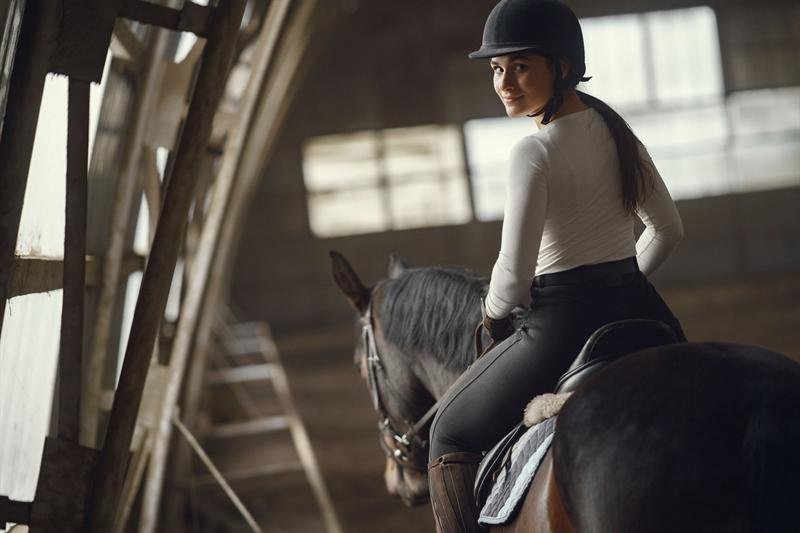
The best rider fitness exercises build core strength, balance, flexibility and stamina, and you can do all of them at home without a gym. A fitter, more symmetrical rider is easier on the horse, safer in the saddle and able to ride well for longer, so a few short sessions each week can change how you sit and how you feel at the end of a lesson.
Why horse riding fitness matters
Riding looks effortless when it is done well, but staying balanced on a moving animal asks a lot of your body. Your core stabilises your trunk so your hands can stay independent and quiet. Your hips and legs absorb movement and give aids without gripping. Your shoulders and back stay supple so you can follow the horse rather than fight it. When any of these tire or stiffen, you tend to tip forward, collapse a hip, clamp with your knees or hang on the reins, and the horse has to compensate.
Fitness also affects safety. A tired rider reacts more slowly, particularly when jumping, hacking on a fresh day or finishing a long cross-country course. Building general strength and stamina gives you a bigger margin when things do not go to plan. None of this requires you to be slim or athletic; it requires regular, sensible work on the qualities riding actually uses.
What riders need to train
| Quality | Why it matters | Ways to build it |
|---|---|---|
| Core strength | Holds the upper body steady and independent of the hands | Planks, side planks, dead bugs, bird dogs, Pilates |
| Balance | Keeps you centred without gripping | Single-leg stands, yoga, wobble cushion work |
| Flexibility | Lets hips and shoulders move with the horse | Hip openers, hamstring, calf and chest stretches |
| Leg and glute strength | Supports a secure position, especially in jumping position and rising trot | Squats, lunges, glute bridges, step-ups |
| Stamina | Helps you ride well when tired, for example in jumping, eventing and long hacks | Brisk walking, cycling, swimming, running |
Core exercises for riders
Core work for riders is less about sit-ups and more about holding your trunk stable while your arms and legs move, which is exactly what riding demands. Good starting points include:
- Plank: Hold a straight line from head to heels on your forearms, keeping your tummy gently braced and not letting your lower back sag. Build up the length of the hold gradually.
- Side plank: Works the muscles at the side of the trunk that stop you collapsing through one hip. Do both sides and notice if one feels weaker.
- Dead bug: Lie on your back and lower opposite arm and leg slowly while keeping your lower back steady. It teaches you to move limbs without disturbing your middle.
- Bird dog: On hands and knees, extend opposite arm and leg and pause. It mimics the independence of seat and hands.
- Glute bridge: Strengthens the seat muscles that support your pelvis in the saddle.
Quality beats quantity. Slow, controlled repetitions with good form are worth more than rushed ones, and stopping when your form slips protects your back.
Balance and exercises to improve riding
Balance work trains the small stabilising muscles and your sense of where your body is in space. Try standing on one leg while brushing your teeth, then progress to closing your eyes briefly or standing on a folded towel or cushion. Slow, controlled squats and lunges build leg strength and balance together. Standing with your feet in a half-seat position and holding it, without leaning on anything, mimics the demands of jumping.
Some riders like an exercise ball or a mechanical riding simulator to practise position, but these are extras, not essentials. Yoga and Pilates are popular because they combine core control, flexibility and body awareness in one session, and many studios offer classes suitable for beginners. Choose whatever you will actually keep doing.
Stretches for riders
Tight hips, hamstrings and chest muscles are common in riders, especially those who sit at a desk all day. Gentle, regular stretching helps you stay supple in the saddle.
- Hip flexor stretch: Kneel on one knee, tuck your pelvis under and gently lean forward until you feel a stretch at the front of the hip.
- Inner thigh stretch: Sit with the soles of your feet together and let your knees relax outwards, without forcing them down.
- Hamstring and calf stretch: Straighten one leg in front of you and reach gently towards your toes, then press your heel down on a step to open the calf.
- Chest and shoulder stretch: Clasp your hands behind you and open the chest, or stand in a doorway with your forearm against the frame.
- Spinal rotation: Lie on your back with knees bent and let both knees drop gently to one side, then the other.
Hold each stretch calmly while you breathe, and stop if you feel sharp pain. Stretching after riding, while your muscles are warm, is more comfortable than stretching cold before you tack up.
A simple weekly routine
- Two short strength sessions of 15 to 20 minutes, focusing on core, glutes and legs.
- One or two cardio sessions of 20 to 40 minutes, at a pace that lets you hold a conversation.
- Daily mobility or stretching, even five minutes before bed.
- One rest day, because muscles adapt during recovery.
If you ride several times a week already, count that as part of your cardio and fit the strength work around it. If you are returning after a break, start gentler than you think you need to and build over several weeks.
Fix your own asymmetry
Almost every rider is stronger or stiffer on one side, and the horse feels it. Notice which side you collapse on, which stirrup feels longer or which rein feels heavier, then include extra work on your weaker side. Lessons on the lunge without stirrups, with a good instructor, are an excellent way to find imbalances. A physiotherapist or a qualified Pilates teacher who works with riders can also assess you. If your horse persistently struggles to go in one direction, it is worth checking your own straightness as well as the horse; see riding position.
Injury and safety
Back, knee and shoulder strains are common in riders. Warm up before exercising and before mounting, avoid riding when exhausted and build new exercise gradually. Falls are part of the sport, so take safety seriously: a correctly fitted, current-standard hat and a body protector for jumping and cross-country reduce risk, as covered in riding safety.
Frequently asked questions
Do I need to be slim to ride?
No. Fitness, balance and a well-matched horse matter more. Choose a horse that can carry you comfortably and ask an experienced instructor about weight-carrying.
Is Pilates good for riders?
Many riders find it helpful because it develops core stability and body awareness, but any regular activity you enjoy is valuable.
How often should I do rider fitness exercises?
Two short strength sessions, one or two cardio sessions and a few minutes of stretching most days is a sensible starting pattern, adjusted to your ability and any advice from a health professional.
What is the best exercise to improve my riding?
There is no single best one. Core stability work, single-leg balance and hip mobility cover the main needs, and regular lessons that highlight your own weaknesses show you where to focus.
Can I improve my fitness just by riding?
Riding helps, but most people find that a little off-horse work on strength, flexibility and stamina makes them more effective and reduces strain.
Should I stretch before or after riding?
A gentle warm-up before and longer stretches after, when your muscles are warm, is a comfortable approach for most people.
Useful official resources
- The British Horse Society Events, access and riding advice.
- British Riding Clubs Social and competitive riding for adults.