
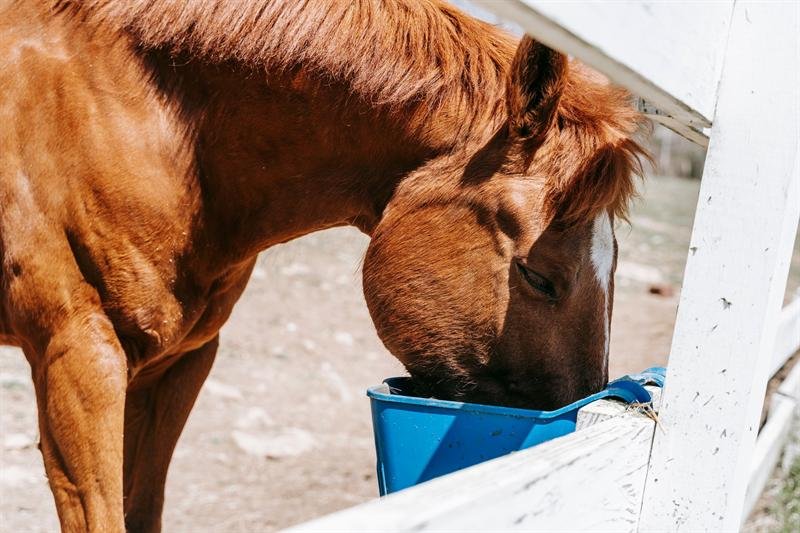
Good feeding is less about buying the right bag and more about getting the basics right: plenty of the right forage, steady routines, and a ration matched to what your horse actually does. This section covers everything from hay and grass to supplements and feed charts, for owners of horses and ponies in the UK, whether you have a retired veteran, a good-doer native or a competition horse.
Explore feeding & nutrition
The forage-first principle
The horse's digestive system evolved to process small amounts of fibre almost continuously. The stomach is small and secretes acid all the time, so long gaps without food leave that acid with nothing to buffer it, which is one of the reasons gastric ulcers are so common in stabled horses. The hindgut depends on a steady supply of fibre to keep its microbial population healthy.
The widely accepted guideline is that a horse should eat roughly 1.5–2.5% of its bodyweight in dry matter each day, with the large majority of that coming from forage (grass, hay, haylage or a forage replacer). For a 500kg horse that is about 7.5–12.5kg of dry matter. Most owners should treat 1.5% as a floor that you don't go below without veterinary guidance, even for a horse that needs to lose weight.
Practical consequences: avoid gaps of more than about four hours without something to eat, use small-holed haynets or slow feeders to extend eating time, and build the rest of the diet around forage rather than the other way round.
Know your horse's weight and condition
You can't feed accurately by guesswork. A weighbridge is ideal, but a weigh tape is cheap, quick and good enough to track trends if you use it the same way each time: same time of day, tape snug behind the elbow, taken on the exhale. Tapes tend to be less accurate on cobs, native types and heavily pregnant or very young animals, so use them for trends, not absolutes.
Pair the numbers with body condition scoring. UK yards usually use either a 0–5 scale or the 9-point Henneke scale; on both, you are assessing fat cover over the ribs, withers, back, loin, tailhead and neck. A horse should be moderate: ribs felt easily but not seen. Photograph your horse from the same angles monthly to spot slow change, which is the kind owners most often miss. Cresty neck fat in particular is worth taking seriously, as it can accompany increased laminitis risk; see our guide to laminitis.
Matching the ration to the job
Workload, age, temperament, metabolic status and whether the horse lives out or in all change what is needed. A good-doer native in light work on grass may need nothing but forage, a low-calorie balancer and a salt source. A fit event horse may need a high-energy ration, with oil and carefully split meals. Don't copy the yard next door: use the feed manufacturer's helpline or a qualified nutritionist, many of whom give free advice, to build a ration around your horse's real forage.
Changing feed and avoiding digestive upset
The hindgut microbes adapt slowly. Introduce any new forage or concentrate gradually over at least 7–10 days (longer for big changes or sensitive horses), swapping a little of the old for the new each day. Feed concentrates in small meals; commonly advised maximums are around 2kg of mixed or cubed feed per meal for an average horse, and less for smaller ponies. Always provide clean water, and keep routines consistent: sudden changes in turnout, weather or workload are as much of a risk as a sudden change in feed. For signs of digestive trouble, see colic.
Feeding through the life stages
Needs change across a horse's life, so a ration that worked for a fit competition horse may be wrong for the same horse in retirement. The table gives general starting points only; your vet or a qualified nutritionist can tailor a plan.
| Type of horse | Forage focus | Common additions |
|---|---|---|
| Good-doer native in light work | Restricted, low-sugar forage; soaked hay if advised | Low-calorie balancer and a salt source |
| Competition horse | Plenty of good forage, with energy from fibre where possible | Hard feed, oil, electrolytes if sweating heavily |
| Poor-doer | Ad lib quality forage, plus alternative fibre sources | Calorie-dense feeds, checks for teeth and worms |
| Veteran | Soft, easily chewed fibre such as chopped forage or mashes | Senior feed; see senior feeding |
| Broodmare or youngster | Good forage and carefully balanced protein, minerals and vitamins | Stud balancer; see foal feeding |
Water, salt and the basics people forget
Horses need constant access to clean water, and many drink more than owners expect, especially in hot weather or when eating dry forage. Check buckets and troughs daily, break ice in winter and clean them regularly. Provide a salt source such as a salt lick or loose salt, since forage alone is low in sodium. A horse that suddenly drinks far more or less than usual should be discussed with your vet. See electrolytes and minerals for more.
Weight management in practice
Both obesity and thinness are common in UK horses. To help a horse lose weight safely, keep forage above the minimum, restrict grazing with a muzzle or track system, increase exercise gradually and weigh monthly. To help a thin horse gain weight, first check teeth, worm burden, pain, social stress and forage quality before adding calories, then add energy slowly. Read our guides to weight loss and weight gain before changing the diet.
A simple feeding review checklist
- Weigh or tape your horse and score body condition, and note the date.
- Weigh the forage you actually feed, and note what the horse eats from grazing.
- List every feed, balancer and supplement, with amounts and times.
- Compare the total to your horse's workload and condition, and ask a nutritionist if it looks wrong.
- Check teeth and worm control, since poor chewing or parasites undermine any ration.
- Review again every few weeks, and whenever workload, season or health changes.
Common feeding mistakes
- Feeding by scoop rather than by weight.
- Giving too little forage, or long gaps between meals.
- Doubling up on supplements that duplicate ingredients already in the balancer.
- Changing feeds suddenly, or feeding a large concentrate meal.
- Letting a good-doer graze unrestricted in spring and autumn.
- Ignoring teeth, which affect how well a horse uses its food.
See also supplements to decide whether a product is worth buying.
Frequently asked questions
How much should I feed my horse a day?
Start with forage at roughly 1.5–2.5% of bodyweight in dry matter, then add only what condition, workload and the forage analysis show to be necessary. Our feeding charts give worked examples.
Does my horse need hard feed?
Not necessarily. Many horses in light or moderate work do well on good forage plus a ration balancer for vitamins and minerals. Hard feed becomes useful when forage can't meet energy needs.
Is haylage better than hay?
Neither is better in all cases. Haylage is generally more palatable and lower in dust, but often richer in calories and sugar; hay can be soaked or steamed. Your horse's health and weight decide.
How many times a day should I feed?
As often as practical, because horses are designed to graze little and often. Two or three concentrate feeds are normal, but forage should be available most of the time.
When should I call a nutritionist or vet?
When a horse is losing or gaining weight unexpectedly, has recurrent laminitis, ulcers, Cushing's disease (PPID) or insulin dysregulation, or is not thriving despite apparently adequate feeding.
Do all horses need supplements?
No. A horse on good forage with a balancer often needs nothing more. Add a supplement only for a clear reason, ideally agreed with your vet or nutritionist.
Can I feed my horse treats?
In moderation, yes. Choose low-sugar options, cut carrots or apples into pieces, and count treats in the daily ration for good-doers and laminitis-prone horses.
Useful official resources
- World Horse Welfare: advice Body condition scoring and feeding guidance.
- British Equine Veterinary Association The professional body for equine vets.
- Code of Practice for the Welfare of Horses (gov.uk) Legal standards for feeding and care.