
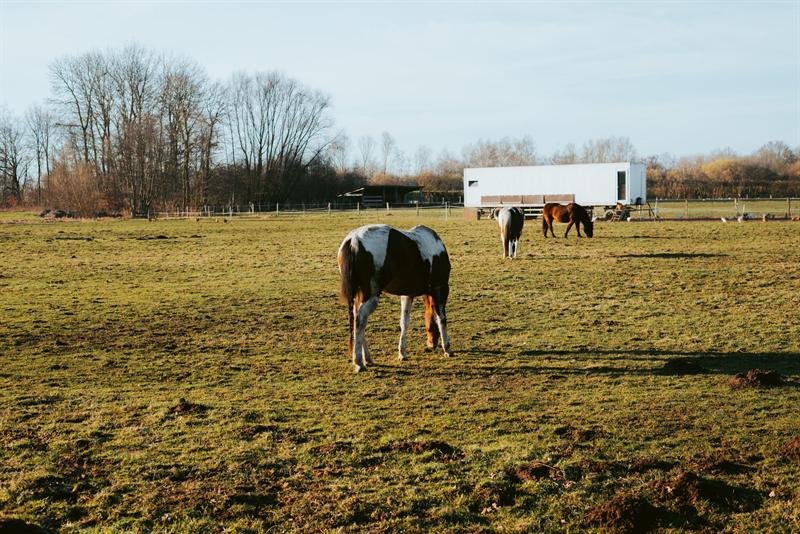
Horse grazing management is the practice of getting the benefits of grass, which is natural, cheap and good for wellbeing, while limiting the risks of excess weight, sugar overload and laminitis. For many UK horses and ponies this means controlling how much grass they eat and when, using tools such as strip grazing, grazing muzzles, limited turnout and careful pasture care.
Why grass matters
Grass and other forage form the base of the horse's diet. Horses evolved to eat small amounts almost constantly, and grazing supports gut health, chewing, movement and mental wellbeing. Turnout with other horses also supports natural behaviour. For many horses, good grass with a mineral or balancer supplement is all they need. But modern pastures, bred and fertilised for productivity, can be too rich for native ponies, good doers and metabolic horses, so management is essential.
Grass for horses: how much do they eat?
A horse can eat a surprising amount of rich grass, and the widely used guide for total forage is roughly 1.5–2.5% of bodyweight in dry matter a day. On lush pasture a horse can potentially exceed that quickly if left to graze for many hours. Spring grass is mostly water, but the dry matter is high in sugars, so the calories add up. If your horse is gaining weight, has fat pads, a cresty neck or is prone to laminitis, grazing needs restricting, and the ration should be monitored with a weigh tape and body condition scoring. See weight loss for how to do this safely.
Spring grass sugar levels and laminitis risk
Grass makes sugars through photosynthesis, uses some for growth, and stores the rest as fructans, a type of carbohydrate. When growth is slowed by cold or stress while sunshine continues, the plant accumulates more sugars and fructans. This is why laminitis risk is linked to certain conditions rather than a single season. The times to be especially careful include:
- Spring. Rapid growth, plus cold nights and sunny days, can produce high sugar and fructan levels. Introduce spring grass gradually.
- Autumn. A flush of growth after summer rain, combined with cool nights, can again raise sugars.
- Frosty, sunny days. Cold nights slow growth, then bright days boost sugar production. Sugar levels tend to be highest in the afternoon after sunshine and lowest in the early morning, though this is a general pattern, not a guarantee.
- Drought, over-grazed or stressed grass, which can also be high in sugar even though it looks poor.
Sugar content cannot be judged by appearance. Short grass is not safe grass, and a field can be risky even when it looks bare. Horses with insulin dysregulation, EMS, PPID or a history of laminitis are at highest risk and often need a strict plan agreed with a vet.
| Situation | Why risk is higher | Sensible approach |
|---|---|---|
| Spring flush | Fast growth, high sugar and fructans | Limit time out, use muzzle or strip grazing |
| Autumn flush | Regrowth with cool nights | Reduce access; monitor weight and feet |
| Frosty, sunny day | Growth slowed, sugars accumulate | Avoid turnout on risky grass; use a barren paddock |
| Afternoon after sunshine | Sugars often peak | Consider grazing earlier or restricting |
| Stressed or drought grass | Sugar may be stored | Do not assume short grass is safe |
How to restrict grazing
Restricting grazing does not mean starving a horse. The aim is to cut sugar and calories while still providing forage, movement and company. Never leave a horse without forage for long periods. Common approaches include:
- Reduce hours at grass. Shorter turnout, or turnout on a bare paddock, with hay or low-energy forage to fill the rest of the day.
- Use a track or paddock system. A track around the edge of a field encourages movement and limits grass.
- Strip graze. Use a movable electric fence to give a fresh, narrow strip of grass each day, with a back fence to prevent horses returning to areas already grazed.
- Fit a grazing muzzle. This reduces intake while allowing the horse to stay out with companions.
- Use a dry lot or sacrifice paddock with a hay net, for horses needing very strict control.
- Stable or bring in on risk days, ensuring plenty of forage and exercise.
Strip grazing
Strip grazing means fencing a small section of the pasture and moving the fence forward regularly, often daily. It limits intake, reduces selective grazing, and helps rest the rest of the field. A back fence stops horses re-grazing areas that are regrowing, which can be high in sugar. Strip grazing needs sturdy, visible electric fencing with a reliable energiser and checking every day. See fencing and pasture rotation for more.
Grazing muzzles
A grazing muzzle has a small hole that restricts how much grass a horse can pull. They are widely used for ponies and horses prone to weight gain or laminitis, but they are not a perfect solution. Points to consider:
- Fit matters. The horse should be able to drink, and the muzzle should not rub on the nose, cheekbones or behind the ears. Check skin daily.
- Some horses learn to get around a muzzle, or to eat more quickly when it is off. Do not assume the intake is low; watch the horse.
- Muzzles should be used with supervision, and removed if a horse is distressed.
- They work best alongside other measures and regular weight monitoring.
- Check that the headcollar or breakaway fastening is safe.
Pasture care that helps
- Remove droppings regularly to reduce worm burden and rank patches. See pasture care.
- Avoid over-grazing and over-fertilising. Mixed, lower-sugar, less-improved pastures are often better for good doers than lush ryegrass leys.
- Mow or top weeds and rank growth, but note that cutting does not remove sugar from regrowth.
- Check for poisonous plants such as ragwort, and remove them safely.
- Provide shelter, water and a hay supply for all seasons.
Introducing grass after winter
Horses on hay or on a bare winter paddock should be introduced to spring grass gradually, starting with perhaps short periods and building up over a couple of weeks. Offer hay beforehand so the horse is not ravenous, and consider a muzzle for the risk-prone. Sudden access to lush grass is a recognised cause of digestive upset and laminitis. Always seek your vet's advice for metabolic horses.
FAQs
When is grass most dangerous for laminitis?
Risk is higher in spring and autumn, and on cold, frosty nights followed by bright sunny days, when sugars and fructans can build up. Stressed grass is also risky.
Is short grass safe for ponies?
No. Short grass can still be high in sugar, and ponies can eat a lot of it. Monitor weight and limit access if needed.
How do I restrict a horse's grazing?
Reduce hours, use strip grazing, a track, a dry lot or a muzzle, and provide hay so forage is never absent.
Do grazing muzzles work?
They can reduce intake, but fit, supervision and monitoring are essential, and they are best used with other measures.
What time of day is grass lowest in sugar?
Often the early morning, with levels rising through sunny afternoons. This is a general pattern and not a guarantee.
How much grass does a horse need?
Total forage of roughly 1.5–2.5% of bodyweight in dry matter daily, adjusted for condition, with less access for good doers and metabolic horses.
Useful official resources
- World Horse Welfare: advice Body condition scoring and feeding guidance.
- British Equine Veterinary Association The professional body for equine vets.
- Code of Practice for the Welfare of Horses (gov.uk) Legal standards for feeding and care.