
To find a saddle fitter near you, look for a Society of Master Saddlers (SMS) Qualified Saddle Fitter and ask how they work. A good fitter assesses your horse, your saddle and you as a rider, then advises on adjustments or replacements, because the job title itself is not legally protected in the UK.
Find saddle fitters by region
More regions are being added. Run a business that should be here? List it for free.
What a saddle fitter does
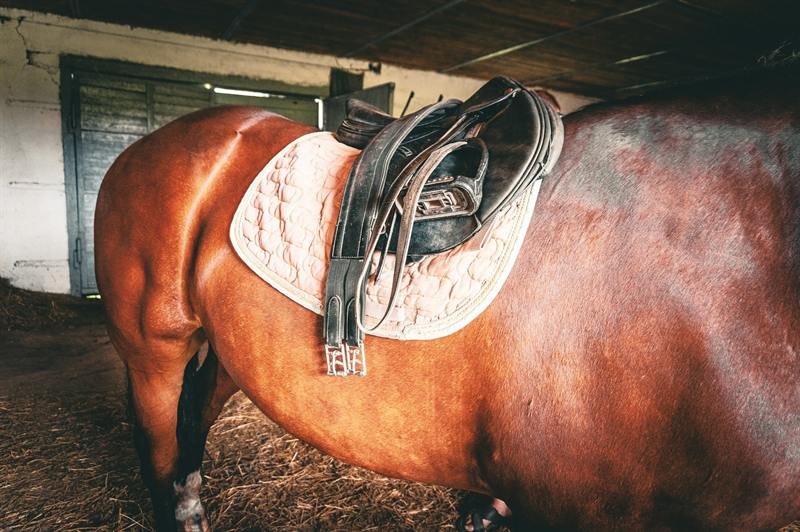
A saddle fitter checks how a saddle sits on your horse’s back, both standing and moving, and whether it suits your riding. They can adjust flocking or panels on suitable saddles, advise on pads and girths, recommend a different saddle or tree shape, and tell you when a problem may need a vet or equine physiotherapist. A poorly fitting saddle can contribute to discomfort, resistance and performance problems, so regular checks are good value. Our guide to saddles explains the parts of a saddle and what good fit looks like.
Qualifications to look for
The Society of Master Saddlers runs a Qualified Saddle Fitter scheme, and its qualified fitters are listed by the society. Qualifying involves training and assessment, and fitters are expected to keep their knowledge up to date. Because the term “saddle fitter” is not legally protected, anyone can use it, so ask whether the person is SMS qualified and, if so, check with the society. Some fitters also trained through apprenticeships, the saddlery trade or manufacturers, and experience with your type of saddle, such as dressage, jumping, general purpose or treeless, is worth asking about.
Be cautious of anyone who sells only one brand, will not discuss alternatives, or tells you every problem needs a new saddle. A good fitter will say when adjustment, re-flocking or a different panel will do, or when the problem is not the saddle at all.
How to find a qualified saddle fitter
- Ask for recommendations: instructors, vets, physiotherapists and other owners often know fitters with a good reputation.
- Check SMS status: confirm the fitter is listed as a Qualified Saddle Fitter.
- Ask how they work: do they visit your yard, ride or lunge the horse and offer trial saddles?
- Be wary of pressure: a fitter should happily explain options and give you time to decide.
- Make an appointment: allow enough time for the horse to be calm, clean and ready to be assessed.
What a proper fitting involves
- History and goals: your horse’s age, work, any back or behaviour concerns, and your riding plans.
- Static check: the shape of the back, symmetry, muscle development and how the saddle sits unridden.
- Moving check: watching the horse in walk, trot and canter on the lunge or ridden, to see whether the saddle stays stable and clear of the shoulder.
- Rider fit: seat size, balance and whether the saddle puts you in a good position.
- Written advice: recommendations on adjustments, rechecks and how long the fit is likely to last.
Questions to ask a saddle fitter
- Are you SMS qualified, and how long have you been fitting?
- Do you work with all makes, or only certain brands?
- Will you watch my horse move and see me ride in the saddle?
- What does your visit cost, and is it credited against a purchase?
- Can I trial a saddle, and what is your policy on returns?
- Will you give me written notes and tell me when to book the next check?
- Would you work with my vet or physiotherapist if my horse has back problems?
Red flags
- Selling a saddle without seeing your horse move or you ride.
- Claiming one brand or tree suits every horse.
- No explanation of what is being checked or why.
- Pushing a quick sale, high-pressure deals or unrealistic guarantees.
- Dismissing signs of pain or telling you to ignore behaviour changes instead of involving a vet.
How often to check your saddle fit
Horses change shape with age, fitness, season and weight, so most saddles need checking at least once a year, and more often for young, growing or changing horses. Re-check after significant weight loss or gain, a lay-off, or if your horse begins resisting, bucking or showing back soreness. Persistent signs of pain should also be discussed with your vet. Fit also depends on your own changes, such as improved balance or a change in the work you do together.
Signs a saddle may not fit
- Uneven sweat or dry patches after riding.
- Sensitivity when grooming, tacking up or girthing.
- White hairs, rubs or muscle wastage behind the withers.
- Reluctance to move forward, bucking, rushing or a change in way of going.
- The saddle slipping to one side or sitting unlevel.
These signs can have other causes, so involve your vet if they persist. The tack care guide also covers keeping your saddle in good condition between fittings.
Typical costs in 2026
| Service | Rough cost in 2026 |
|---|---|
| Routine check or fitting visit | roughly £50–£120 |
| Re-flocking or adjustment | extra, by quote |
| Second-hand saddle | from a few hundred pounds |
| New saddle | a few hundred to several thousand pounds |
Costs depend on region, distance travelled and the work needed. Ask whether the visit fee is credited against a purchase and whether trials are available.
Preparing for your appointment
A little preparation helps the fitter do a thorough job. Have your horse clean, dry and calm, and arrange a flat, firm area plus an enclosed space or arena where the horse can be seen moving. Bring the saddles, girths, numnahs and pads you normally use, because the fitter needs to see the whole set-up. Tell them about any history of back pain, injury, behaviour change, weight change or recent veterinary treatment, and mention any plans to step up your work or change discipline.
Be ready to ride, or to have someone lunge, and wear the footwear and clothing you normally ride in. Ask questions as the fitter works, and ask them to show you what they see, such as how the saddle sits level, the clearance over the withers and spine, and whether it stays stable in motion. Understanding these points makes it easier for you to notice changes between visits.
Afterwards, keep notes of what was done and what was recommended. If a saddle needs adjusting, ask how long the change should last and when you should re-check. If your horse is in pain or has a muscle imbalance, the saddle is only one part of the picture. A vet or an equine physiotherapist, working together with the fitter, gives you the best chance of finding the cause rather than just masking it.
Saddle fitter checklist
- Confirmed SMS Qualified Saddle Fitter status.
- Booked a visit where the horse is seen standing, moving and ridden.
- Asked about costs, trials and returns before the visit.
- Received written notes and a recheck date.
- Booked an annual check, or sooner if your horse changes.
FAQs
Can I fit a saddle myself?
You can learn to spot obvious problems, but a qualified fitter sees things you may miss, such as asymmetry and movement under saddle.
Is a second-hand saddle a good idea?
It can be, provided it is checked on your horse by a qualified fitter before you commit.
How much does saddle fitting cost?
Roughly £50–£120 for a check or fitting visit in 2026, with adjustments and new saddles extra.
How often should a saddle be checked?
At least once a year, and more often for young horses, changing shapes or if behaviour changes.
What if my horse is difficult to fit?
Ask the fitter about adjustable or custom options, and involve your vet or an equine physiotherapist if there is pain or muscle imbalance.
Get your business listed
We're building the UK's most useful directory of saddle fitters. Run a saddle fitting business? List your business for free.
Useful official resources
- Farriers Registration Council Check a farrier is registered.
- RCVS Find a Vet Find a registered equine vet.
- BAEDT Find a qualified equine dental technician.