
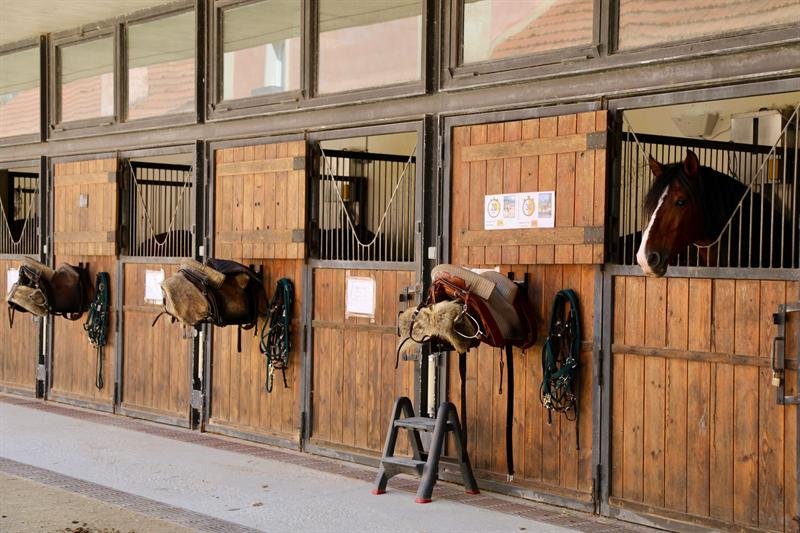
Walk into any UK tack shop and you could spend a month's wages before you have bought a single thing your horse actually needs. This section cuts through that: what is essential, what is nice to have, how to get the size right, and how to look after kit so it lasts. It is written for new owners kitting out a first horse and for experienced riders who want to stop wasting money on things that end up in the back of the tack room.
Explore horse equipment
Start with the essentials, not the catalogue
A horse kept at grass with a competent owner needs surprisingly little. The genuine day-one list is: a well-fitted headcollar and lead rope, a basic grooming kit, a hoof pick, water and feed buckets suited to how you manage the horse, a first aid kit, and rugs only if the horse truly needs them. Everything else, from boots to a fourth numnah, can wait until you know your horse and your routine.
Many new owners over-rug, over-boot and over-supplement. A fit, healthy native with a good coat often needs no rug at all through most of a British winter, and a horse that is rugged unnecessarily can overheat or lose condition awareness. Read our guide to rugging before you commit to a wardrobe of rugs.
How to size equipment properly
Poor fit is the most common reason kit fails, and it is rarely about quality. Take measurements properly and write them down, because you will need them every time you buy.
- Rugs: measure in a straight line from the centre of the chest, along the side of the body, to the point of the buttock (the tail end). UK rugs are sold in feet and inches in 3-inch steps, such as 5'6", 5'9" and 6'0", so round up to the nearest size.
- Headcollars: sized by horse type (pony, cob, full, extra full), but check the noseband sits roughly two fingers below the cheekbone and the throatlash allows a hand's width of space.
- Boots: sized by leg length and circumference, not just horse height. A long-backed cob can need different boots from a leggy Thoroughbred of the same height.
- Bandages and clippers: bandage length and clipper blade size matter more than the label on the pack.
When a size sits between two, consider the horse's growth, weight change over the season and whether he wears layers. Never force a rug on a horse or leave a strap tight against a point of pressure.
Starter kit checklist by priority
| Priority | Items | Notes |
|---|---|---|
| Essential from day one | Headcollar, lead rope, hoof pick, basic brushes, water bucket, first aid kit | Buy safety items new and check the fit properly |
| Needed for most set-ups | Feed bucket, hay net or other forage feeder, muck-out tools, rugs if required | Choose according to how your horse is kept |
| Useful once you know your horse | Boots, bandages, fly protection, sweat sheet | Buy for a reason, such as the work he does |
| Specialist | Clippers, travel kit, show equipment | Consider borrowing or sharing before buying |
Seasonal kit: what changes through the year
Your equipment list changes with the weather. In autumn and winter you may need turnout rugs of different weights, a stable rug, insulated or heated water solutions, extra buckets so one can always be defrosted, and mud-friendly leg care. In spring and summer, the focus shifts to fly masks, fly rugs, lighter cover and shade, and checking that cold-weather rugs are washed and stored properly before they go away. Planning ahead lets you buy off-season, when prices are often lower, rather than in a rush when the first frost or the first midge arrives.
What to look for when buying
- Fit first: measure your horse and check the manufacturer's size chart, because sizes vary between makers.
- Safe design: break points on headcollars, small mesh on hay nets used in a stable and no sharp edges.
- Strong fittings: look at buckles, clips and stitching, as these usually fail before the fabric does.
- Easy care: choose items you can wash or wipe clean quickly, because kit that is a chore to clean will be neglected.
- Returns policy: especially for rugs and boots, where fit is hard to judge until the horse is wearing them.
Materials, safety and false economies
With horses, cheap and cheerful kit can be genuinely risky. A hay net with large holes can trap a hoof, a headcollar without a break point can cause serious injury if a horse panics, and hardware that rusts or bends will fail at the wrong moment. Look for stitched rather than glued construction, solid brass or stainless fittings, and strong yet safe design that fails in a controlled way.
That said, expensive does not always mean better. Mid-range items often perform just as well when properly cared for. Aim to spend more on items that touch the horse for long periods, such as rugs, headcollars and boots, and less on items that are replaceable and low risk, such as muck buckets and brushes.
Looking after your kit
Clean, dry kit lasts years longer than neglected kit. Brush mud off rugs before it dries, wash and reproof turnout rugs once a year, and hang rugs to dry rather than folding them damp. Rinse water buckets daily, scrub feed buckets after each feed, and replace worn straps before they fail rather than after. Anything that holds a horse, such as headcollars, lead ropes and hay net strings, should be checked regularly for fraying and weakened stitching.
Store kit somewhere dry and rodent-proof. Many yards offer a shared tack room, so name everything and keep your first aid kit in a place others can find in an emergency. For leather care and saddlery, see our tack and saddlery section.
Frequently asked questions
What equipment does a new horse owner really need?
At minimum: a fitted headcollar and rope, grooming kit and hoof pick, water and feed buckets, a first aid kit and a hay net or feeding method suited to your set-up. Add rugs, boots and clippers only as the horse's needs become clear.
How much should I spend on a rug?
Prices vary widely and change each season. A mid-range rug that fits properly will usually outperform a pricey one that does not. Prioritise fit, waterproofing and strong fittings over fashion colours.
Do I need to buy new equipment, or is second-hand fine?
Second-hand is fine for buckets, brushes, rugs and many other items if they are clean and undamaged. Be more cautious with safety-critical items such as headcollars, boots with weakened Velcro, and anything that has been repaired many times.
How often should equipment be replaced?
There is no set date. Replace items when they show damage, such as frayed stitching, cracked buckets, weakened fastenings or torn linings, rather than by age alone.
Where do I start if I am on a tight budget?
Buy safety items new and everything else second-hand where possible. Our guide to owning a horse on a budget has more ways to save without cutting corners.
Should I buy a first aid kit before I buy a horse?
Ideally yes. Having a stocked kit on the yard from day one means you are ready for a minor injury, and your vet can tell you what to add. See first aid kits.
Useful official resources
- Society of Master Saddlers Find qualified saddle and bridle fitters.
- BETA The British Equestrian Trade Association.
- British Horse Society: horse care and welfare Care advice for horse owners.