
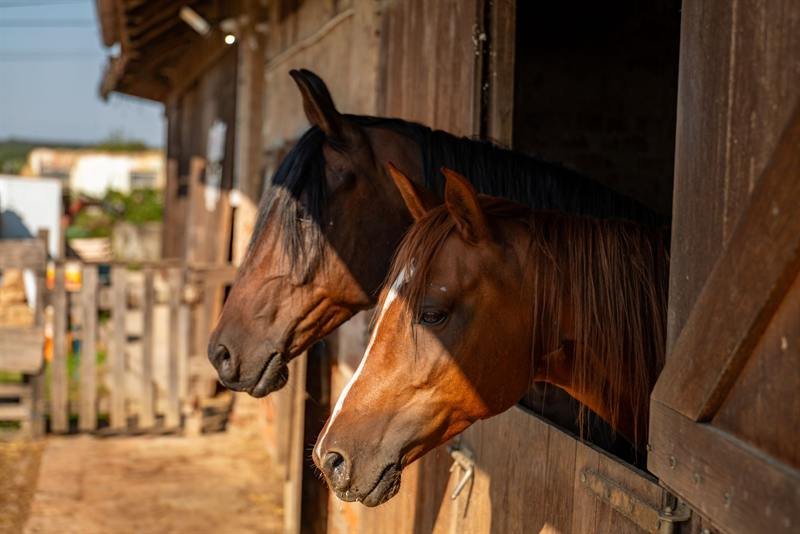
To start a livery yard you need suitable land and buildings, planning permission for commercial use, the right insurance and a clear written contract for every customer. A livery yard earns money by providing stabling, grazing and care for other people’s horses, and its success depends on reliable service and a good reputation.
Choosing your livery model
Decide which service you will offer, because each has different staffing, pricing and risk implications.
- DIY livery: lower income per horse, but less labour. The yard provides stables, turnout and facilities and owners do the daily work.
- Part livery: a mix of owner and yard care, which needs clear rules on who does what and when.
- Full livery: higher fees, but it requires skilled staff, daily routines and cover for holidays and sickness.
- Grass livery: low-cost income if you have suitable land, but with limits on stocking density and winter ground damage.
- Specialist livery: options such as competition, rehabilitation, retirement or youngstock, which need specific skills and facilities.
Our consumer guide to livery options shows how owners compare these, which helps you price and describe yours.
Livery yard business plan
A livery yard business plan turns an idea into numbers. It does not need to be elaborate, but it should answer these questions honestly:
- Who is your customer? Competition riders, leisure owners, retired horses or owners who work full-time all want different things.
- What is the local demand? Look at nearby yards, their prices, waiting lists and vacancies.
- What facilities will you offer? Stables, turnout, an arena, a tack room, hacking and storage, along with the cost of building or maintaining each.
- What are your costs? Land or rent, bedding, forage, water, electricity, insurance, maintenance, manure removal, staff and your own time.
- How many horses do you need to break even, and what happens if you are only half full for six months?
- Who will cover holidays, illness and emergencies?
- What is your exit plan, including how you would wind down or sell?
Talk to an accountant about how to structure the business, how to treat tax and whether business rates apply to your land and buildings.
Livery yard planning permission
Using land or buildings commercially for livery usually needs planning permission, even if you already keep your own horses there. Keeping horses for private use is often treated differently from running a business, so a change to commercial use is the point at which you should speak to the council. Councils look at the effect on traffic, neighbours, drainage and the landscape, and may attach conditions such as limits on numbers, hours of use or lighting. Questions are often raised by:
- New stables, barns and hardstanding.
- Arenas and floodlighting.
- Muck heaps, drainage and run-off to watercourses.
- Extra vehicles, horseboxes and visitors using narrow lanes.
- Residential use, such as a caravan or mobile home for a yard manager.
Speak to your local planning authority early, and consider an agricultural or equestrian planning consultant if your site is complex. Rules differ across England, Scotland, Wales and Northern Ireland. Good design matters too: see our guides to stable design and fencing.
How to run a livery yard well
Good yards are run on routine and communication. The basics are:
- Daily checks: every horse seen at set times, with clean water, appropriate forage and prompt action if something looks wrong.
- Safe turnout and field management: sound fencing, regular rotation and attention to poaching and weeds. See pasture rotation.
- Clear yard rules: covering gates, children, dogs, smoking, visitors, tack rooms, arena use and parking.
- Emergency procedures: fire evacuation plans, vet contact details for every horse, and an accident book.
- Regular communication: a group message or noticeboard for updates, fee reminders and news.
- Fair handling of disputes, calmly and in writing.
Staffing is often the hardest part. If you take on staff, think about training, holiday cover, fair pay and your obligations as an employer.
Livery contract and responsibilities
A written livery contract is the most important protection for both sides. It should cover:
- Fees, services and payment dates, including what happens if fees are late or unpaid.
- Notice periods for the owner and for the yard, and what happens if rules are broken.
- Who does what: turnout, rugging, feeding, mucking out and care of sick horses.
- Vet, farrier and emergency arrangements, and who pays and who authorises treatment.
- Insurance requirements: whether owners must have their own horse insurance and third-party liability cover.
- Rule changes, and how you will tell people.
- Liability: what you accept responsibility for, and what remains with the owner. Take legal advice on wording that is enforceable.
- Termination and removal, including what happens to a horse left on the yard.
You have a legal duty of care for animals you are responsible for under the Animal Welfare Act 2006, with equivalents in Scotland and Northern Ireland. Our guide to horse ownership and the law gives more background.
Insurance and risk management
You will usually need public liability, buildings and contents, and care, custody and control cover for horses in your charge, plus employers’ liability if you take on staff. Make sure the policy matches what you actually do, including riding, loading and any hire of horses. See our guide to equestrian business insurance for how the main cover types work. Fire safety, secure storage of hay and bedding, clear access for emergency vehicles and good record-keeping all help reduce risk.
Livery pricing and running costs
Look at what other yards in your area charge, then work backwards from your own costs. Livery prices in 2026 vary hugely by region and service, from roughly £100 a month for basic DIY in rural areas to well over £600 for full livery in high-cost regions. Do not undercharge to fill stables, because a full yard that loses money is still losing money. Build in price reviews, so that rises in feed, bedding, labour and energy are passed on fairly and with notice.
| Livery type | Typical workload for the yard | Pricing consideration |
|---|---|---|
| Grass | Low: field checks and water | Limited by acreage and winter ground |
| DIY | Low to moderate: facilities and maintenance | Price for stable, grazing and facilities |
| Part | Moderate: set daily tasks | Price each service clearly |
| Full | High: daily care, staff and cover | Must cover labour, forage and skill |
FAQs
Do I need planning permission to start a livery yard?
Usually yes, if you are using land or buildings commercially. Speak to your local planning authority before you take on liveries or build anything.
Do I need a licence to run a livery yard?
Livery alone generally does not need a riding establishment licence, but if you also hire out horses or teach on yours, you may. Check with your local council.
How many horses can I keep per acre?
There is no single figure, because it depends on soil, drainage, season and management. Many guides suggest allowing generous space per horse, and a planning condition may set a limit.
Who is liable if a horse is injured?
It depends on the cause, the contract and your insurance. Clear agreements and cover reduce disputes, and legal advice helps with the wording.
How much does it cost to start a livery yard?
It depends on whether you already own suitable land and buildings. Costs include planning, stables, fencing, water, manure storage, insurance, equipment and working capital.
What happens if a livery owner stops paying?
Your contract should explain notice, interest or charges and what you can do. Take legal advice before taking action over a horse, because animals are protected by welfare law and property rules.
Useful official resources
- The British Horse Society Approved centres, coaching and qualifications.
- ABRS The Association of British Riding Schools.
- British Grooms Association Employment guidance for grooms and employers.
Listings coming soon
We’re building the UK’s most useful directory of livery yards. Run a livery yard? Get in touch to be listed.