
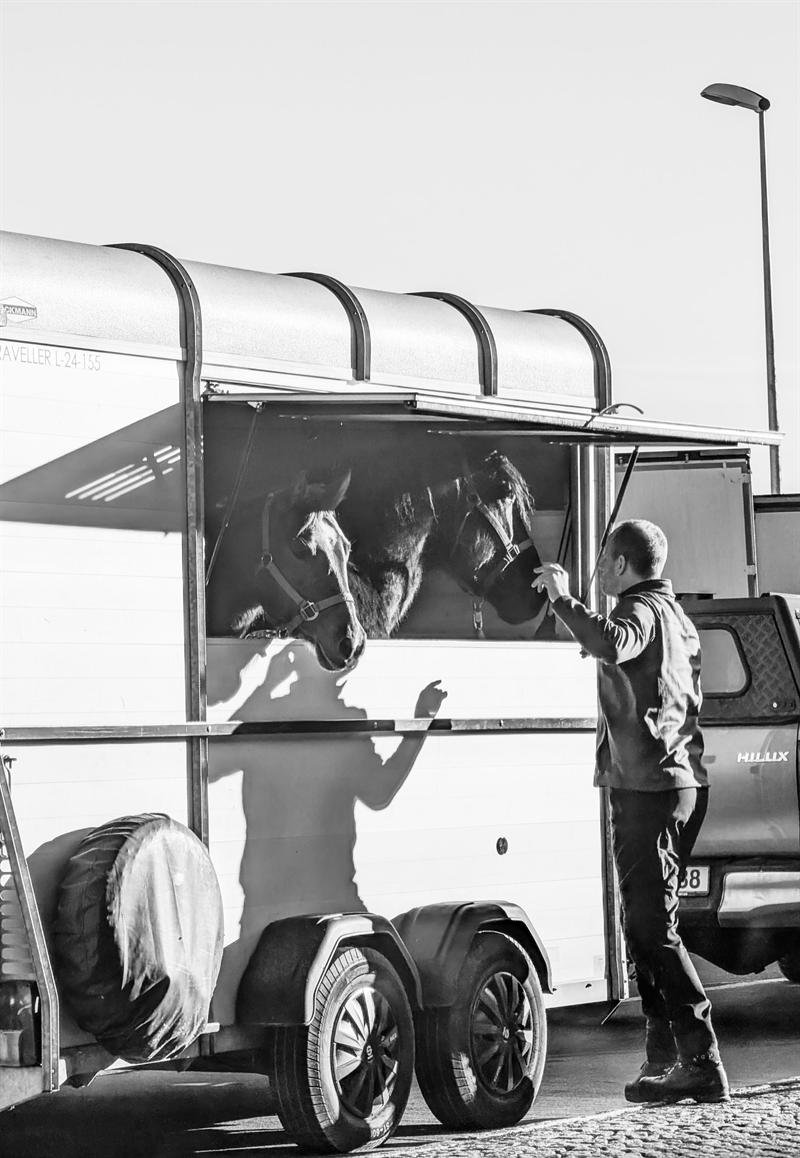
How to load a horse starts with teaching, not pushing: a horse that loads calmly is a horse that has been taught to, and the best time to teach it is long before you need to travel. Practise little and often with a well-ventilated, secure trailer or lorry, keep the mood relaxed and never chase or force a horse into a box.
Why a horse won't load
Horses are claustrophobic, flight-driven animals, and a dark, enclosed, wobbling space can seem like a trap. If your horse refuses to load, the reason is rarely stubbornness. Common causes include:
- a previous bad experience, such as a rough journey or being rushed or hit while loading
- a steep, slippery or noisy ramp, or a dark, narrow interior
- a nervous or impatient handler, or time pressure
- a lack of training, or never being asked to load until the day it mattered
- pain: a sore back, hock or stifle can make stepping up or standing in a moving box uncomfortable
- unfamiliar surroundings, other horses or excitement away from home
Pain or fear is not naughtiness, so shouting or smacking will make things worse. If a normally good loader suddenly refuses, ask your vet to check him. See veterinary advice.
Preparation before you start
- Check the vehicle: a sound floor, working ramp or breeching bars, good ventilation and a well-maintained, roadworthy trailer or lorry. Light, airy and roomy vehicles are far easier to load into.
- Park safely: on level ground, in an enclosed space, with the trailer or lorry secured, the tow vehicle in park with the handbrake on, and the ramp non-slip.
- Make it inviting: open the front doors, windows and ramp so it is bright and airy, add a clean non-slip floor and a haynet.
- Equip the horse: a well-fitting headcollar with a long, soft lead rope, and consider leg protection; see horse boots.
- Equip yourself: a hat, gloves and sturdy boots. Wear a hat to a current standard, such as PAS 015 or VG1 01.040, when handling a nervous horse.
- Be ready: have a calm, experienced helper, and start when you have plenty of time and no deadline.
How to load a horse: step by step
- Make sure the groundwork is in place: your horse should lead, stop, back up and respond to light pressure; see groundwork. If he does not lead nicely along a path, he will not load.
- Approach the ramp: let him look and sniff, and reward any calm step forward by stopping and releasing the pressure.
- Ask one foot at a time: allow him to put a front foot on the ramp, then pause. Increase gradually, always letting him stop and think.
- Walk on and stand: once he is in, stand quietly, give a scratch and a hay reward, then walk off calmly.
- Repeat in short sessions: over several days, then add the ramp up, or the breeching bar or partition, for a few seconds at first.
- Add the journey: a very short drive, then back home to a calm unload and a reward. See trailer training.
Never stand behind the horse, and never tie him up until the partition is secure and he is calmly standing. Use a quick-release knot, tied to a string loop. Always use a helper for ramps and breeching bars, and stand clear of the ramp as it moves. If loading always fails, a qualified trainer can help; see problem horses.
Horse loading problems and what to do
| Problem | Possible cause | What to try |
|---|---|---|
| Stops at the bottom of the ramp | Fear of the ramp surface or the dark inside | Open all doors, add light, walk him up in small steps, reward calm |
| Rushes in and panics | Anxiety, a short space or earlier bad experience | Slow right down, practise standing, feed small meals inside |
| Rears or backs off | Pain, claustrophobia or handler pressure | Stop, go back a stage, ask a vet to rule out pain, seek professional help |
| Loads at home but not at shows | Excitement and unfamiliar surroundings | Practise at other locations, allow extra time, bring a calm companion |
| Will not walk past the partition | Narrow space or dark corner | Open the partition fully, remove obstacles, load with a travelling companion |
The most important rule is to keep your own energy calm and steady. Horses read handler tension. If you feel yourself becoming frustrated, stop, walk him round quietly, and end on a good note, even if it is only a step forward. If there is a real emergency need to travel and the horse is panicking, call your vet, who may advise on safe options. Do not use sedatives without veterinary advice.
Safety: for you and your horse
Loading injuries happen quickly, so plan for the worst. Keep your feet clear, never wrap the lead rope around your hand, and never stand in a position where you can be crushed between the horse and the vehicle. Use the tie-up point only once the horse is fully in and the partition is secure. Avoid using lunge lines or ropes behind the quarters, which can injure both horse and handler, and consider whether the trailer or lorry suits your horse's size. Hard hats, gloves and strong boots protect you; our riding safety guide covers general kit.
Law, welfare and travel
You must make sure a horse is fit to travel and that he is transported in a way that does not cause injury or unnecessary suffering. In practice that means a suitable, well-maintained vehicle with adequate space, headroom and ventilation, safe flooring, planned breaks and journeys that avoid stress. Rules are stricter for commercial journeys, and the Welfare of Animals (Transport) rules and DEFRA guidance apply, so read the current guidance if you transport horses for hire or reward. Keep the horse's passport with him while travelling; see horse passports and microchipping. If you are using a professional, see horse transport.
FAQs
How long does it take to teach a horse to load?
It varies enormously. Some horses learn in a few short sessions, while a frightened horse can take weeks. Short, calm, regular practice works better than one long attempt.
My horse won't load. Should I use a lunge line behind his rump?
It is a controversial method and can be dangerous for the handlers. Calm, patient training with an experienced helper is safer and more lasting.
My horse loads at home but not at shows. Why?
Excitement and unfamiliar surroundings. Practise at different locations, and allow extra time.
Should I feed him in the trailer?
Yes, small feeds or hay inside help build a positive association. Keep it relaxed and do not rush to close the ramp.
Is it better to use a trailer or a lorry?
Both can work. Some horses prefer the roomier feel of a lorry, but training works in either. Choose what suits your horse and your driving experience.
Should I get a professional to help?
If you have tried calm training and the horse remains scared, or you are unsure of your own safety, a qualified trainer can help, as they will use gentle, reward-based methods.
Useful official resources
- The British Horse Society Training, coaching and qualifications.
- World Horse Welfare: advice Handling and welfare guidance.