
Beginner horse riding is easier to start than most people think: you can begin at almost any age, and you do not need your own horse or expensive kit. Book a lesson at a reputable UK riding school, wear a correctly fitted hat and boots with a heel, and expect to spend your first sessions learning to balance, steer and stop at walk.
How to start horse riding for beginners: step by step
- Find a riding school. Look for an approved, well-run school with qualified instructors, tidy yards and horses that look content. See riding schools and how riding schools work.
- Ring or visit first. Say you are a complete beginner, give your height, weight and any health conditions, and ask what to wear and how long the lesson lasts.
- Book a trial lesson. Many schools offer a first lesson, often private or in a small group, so you can see whether you enjoy it.
- Build a routine. Weekly lessons give much faster progress than occasional ones.
- Add to your kit gradually. Start with a hat, boots and suitable trousers, then add gloves and a body protector if advised.
What happens in your first riding lesson
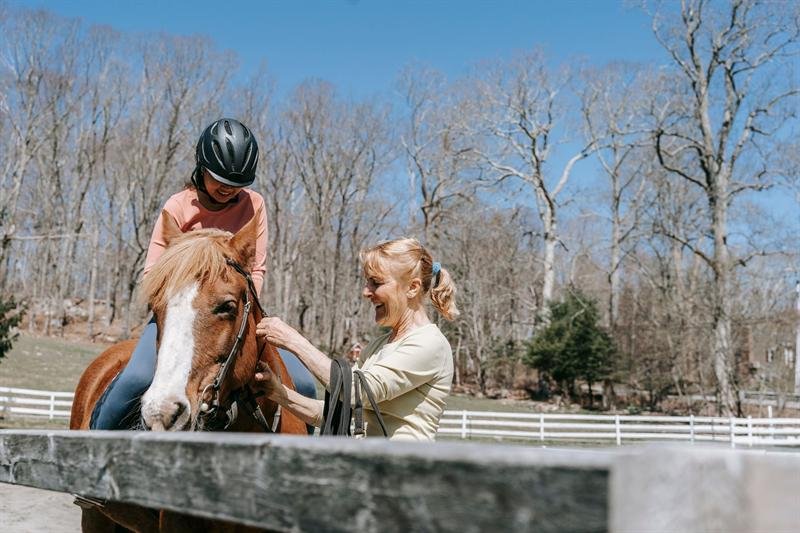
A good school will match you to a calm, experienced horse and begin on the ground. Expect to learn how to approach a horse, how to hold the reins, how to mount (usually from a block), and how to adjust your stirrups. Early lessons are often on a lead rein or in a small enclosed arena, which lets you concentrate on your seat rather than steering.
By lesson three or four, most people are walking and steering independently, halting on request and starting to trot. Rising trot, where you stand and sit in rhythm with the horse's diagonal, is the first real challenge, and almost everybody finds it awkward at first. It clicks, usually quite suddenly. Our guides to riding position and horse control explain what your instructor is working on.
What to wear horse riding
- Riding hat: must meet a current standard and fit snugly. Schools often lend hats, but a properly fitted one of your own is worth having. See riding safety.
- Boots: a smooth sole and a small heel, so your foot cannot slide through the stirrup. Jodhpur boots or short riding boots are fine. Trainers and walking boots with deep treads are not.
- Trousers: comfortable and stretchy, without thick inner seams. Jodhpurs or riding tights are ideal, but leggings can do for a first try.
- Top: fitted layers rather than flapping jackets; add a body protector if your school recommends one.
- Gloves: useful for grip and to avoid rein burn.
- Hair and jewellery: tie long hair back and leave dangly jewellery at home.
How long does it take to learn to ride a horse?
There is no single answer. You can be safe and enjoying walk and trot within a few weeks of weekly lessons, but riding well, with a secure seat and independent hands, takes years, and even experienced riders keep learning. The table below is a rough guide only.
| Stage | Typical focus |
|---|---|
| First few lessons | Mounting, balance, steering and stopping at walk |
| First couple of months | Rising trot, school figures, keeping a steady contact |
| Three to six months | Sitting trot, first canter, riding without stirrups briefly |
| Six months onwards | Poles, small jumps, a first hack, better feel |
Weekly lessons produce much quicker progress than one a month, and different riders pick up different skills at different speeds. Do not compare yourself with others: children often seem fearless, while adults tend to think more, and both approaches work.
Adult beginner riding
Adult beginners are very common, and many people learn in their thirties, forties, fifties and beyond. Adults often need a little longer to relax into the movement and tend to worry more about falling, but they also listen well and understand why an exercise matters. Choose a school that is used to adults, ask for private lessons or small adult groups at first, and tell your instructor about any injuries, joint problems or health conditions. If you are returning after a long break, say so: you may progress faster than a true beginner, but a gentle restart is wise.
Building confidence and fitness
Nerves are normal and nothing to be ashamed of. Tell your instructor how you feel; a good one will adjust the exercise rather than push you. Ask for a horse that suits you, and do not be afraid to say no to a new exercise until you are ready.
Riding uses muscles you may not know you have, particularly the inner thighs and core. Gentle stretching and walking help, and the ideas in rider fitness will speed things up.
Choosing the right lessons
Group lessons are cheaper and sociable, and they teach you to ride in company, but you get less individual attention. Private lessons cost more but let the instructor tailor every minute to you, which suits nervous riders, adults and anyone with a particular challenge. Many people start with a few private lessons, then move to a small group. Look for instructors who are qualified and insured, explain things clearly, praise progress and pay attention to safety. Our riding lessons guide covers what to ask a school.
It also helps to think about what you want from riding. If you hope to hack in the countryside, look for a school that offers escorted rides and teaches road safety; if you are drawn to competition, ask about dressage, jumping or Pony Club links. A good school will help you set sensible goals.
Staying safe around horses
- Always wear your hat and boots when handling or riding, and never walk behind a horse without letting it know where you are.
- Follow staff instructions and keep gates closed.
- Do not feed treats unless the yard says you may.
- Tell staff straight away if something feels wrong, if you lose a stirrup or if you feel unwell.
FAQs
How much do beginner lessons cost?
Group lessons often cost roughly £25–£45 and private lessons roughly £40–£70 an hour in 2026, varying widely by region and facilities. Ask about block-booking discounts.
Am I too heavy or too old to ride?
Probably not. Reputable schools have horses of different sizes and weight-carrying abilities, and will be honest with you if a horse is not suitable. Tell them your height and weight when you book.
Do I need to be fit first?
No, though you will get fitter as you ride. Tell the school about any injuries or health conditions beforehand.
Do I need to buy any kit before my first lesson?
Not necessarily. Many schools lend hats, but you will need suitable boots and comfortable trousers.
How often should a beginner have lessons?
Once a week is a good start. Two a week speeds progress if you have the time and budget.
Is horse riding safe for beginners?
Riding carries some risk, as horses are large and unpredictable animals, but a good school, a correct hat and sensible supervision reduce it considerably.
Useful official resources
- The Highway Code: rules for horse riders (gov.uk) Rules 47 to 58 for riding and leading horses on the road.
- The British Horse Society Riding, safety and access advice.
- British Riding Clubs Training and competition for adult riders.