
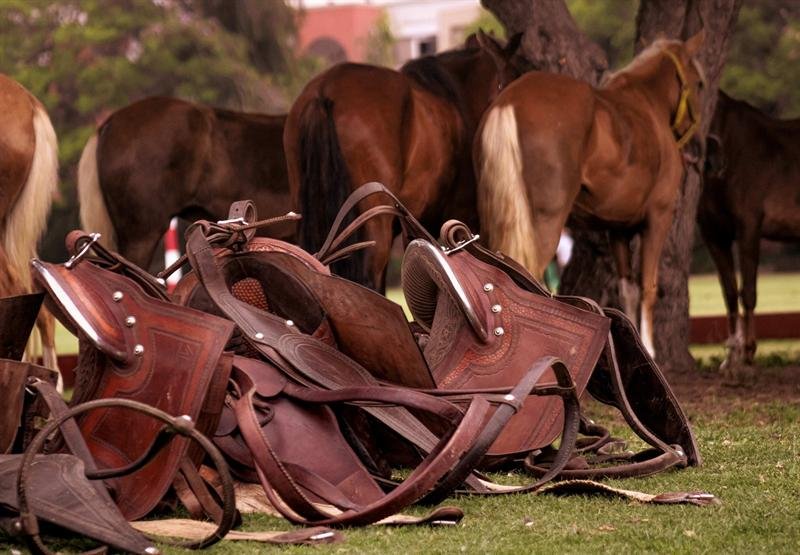
Tack is the interface between you and your horse, so fit and condition matter far more than fashion or price. This section explains every major piece of saddlery, from the saddle that carries your weight to the girth that holds it on, with practical advice on fitting, buying and looking after leather. It is written for riders who want comfortable horses, safe kit and money well spent.
Explore tack and saddlery
Saddle fit comes first
A saddle that does not fit can cause back pain, resistance, uneven movement and behaviour that looks like naughtiness. It is also the item most often bought wrongly. A horse's back changes with age, fitness, season and workload, so a saddle that fitted last spring may not fit this one. Have your saddle checked at least once a year, and sooner if your horse changes shape or you notice problems.
In the UK, look for a fitter qualified through a recognised body such as the Society of Master Saddlers, and ask what qualification they hold. A good fitter checks the saddle on the horse standing and moving, and with you in it. Our guide to becoming a saddle fitter explains the training, and the saddle fitter directory is on its way.
Getting the measurements right
Most tack comes in standard sizes. Always measure rather than guess, and note down the numbers.
- Saddles: seat size is measured in inches, from the nail head by the pommel to the centre of the cantle. Riders usually sit in a seat between 16 and 18 inches, but the horse's back decides the tree and gullet width.
- Girths: measured in inches (or centimetres for some dressage styles) from the point of the billet on one side to the other, running around the horse's belly.
- Bridles: sold in pony, cob, full and extra full. Compare brow band, noseband and cheekpiece lengths for your horse.
- Bits: measured as the width of the mouthpiece in inches; an average full-sized horse often wears around 5 to 5.5 inches.
- Stirrups: choose irons with roughly 1 cm clearance each side of your boot at its widest part.
Quality versus price
Saddlery is a place where good-quality leather and skilled stitching pay off. Cheap synthetic or poorly finished leather can crack, stretch or fail when you need it most. That said, price does not guarantee fit: a mid-priced saddle properly fitted will serve a horse better than a costly one that does not suit his back. Consider second-hand saddles, which are widely traded in the UK, but have a fitter check any saddle before you buy and ride in it.
For regular items such as girths, pads and reins, mid-range products are generally sensible. Keep your best budget for the saddle and bridle, and check our cost of owning a horse guide for planning.
Care and safety checks
Tack takes a beating from sweat, mud and wear. Wipe down leather after each ride, give it a proper clean regularly and inspect stitching, billets and stirrup leathers for wear. Stitching failure on a girth strap or stirrup leather can cause a serious fall. See tack care and leather care for a routine you can follow, and riding safety for wider precautions.
What every rider needs, and what is optional
A basic set of tack is simple, and extras are only worth buying if they solve a real problem. Use this as a guide when you are setting up or checking your kit.
| Item | Essential? | Notes |
|---|---|---|
| Saddle | Yes | Fitted to the horse and the rider by a qualified fitter |
| Girth | Yes | Correct length, with no sore spots or rubs |
| Stirrups and leathers | Yes | Check wear and use safety designs where suitable |
| Bridle and bit | Usually | Fit the horse; ask a professional if you are unsure about mouthpieces |
| Reins | Yes | Choose a grip and length you can hold comfortably |
| Saddle pad | Optional | Does not correct a poorly fitting saddle |
| Martingale or breastplate | Optional | Useful for some horses; check competition rules |
What to look for when buying
Whether new or second-hand, use this checklist before you part with money.
- Measure your horse and yourself, and compare against the maker's sizing, not just the label.
- Check stitching, billets, buckles and welds on stirrups for wear, splits or rust.
- Look at the leather: it should be supple, not cracked or hard, and free from mould.
- Choose materials you can clean and look after easily.
- Ask about returns, especially if you cannot try the item on your horse first.
- Spend more on the items that affect the horse's comfort and your safety, and less on decoration.
Signs that tack does not fit
Horses seldom complain about discomfort in a way that is easy to miss, but the clues are there. Look for dry patches or uneven sweat marks under the saddle, white hairs appearing, rubs or hair loss, swelling after work, or a girth sore. A horse who pins his ears when tacked up, dips away from the saddle, bucks, rushes or hollows his back may be telling you something hurts. Mouth problems may show as head tossing, tongue lolling or leaning on the bit.
Planning your tack budget
Think in terms of cost per year of use rather than the price on the label. A well-made bridle can last for many years with proper care, while a poor saddle can cost far more in vet, physio and refitting bills. Build your kit gradually, put the money into fit and safety first, and check items regularly for wear. Prices vary by maker, materials and region, and second-hand sales can be a good way to save if you inspect carefully.
Frequently asked questions
How often should I clean my tack?
Wipe down bits and leather after every ride, and give it a full clean regularly, depending on how muddy and sweaty it gets. See tack care.
How do I know if a bridle fits?
It should sit evenly without pinching the ears or rubbing, with the noseband and cheekpieces adjusted so there is no pressure on the face. See bridles.
How often should a saddle be checked?
At least once a year, and whenever your horse changes weight, fitness or shape, or if you notice behaviour changes under saddle.
Can I fit a saddle myself?
You can learn to spot obvious problems, but a qualified saddle fitter is the best option for a proper assessment, especially for a new saddle.
What is the difference between a numnah and a saddle cloth?
A numnah is shaped to fit under the saddle and sits against the horse, while a saddle cloth is usually a flat, square or shaped fabric covering. See saddle pads.
Is second-hand tack safe?
Yes, if it is in good condition and inspected carefully. Check stitching, leather and fittings before you buy, and have a saddle fitted to your horse.
Do I need a martingale or breastplate?
Not for every horse. They can help in jumping or when a saddle slips, but they do not cure underlying problems. Competition rules also apply. See competition rules.
Useful official resources
- BETA The British Equestrian Trade Association.