
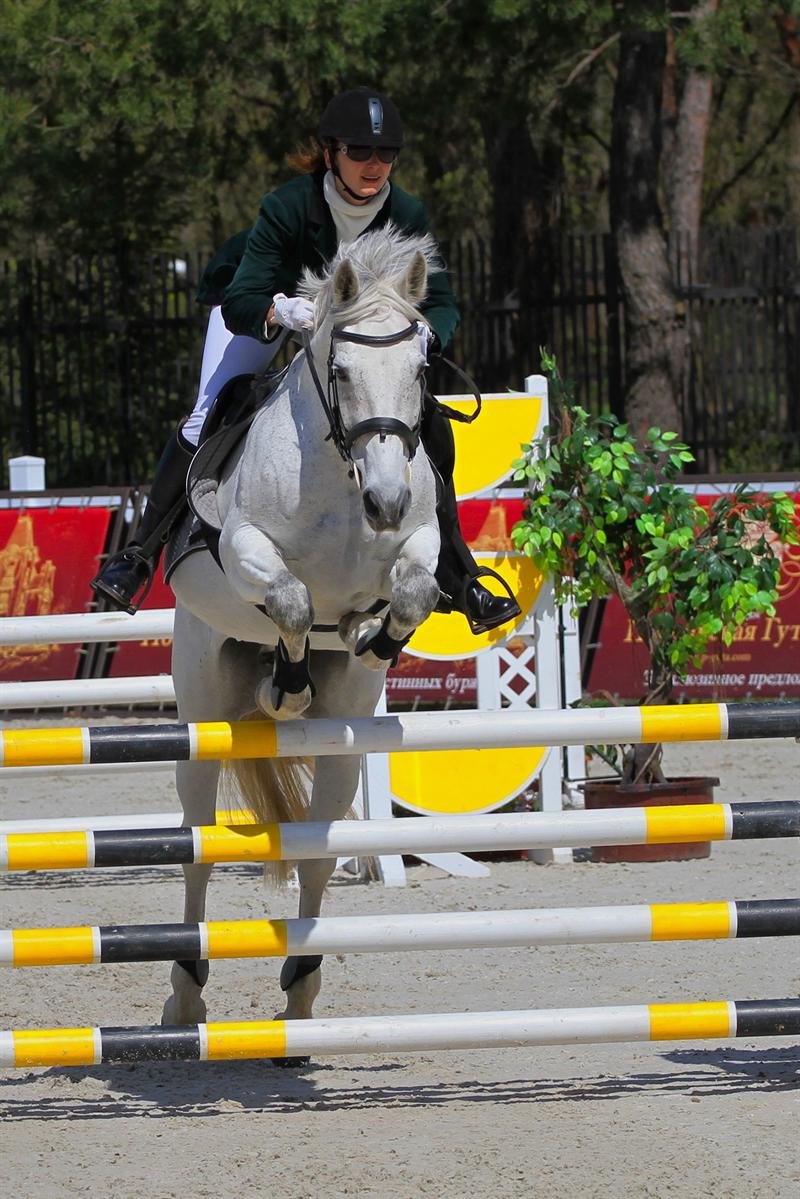
The Irish Sport Horse is a registered sport horse type, traditionally an Irish Draught cross Thoroughbred. It combines bone, scope and a sensible head with enough blood to compete, which is why it is a firm favourite for eventing, hunting and showjumping.
| At a glance | |
|---|---|
| Height | 15.2 to 17.2 hands |
| Typical weight | Roughly 500 to 650 kg |
| Temperament | Bold, intelligent, generous, often sensible |
| Common colours | Bay, brown, grey, chestnut, black |
| Best for | Eventing, showjumping, hunting, riding horse classes, amateur riders |
| Origin | Ireland |
What is an Irish Sport Horse?
An Irish Sport Horse is a sport horse registered in the Irish Sport Horse studbook, normally bred from the Irish Draught and the Thoroughbred, though other approved sport breeds can feature in the pedigree. It is not a pure breed in the way an Arabian is. It is a type, defined by registration, breeding and performance. The aim is a horse with the Draught's bone, sense and jumping ability, plus the Thoroughbred's speed, courage and quality.
Typical Irish Sport Horses stand between about 15.2 and 17.2 hands, with a strong frame, good bone, powerful quarters and an athletic, free-moving build. Colour varies widely.
Irish Draught cross Thoroughbred: what the blend means
The Irish Draught cross Thoroughbred is the classic recipe, but the proportions matter. The more Thoroughbred blood, the more speed, refinement and sensitivity you can expect, and often a finer, taller horse. A higher Draught content tends to bring more bone, substance and a calmer outlook, but possibly less natural gallop and rideability.
- Half-bred: often the best balance of sense and ability, and popular with amateur riders.
- Three-quarter Thoroughbred: sharper and more athletic, better suited to experienced riders and top-level competition.
- Heavier types: sturdy hunters and riding horses, often more placid.
These are general tendencies, not guarantees. Individual temperament and training matter more than percentages.
History and the Irish Sport Horse studbook
The Irish Draught was the all-purpose farm horse of Ireland, strong enough for work and bold enough to jump a bank. Crossed with Thoroughbreds, it produced horses with substance and athleticism. The Irish Sport Horse studbook is administered through Horse Sport Ireland, and in the UK there are active societies and many dealers and breeders working with Irish horses. Some top-level competition horses have been Irish-bred.
When considering the Irish Sport Horse studbook, ask what registration the horse actually has and what that means. A horse described as "Irish" is not necessarily a registered Irish Sport Horse, so ask for documents, not just a description. Studbook status can matter for breeding, classes and resale.
Irish Sport Horse temperament
The best Irish Sport Horses have a famously kind, level nature combined with courage and stamina. The proportion of Thoroughbred blood affects how hot or placid they are: a three-quarter-bred is typically sharper than a half-bred. They respond well to fair, consistent riding and are often described as honest. Many are bold jumpers that will try hard for a confident rider but can lose heart if over-faced or poorly ridden.
Irish horses are sometimes imported young and green, so check how much handling, travel and schooling the horse has actually had before buying.
Irish Sport Horse eventing and other uses
Irish Sport Horse eventing is where the type has built much of its reputation. Scope and stamina over fences, a bold cross-country attitude and a sensible approach to dressage and showjumping make these horses popular at all levels from riding club to international. For more about the sport see eventing and cross-country.
- Eventing at all levels, where scope and stamina count.
- Showjumping.
- Hunting and cross-country.
- Working hunter and riding horse showing.
- Dressage, particularly for sturdier types.
- General riding for competent amateurs.
Health considerations
Generally sound and robust, but heavier-boned types can suffer from arthritis and tendon injuries if over-jumped young. Some are prone to being overweight if not worked, and skin or leg issues may occur on feathered types. As with all sport horses, early over-work causes problems later, so build fitness gradually and monitor limb health. Ask a vet to check feet, hocks and back carefully at vetting.
Care guide
Most Irish Sport Horses are practical to keep, living out with sensible rugging and decent forage, although fitter competition horses need more feed. Balance work and rest, protect legs with appropriate boots, and consider proper hoof care and regular saddle checks. Many mature slowly, so allow time before serious competing.
- Base feeding on good forage and add hard feed according to workload and condition.
- Build fitness gradually before the season, and rest after hard events.
- Keep up routine vaccinations, dental checks and worm management.
- Check saddle and tack fit regularly as the horse changes shape with fitness.
Irish Sport Horse for sale: buying guide
Look for registration papers, passport and a clear pedigree, and be cautious about the label "Irish" alone, as it does not guarantee quality or breeding. See the horse jumped and ridden by its current rider, then by yours. Choose a horse that suits your level, not your ambition, and have a full vetting. Prices vary greatly with age, ability, breeding and region, and a proven competition horse costs far more than an unbroken youngster. See horse prices.
- Decide your discipline and the level you realistically ride at.
- Ask for studbook papers, passport and microchip details, and check they match the horse.
- Ask about its history, previous injuries, travel and any time spent in Ireland.
- Watch it ridden on flat and over fences, then try it yourself.
- Have it vetted and arrange insurance before you pay.
Bringing on a young Irish Sport Horse
Many buyers are drawn to young horses because of the price and potential, but a four-year-old Irish Sport Horse can be a big commitment. Allow time for the horse to grow and strengthen before asking for serious work, keep early training varied and short, and avoid repeated jumping while the body is still developing. Good groundwork, steady hacking and plenty of turnout build a calm, confident partner. If you are not an experienced producer, consider paying for regular lessons or a trusted trainer. See young horses and backing for more on this stage.
FAQs
Is an Irish Sport Horse the same as an Irish Draught?
No. The Irish Draught is a distinct heavier breed; the Irish Sport Horse is typically a cross with Thoroughbred or other sport blood.
Are they good for amateurs?
Many are, particularly the more sensible half-bred types, but individual temperament matters most.
Are Irish Sport Horses good at eventing?
Yes. Their stamina, jumping ability and sense have made them popular event horses from riding club level upwards.
How tall is an Irish Sport Horse?
Typically between about 15.2 and 17.2 hands, depending on breeding.
What is the Irish Sport Horse studbook?
It is the register of Irish Sport Horses, administered through Horse Sport Ireland. Registration records breeding and can matter for classes and resale.
Do Irish Sport Horses make good first horses?
A sensible, well-schooled one can, but bold, athletic types may be too much for a novice. Choose on temperament and training.
Useful official resources
- The British Horse Society Owning and caring for horses of every type.
- World Horse Welfare Rehoming and welfare charity.