
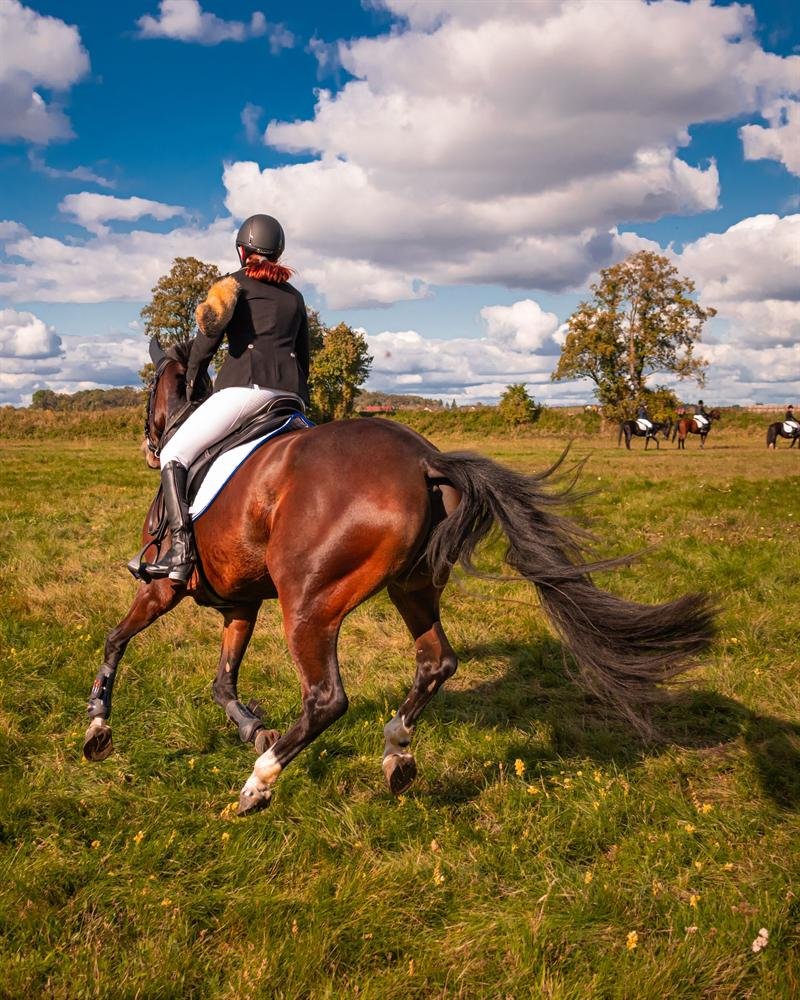
Endurance riding is long-distance riding where the horse's fitness, soundness and recovery matter as much as speed. In the UK, endurance riding is run under Endurance GB, with distances from short introductory rides up to long competitive races, and your horse is vetted throughout to make sure he is fit to continue.
What is endurance riding?
Endurance is a test of partnership, planning and stamina. Rides follow marked routes across varied countryside, often on bridleways, tracks and open land. Unlike many disciplines, the aim is not simply to be quickest: the horse must also pass veterinary checks to qualify. That makes it as much about horse welfare and good horsemanship as about riding.
It suits riders who love hacking and being out in the countryside, and who enjoy the training side of working steadily towards a goal. If you already enjoy long hacks, endurance is a natural next step.
How an endurance ride works
A ride is divided into loops. At the end of each loop the horse goes to a vet gate, where his heart rate must drop to a set level within a time limit. A vet then checks him for soundness and metabolic health, and he is trotted up in hand. If he does not pass, he cannot continue. The aim is to complete safely, so finishing is an achievement in itself.
| Stage | What happens |
|---|---|
| Pre-ride vet check | The horse is checked and trotted up before he starts |
| Loops | The route is split into sections ridden at your own planned pace |
| Vet gate | Heart rate must drop within a time limit, then a vet checks soundness and wellbeing |
| Hold | A compulsory rest period where the horse can drink, eat and recover |
| Final check | A last inspection to confirm the horse is sound and well |
Rules, speeds, age requirements and pulse criteria differ by class and change over time, so check the current Endurance GB rulebook before entering.
How to start endurance riding
- Check your horse is suitable and sound. A vet check before you begin a fitness plan is sensible; see veterinary advice.
- Join the governing body and read the rules. Membership and horse registration requirements apply for affiliated rides.
- Build a base of steady hacking. Several weeks of regular, controlled work before any faster training.
- Enter a short introductory ride. Choose a gentle distance and treat it as a learning day rather than a race.
- Go with an experienced friend. You will learn how vet gates work without pressure to compete.
- Review and plan. Afterwards, check legs, back and weight, note what went well and build up gradually.
Endurance horse fitness
Endurance fitness is built slowly over months. A typical programme is based on long, steady work at walk and trot, gradually increasing distance before speed, with hills for strength. Tendons, ligaments and bone adapt more slowly than the heart and lungs, so a horse can feel fit before his legs are ready. Rushing is the most common mistake.
- Increase distance gradually and allow regular rest days; avoid big jumps in workload.
- Use a heart-rate monitor to learn how quickly your horse recovers after effort.
- Check legs, back and feet every day, and make sure shoeing or hoof care is spot on (see hoof care).
- Practise trotting up in hand on a firm, level surface so the vet gate feels familiar.
- Vary routes and terrain so the horse stays mentally fresh.
Rider fitness matters as well: a balanced, strong rider is easier for the horse to carry over many miles. See rider fitness.
Pacing, feeding and water
Many novices set off too fast. Settle into a steady rhythm, ride the terrain (walk up steep hills, trot on the flat, take downhill carefully) and use your horse's heart rate and breathing as a guide. Consider getting off and running beside him on long descents or tiring sections to give his back a break.
Offer water at every opportunity, including streams on the route, because a horse that drinks well recovers better. Use electrolytes only in line with veterinary advice; see electrolytes. Plenty of forage helps keep the gut working, and many horses in endurance work need adjusted feeding; ask your vet or an equine nutritionist for tailored advice.
Tack and kit
Comfort over long distances is crucial. A well-fitted saddle is the single most important item: check it regularly, because muscles change as fitness develops; see saddles. Many riders choose lightweight, comfortable tack, a sponge and scraper to cool the horse, spare shoes or hoof boots and a map. You will also need a hat, hi-vis if there is any road work and a phone in a secure pocket. Pack a small first aid kit too.
Endurance riding in the UK: finding rides and what to expect
Endurance riding in the UK is run by volunteers and organisers across the country, with rides held on private land, forestry tracks and open countryside from spring to autumn. Introductory rides are short and often friendly, with a mix of experienced riders and newcomers, and they are a good place to ask questions. Ride days tend to be long, so expect early starts, a lot of waiting around at vet gates and a strong community spirit among competitors and helpers.
Before entering, read the schedule carefully: it explains start times, distances, ground conditions, vetting arrangements and what to bring. Allow time to arrive, settle your horse and walk him round before the pre-ride vet check. Plan how you will get your horse home and remember that he needs a proper cool-down, food and water afterwards. See horse transport if you need help travelling.
After the ride: recovery
Recovery is part of training. After a ride, check your horse over for heat, swelling, rubs and sore spots, offer small amounts of water often and let him graze or eat forage. Give him an easy few days before the next hard session, and trot him up on a firm surface to check that he is sound. A horse that is still tired, off his food or stiff after a few days needs a vet; do not assume he will just bounce back. Keep a simple diary of distances, pulse readings and how he felt, as it helps you plan your next steps.
FAQs
Which horses are best for endurance?
Arabians and part-breds are common, but many sound, fit horses of different breeds complete rides. Good conformation, efficient movement and a sensible attitude matter most.
Can I do endurance on a hack-fit horse?
For short introductory rides, yes, with careful preparation. Longer distances need a proper fitness programme.
How long does it take to get a horse fit for endurance?
It depends on the horse and the distance, but expect months rather than weeks for anything beyond introductory rides. Build slowly and let legs adapt.
What is a vet gate?
It is a checkpoint where your horse's heart rate must fall to a set level within a time limit and a vet checks him before he can continue.
Is endurance riding bad for horses?
Done sensibly, with gradual fitness, good pacing and veterinary checks, it can be a healthy discipline. Pushing an unfit or unsound horse is where problems arise.
How much does it cost to start?
Costs vary by region and ride: think membership, entry fees, travel and kit. Check current fees with the organisers and budget for transport and shoeing.
Useful official resources
- The Highway Code: rules for horse riders (gov.uk) Rules 47 to 58 for riding and leading horses on the road.
- The British Horse Society Riding, safety and access advice.
- British Riding Clubs Training and competition for adult riders.