
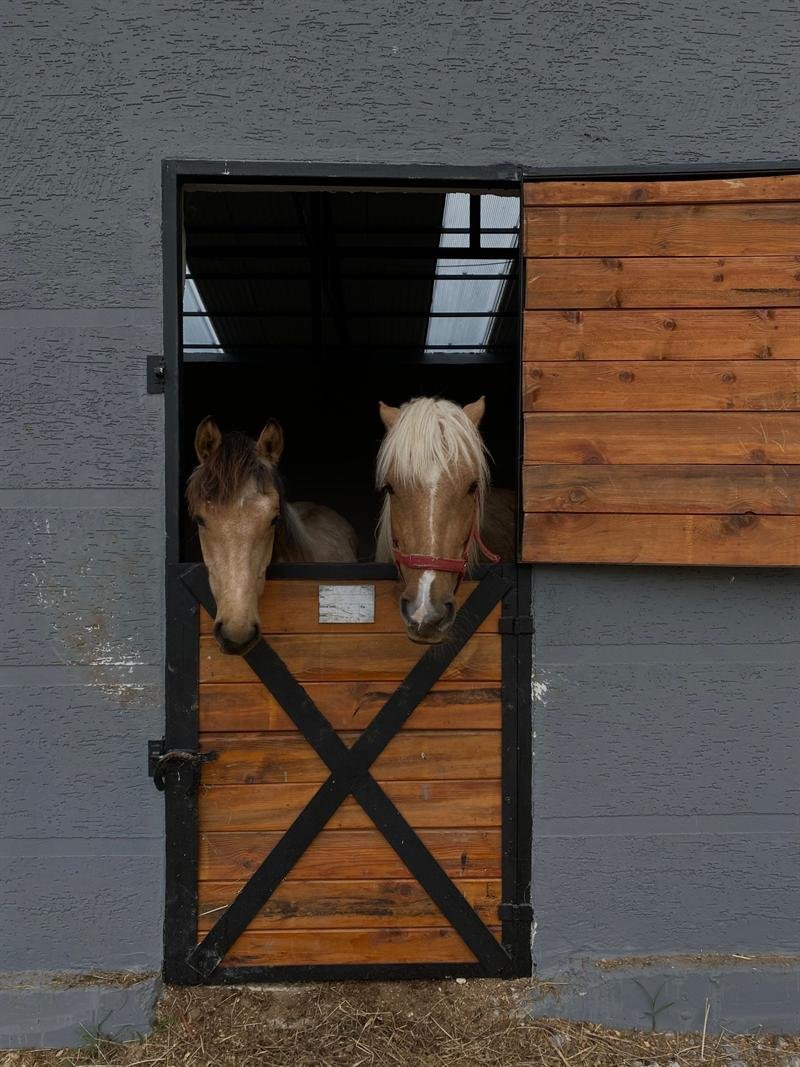
Stable ventilation means a steady flow of fresh air through the stable, without a draught blowing directly on the horse. Horses cope with cold far better than with stale, damp, ammonia-laden air, and good horse stable ventilation protects the lungs from dust, mould and ammonia, which matters hugely for any horse prone to coughing or allergies.
Why stable air quality matters
A stabled horse breathes in whatever is in the air: dust from bedding and forage, fungal spores, ammonia from urine and moisture from its own breath. Poor airflow leads to irritation of the airways and is a recognised factor in inflammatory airway disease and recurrent airway obstruction (heaves). Signs include a cough, nasal discharge, reduced performance or laboured breathing. See respiratory problems.
Horses are also built for moving air. They have large lungs, they are comfortable at much lower temperatures than people, and they produce plenty of heat from digesting forage. A stable that feels warm and cosy to you may be stuffy, damp and dusty to the horse. The aim is fresh air without strong draughts at body level, not a warm room.
How to ventilate a stable
Warm air rises. The principle behind good stable ventilation is simple: let fresh air in low or at the side, and let warm, stale air escape through the roof or high openings, a design known as the “stack effect”. Here are the most practical ways to improve airflow.
- Keep the top door open whenever the weather allows. In most conditions, even cold, wind-free ones, an open top door is better than a closed one, with the horse rugged as needed.
- Ridge vents and roof outlets: an opening at the highest point lets warm, damp air out. Roof turbines or ridge gaps are the usual fixes for older yards.
- Windows and louvres: provide opening vents along the back wall, ideally above the horse's head height to avoid draughts at body level.
- Eaves gaps and space boards: gaps between boards allow air through, but should be protected from rain and driving wind.
- Barn design: in an American-style or internal barn, high ceilings and ridge ventilation are essential, and doors at both ends should be closed carefully.
- Keep air paths clear: do not block vents with hay, rugs or stored equipment, and keep cobwebs and dust off louvres.
If you are building or converting, plan ventilation at the design stage; see stable design. A competent builder or equine specialist can advise on vent sizes and positions for your layout.
Draughts versus ventilation
A draught is a fast, narrow stream of air that hits the horse, while ventilation is a gentle exchange of air through the whole space. The fix for a draught is usually to move or direct the opening, not to close it. High vents, solid lower walls and an open top door facing away from the prevailing wind usually give good airflow without chilling the horse.
| Feature | Good ventilation | Draught or poor air |
|---|---|---|
| Air movement | Gentle, fresh feel; air changes without strong flow on the horse | Fast stream across the horse, or stagnant air |
| Smell | Neutral, slightly earthy | Sharp ammonia, musty or sour smell |
| Walls and roof | Dry; little condensation | Damp walls, drips, mould or cobwebs full of dust |
| Horse | Relaxed, normal breathing, no coughing | Coughing, nasal discharge, tension or shivering in a draught |
Is your stable too damp or dusty?
- Walk into the stable first thing in the morning. A sharp smell of ammonia at nose height means poor air quality or wet bedding.
- Check for condensation on walls and roofs and for mould or cobwebs full of dust.
- Check for draughts at horse height using your hand or a tissue, especially near doors and windows.
- Look at the bedding and forage. Mouldy hay, dusty straw and damp bales all put spores into the air.
- Listen to your horse. A persistent cough, especially at feeding or when you first go in, is a reason to review the environment and call a vet.
Management helps as much as building changes. Remove wet bedding daily, damp down dusty hay or steam it, keep hay stores out of the stable and avoid sweeping while horses are in. See bedding for low-dust options, and stable hygiene for the daily routine. Horses with respiratory problems are often better off living out where possible, or in a well-ventilated barn with low-dust bedding and soaked or steamed forage.
Dust, spores and what makes air worse
Ventilation is only half the story. The cleaner the air you start with, the less your horse has to cope with. The biggest sources of dust and spores in a stable are usually the forage and the bedding, and both are within your control.
- Hay: soaking or steaming reduces the dust and spores a horse breathes in. Haylage is lower in dust but should still be fresh and mould-free.
- Bedding: straw can be dusty and carry fungal spores; low-dust shavings, paper or hemp may suit sensitive horses better. Whichever you choose, shake out and remove wet and dusty patches daily.
- Muck heap and hay barn: keep them away from the stable air intakes, so smells and spores are not drawn in.
- Cleaning habits: avoid sweeping and mucking out with the horse in the stable, or wet the floor lightly first. A horse that must stay in while you work is breathing the dust you raise.
- Neighbouring stables: a dusty horse next door can affect yours when airspace is shared.
If a horse already has a respiratory problem, ventilation and low-dust management are part of the treatment, together with advice from your vet. Time at grass, when possible, is often beneficial, because fresh air and open space are hard to match.
Ventilation through the seasons
- Winter: resist the urge to shut everything. Rug appropriately, provide forage to generate warmth and keep the top door open if the weather allows. See winter care.
- Summer: keep openings clear and open doors on both sides if there is a safe, secure option, as heat and flies build up in still air. Fly screens or fly masks can help.
- Wet or windy days: use sheltered vents, partial closing of the exposed door or a stable guard rather than shutting the horse in.
- Night-time: horses spend many hours resting, so check air quality at night as well as in the morning.
Frequently asked questions
How do I ventilate a stable?
Let fresh air in through openings at the side or low down, and let stale, warm air out through high vents or the roof. Keep the top door open when you can, and avoid draughts at horse height.
Should I shut the stable up in winter?
Generally not. Horses tolerate cold well, and a good rug or extra forage is a better answer than closing out the air.
How do I stop draughts without losing ventilation?
Position openings so air flows over, not at, the horse, such as high vents, with a solid lower half to the walls.
What causes a damp stable?
Wet bedding, horse breath, poor drainage, leaks and poor airflow. Remove wet bedding daily, fix leaks and increase air exchange at roof level.
What about horses in a barn with shared airspace?
Take extra care to keep the barn clear of dust, and consider high ridge ventilation. One dusty horse affects every horse in the building.
Can poor ventilation cause coughing?
Yes, dust, mould and ammonia can irritate the airways. See your vet to find out the cause and review bedding, forage and airflow.
Useful official resources
- Code of Practice for the Welfare of Horses (gov.uk) Legal standards for shelter, space and care.
- Ragwort code of practice (gov.uk) How to control ragwort on your land.
- British Horse Society: horse care and welfare Yard and grazing advice.