
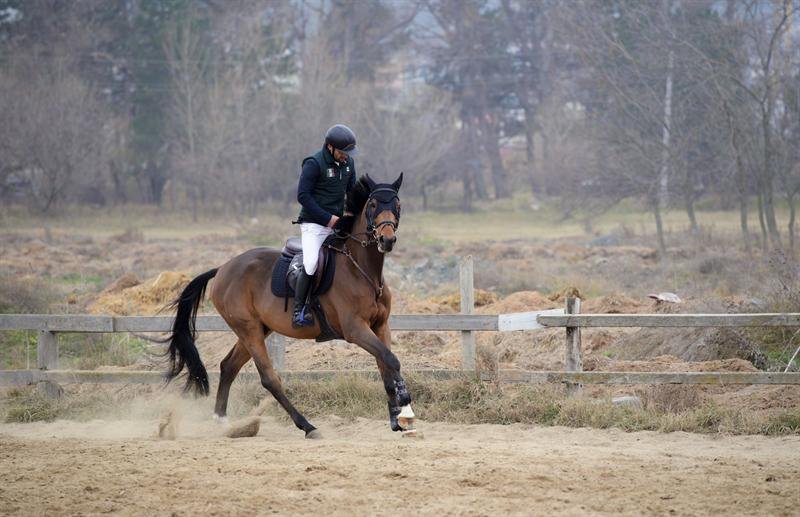
The training scale for a horse is the framework most trainers use to school a horse: rhythm, suppleness, contact, impulsion, straightness and collection. Schooling is the long-term process of developing balance, strength and understanding so he carries a rider easily; for rider exercises and school figures, see schooling for riders.
What is the training scale?
The training scale, used in dressage and general schooling, is a progression in which each step supports the next. It is not a rigid ladder: in practice you keep revisiting earlier steps, and a good session often moves up and down it. It is sometimes taught as the six points of rhythm, suppleness, contact, impulsion, straightness and collection, and in some systems the first three are grouped as the stage of familiarisation, with the later ones developing power and carrying.
It matters because it gives you a logical way to judge what your horse is ready for, and what to fix when something goes wrong. A horse who is not relaxed or regular cannot find true impulsion, however hard you push.
Rhythm, suppleness, contact, impulsion, straightness and collection explained
| Step | What it means | What you will notice |
|---|---|---|
| Rhythm | Regular, even steps and a steady tempo in each gait | A clear, even beat without rushing or dragging |
| Suppleness | Looseness through the back and body, free from tension | Swinging back, blowing out, a relaxed expression |
| Contact | A steady, elastic connection with the rider's hand through acceptance of the bit | Stable head carriage, chewing softly, no leaning or fighting |
| Impulsion | Energy from the hindquarters, with active hind legs | More push and spring without more speed |
| Straightness | Hind feet following the forefeet, with even use of both sides | Balance on both reins, less crookedness |
| Collection | Carrying more weight behind, lightening the forehand | Shorter, higher steps, with more balance and lightness |
Do not skip stages. Pushing for a "frame" before the horse is relaxed and rhythmical usually produces tension, short steps and a horse who learns to resist.
How to school a horse: a balanced session
- Warm up on a long rein: walk for several minutes, then trot, letting him stretch and loosen the back.
- Establish rhythm and suppleness: circles, large figures and transitions on both reins.
- Develop the contact: ask for a soft, steady connection without holding him in place; reward him for softening.
- Work on one new thing: such as bend, a lengthened trot or a better halt, in small, achievable steps.
- Add impulsion and straightness: using transitions, changes of rein and school figures, always keeping the rhythm.
- Reward and rest: short walk breaks, and finish on a good moment.
- Cool down: walk on a long rein until he is dry and settled.
Variation matters. Mix schooling with hacking, pole work and hills so the horse stays fit, motivated and mentally fresh. Too much repetition on the flat can sour a horse. A few schooling sessions a week, rather than daily drilling, suits most horses, though your instructor can advise on your own horse.
Schooling a horse: common problems and what they tell you
| What you see | Which step to revisit | Ideas |
|---|---|---|
| Rushing or irregular steps | Rhythm | Slow down, use circles and transitions, check balance and tension |
| Hollow, stiff back, tense expression | Suppleness | Long and low work, lots of walk, check pain and saddle fit |
| Leaning, resisting or evading the bit | Contact | Check the bit, teeth and your hands; see bits |
| Lazy, flat or hurried strides | Impulsion | Forward-thinking transitions, quality over speed |
| Falling in or out, favouring one rein | Straightness | Work on both reins evenly, use poles and suppling exercises |
Developing a horse's way of going over time
A horse's way of going, the way he moves and carries himself, develops with strength and understanding. Think of it as years rather than weeks. Many amateur horses never need true collection, and that is perfectly fine for hacking, pleasure riding and many sports. A good outline is simply the result of a horse who is relaxed, balanced and working from behind, not a head position pulled into place.
- Build the walk first; it is the gait that shows the most about a horse's way of going.
- Strengthen gradually with hill work, pole work and varied terrain.
- Check fitness and soundness regularly; weak or tired horses cannot hold good form.
- Take lessons, and film yourself, so you can see what is really happening.
Planning your schooling week
A simple weekly plan keeps the horse fit, interested and sound. The example below is only a guide; adjust it to your horse's age, fitness and job, and ask your instructor to help you tailor it.
| Day | Suggested work |
|---|---|
| Day 1 | Flatwork focused on rhythm and suppleness, with plenty of transitions |
| Day 2 | Hack, ideally including some gentle hills |
| Day 3 | Pole work or small grids to improve balance and strength |
| Day 4 | Rest day, with turnout |
| Day 5 | Flatwork focused on one new skill, such as bend or lengthening |
| Day 6 | Relaxed hack or lunging in a long, low outline |
| Day 7 | Rest or a short, easy walk |
The key is balance: hard days followed by easy days, and always at least one full day off. Watch for signs of tiredness, such as shortened strides, stiffness or reluctance, and adjust the plan rather than pushing on.
Age, fitness and soundness
A young horse needs lots of walk, short trots and plenty of variety; see young horses. Muscles and joints take time to develop, so progress slowly. A horse that has been off work needs a gradual return to fitness, and an older horse may need shorter sessions and more warm-up time. If a horse is resistant, hollow or uneven, rule out pain first: teeth, back, feet and saddle fit are common culprits. See lameness and veterinary advice.
Schooling can also be done in hand, on the lunge or in long reins, which suits horses who are green, recovering or not yet strong enough for a rider; see lunging and long-reining. If a horse becomes dangerous, rearing, bucking or bolting during schooling, stop and ask a qualified instructor or behaviourist for help; see problem horses.
FAQs
What is the training scale in dressage?
It is the sequence of rhythm, suppleness, contact, impulsion, straightness and collection, used to build a horse's balance and strength in a logical order.
Does every horse need to go in a "frame"?
No. A good outline is the result of training, with the horse relaxed, balanced and working from behind, not a head position pulled into place.
How long until my horse is collected?
Collection is a result of years of strengthening. Most horses are never asked for true collection, and that is fine for hacking or many amateur uses.
Is schooling just for dressage?
No. The same principles help jumpers, eventers, hacks and family horses to move more easily and stay sounder.
How often should I school my horse?
A few sessions a week mixed with hacking and other work suits most horses. Daily drilling can lead to boredom or soreness.
Can I school a horse without a trainer?
You can, but regular lessons help you spot problems early and avoid bad habits. Look for a qualified instructor who focuses on the horse's welfare.
Useful official resources
- The British Horse Society Training, coaching and qualifications.
- World Horse Welfare: advice Handling and welfare guidance.