
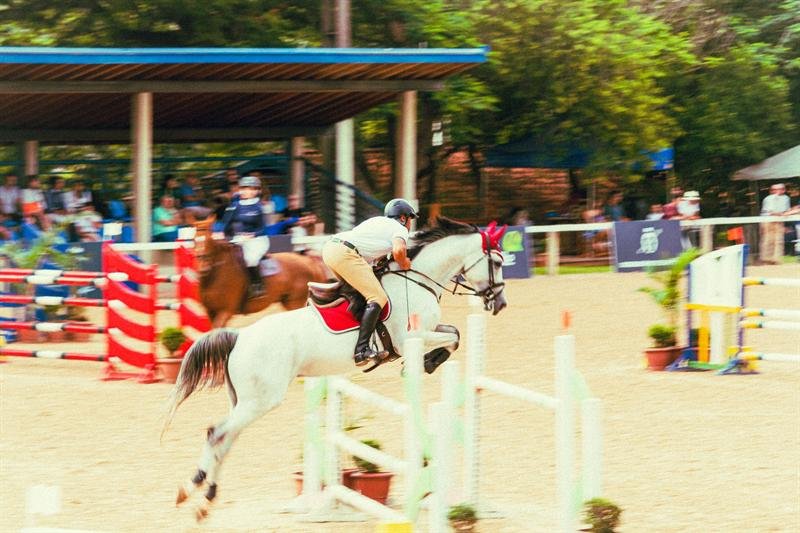
Whether you want a rosette at a village show or a place on a national team, UK competition has a route for you. This section explains the main governing bodies and disciplines, the rules that catch people out, and how to take a first step without overspending or overfacing your horse.
Explore competitions
Choosing a discipline
The best discipline is usually the one that suits your horse's natural talents and your own appetite for risk and preparation. A horse that loves to jump but finds collected work hard may thrive in showjumping or eventing, whereas a sensitive horse that enjoys precision may excel at dressage. A quiet, well-mannered type often shines in showing. If you are undecided, riding clubs let you sample several disciplines in friendly settings.
| Discipline | Main body | What it rewards | Risk level |
|---|---|---|---|
| Dressage | British Dressage | Accuracy, harmony and training | Low |
| Showjumping | British Showjumping | Control, rhythm and bravery | Moderate |
| Eventing | British Eventing | All-round fitness and boldness | Higher |
| Showing | Show societies | Conformation, manners and turnout | Low |
| Club and Pony Club events | BHS, Pony Club | Teamwork and horsemanship | Varies |
Affiliated and unaffiliated competition
Unaffiliated competitions are run independently, usually with lower fees and fewer formalities. Affiliated competitions follow a governing body's rules and require membership and registration, and they are the route to rankings and championships. Neither is "better": most riders start unaffiliated, learn how to prepare, and affiliate when they want to qualify. Always read the schedule to see which rules apply. See competition rules.
Preparing for your first show
- Be honest about readiness. Your horse should load calmly, behave among crowds and perform the class comfortably at home.
- Practise the whole day, including loading, arrival, tacking up and warming up.
- Choose a small, friendly show and enter one class.
- Plan travel and timings, and take a helper if you can. Our loading guide helps if travelling is a worry.
- Afterwards, review what went well and what to work on.
Costs and welfare
Competing costs more than entry fees: membership, transport, tack and training can add up. Budget realistically, and remember that welfare comes first. Rest your horse after competing, check for heat or stiffness, and cancel if your horse is not fit or well. Contact your vet if anything concerns you.
How progression works
Every UK governing body arranges competition in levels, so you can move up as you and your horse gain experience. Dressage runs from introductory tests through to Grand Prix, showjumping uses grades and height classes, and eventing steps up from introductory classes through levels of increasing technical difficulty. Pony Club and riding clubs add team and badge structures. A sensible rule is to move up only when you are placing consistently and your horse is relaxed rather than rushed. Staying a little below your limit for a season is rarely wasted; it builds fitness, confidence and a record you can be proud of. Our guides to British Dressage, British Showjumping and eventing explain the levels in detail.
Is your horse ready to compete?
Readiness is not only about skill. Ask yourself:
- Does my horse load, travel and stand calmly, including when other horses are around?
- Can I warm up, ride the class and cool down without losing control or confidence?
- Is my horse sound, fit enough for the work and free of pain? Check saddle fit, teeth and back health with the appropriate professionals.
- Have I ridden at a venue away from home, perhaps at a training day or clinic?
A horse that spooks, rushes or naps at home is unlikely to improve at a busy show. Work on the basics first with your instructor, and see horse training for ideas.
Competition day checklist
- The night before: check your entry confirmation, start time and venue directions, and plan your journey with spare time.
- Pack passport, membership card if affiliated, number bibs or numbers, tack, spares, first aid kit and water for the horse.
- Pack your own kit too: hat meeting the required standard, correct dress, gloves, boots and a waterproof.
- On arrival, declare and collect your number, walk the course or arena if allowed and find the toilets, water and ring.
- Warm up sensibly, allowing extra time for a nervous horse, and keep to the warm-up area rules.
- After your class, cool your horse down, offer water, check legs and loosen the girth before you pack up.
- At home, check for heat, swelling or stiffness over the following days.
Typical costs to budget for
These are broad guides for 2026 and vary by region, discipline and level, so treat them as prompts for your own budget rather than quotes.
| Item | What to expect |
|---|---|
| Entry fees | Often a modest sum for local classes, rising at higher levels and for cross-country or championship events |
| Membership | Annual fees for affiliated bodies, usually with separate registration for horse and rider |
| Transport | Fuel and trailer or lorry upkeep, or a professional haulier’s charges |
| Training | Lessons and clinics, which improve results far more than expensive kit |
| Kit | Competition clothing, a safe hat and tack that complies with the rules |
Rules that catch people out
Most problems arise from small details. Hats must meet the standard named in the schedule or rulebook and be correctly fitted, and body protectors and hat tags are required in some disciplines. Horses must have a valid passport, and vaccination rules for competition are strict at many events, so check your vaccination record is up to date and keep the passport with you. Tack, bits, nosebands, whips and spurs are regulated, and different disciplines allow different equipment. Medication and feed supplements can break rules on prohibited substances, so ask your vet and the rulebook before giving anything to a horse before competing. Read competition rules well before your first entry, and see how marks are awarded in judging.
Starting through clubs and young riders’ organisations
If you would like company and coaching, a riding club or Pony Club branch is often the friendliest way in. They offer training days, team events, social rides and affordable competitions, and members of all ages can learn horse management as well as riding. Parents of younger riders will find the Pony Club and Riding Club guides a good place to begin, along with our young riders section.
Nerves, welfare and sportsmanship
Nerves are normal for riders and horses alike. Breathe, keep your routine simple and focus on one thing to improve each time. Be gracious to judges, stewards and fellow competitors, whatever the result, and remember that volunteers make shows possible. Above all, put the horse first: withdraw if the ground is unsuitable, the weather is dangerous or the horse is not itself.
Frequently asked questions
How do I start competing with my horse?
Begin with a small local show or riding club event, choose a class below your home level and focus on a calm experience rather than winning.
Do I need to join a governing body?
Not for unaffiliated shows. You need membership and registration for affiliated competitions in British Dressage, Showjumping or Eventing.
What hat do I need for competitions?
One that meets a currently accepted safety standard and fits properly. Check the organiser’s schedule or the rulebook for the accepted standards and any required hat tags.
How much does competing cost?
Costs vary widely with discipline, level, distance and how often you compete. Entry fees are only part of the picture, so budget for travel, kit and lessons too.
Can I compete a horse I loan or share?
Often yes, but governing bodies have specific rules about registration and ownership, so check before entering.
Which discipline is best for a beginner?
Many people start with unaffiliated dressage, showjumping or showing classes, or with riding club activities. The best choice is one that suits your horse and that you will enjoy preparing for.
What if my horse behaves badly at a show?
Stay safe, take your horse somewhere quiet, and go home if needed. Repeated problems usually mean more preparation is needed, and a lesson at an away venue can help.
Useful official resources
- British Showjumping Rules, classes and membership.
- British Eventing Levels, rules and entries.