
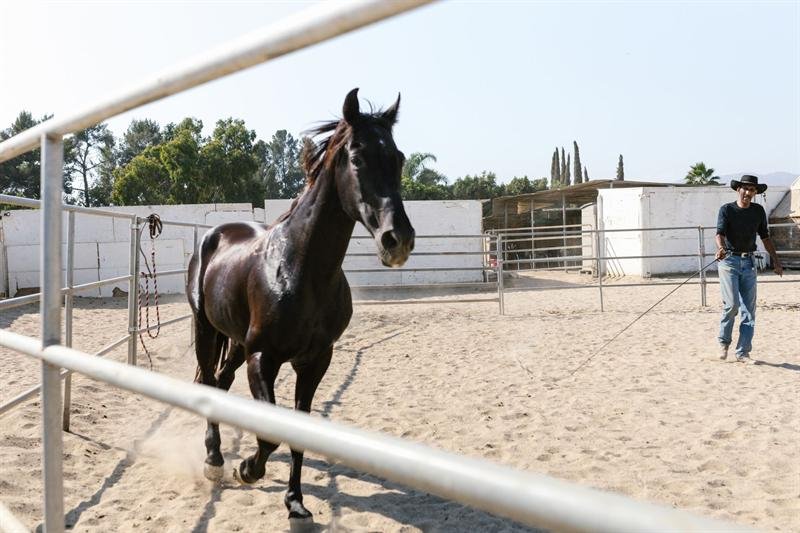
Horse rearing is one of the most dangerous equine behaviours: a horse that goes up can fall backwards onto its rider. It is a sign the horse is in pain, frightened, confused or desperate to escape, and it should be treated as a safety issue. Rule out pain, stop riding the horse if you feel unsafe, and get a qualified trainer or equine behaviourist involved.
Why do horses rear?
A rear is the horse lifting its front legs off the ground, from a small "light up" in front to a full vertical rear. It is rarely a random act of defiance. There is usually a reason, and finding it is the key to dealing with it safely.
- Pain. Mouth, bit, teeth, back, saddle or limb pain can all trigger rearing, especially if the horse is trapped between "go" and "stop".
- Fear. Horses may rear when faced with something frightening they cannot flee from, such as a trailer, a tight space or a strange environment.
- Napping that escalates. A horse that refuses to go forward and is pushed harder may go up as the next step. See napping.
- Conflicting aids. Driving with the legs while restraining with the hands creates a horse with nowhere to go but up.
- Overexcitement. Fit, fresh or insufficiently exercised horses, particularly in company or at competitions.
- Separation distress. Some horses rear when taken away from companions. See separation anxiety.
- Learned behaviour. If rearing has got a horse out of work or out of a situation, it may repeat it.
- Handling errors. Some horses rear in hand when led, loaded or when a handler is inconsistent. See loading a horse.
Rule out pain first
Because pain can be the hidden driver of rearing, a full veterinary work-up is the first step. That means a check of the mouth and teeth, the back and a lameness examination, and a discussion with your vet about whether gastric discomfort, back problems or other conditions may be involved. Have a qualified saddle fitter check the saddle and girth, and check the bridle and bit fit. A horse that rears because something hurts will not be cured by training until the cause is dealt with. See dental care and saddles.
What to do if a horse rears
- Lean forward and release the reins so you do not pull the horse over backwards. Do not grab the reins to hold on; hold the mane or neck strap instead.
- Slide off to the side if the horse is going over, rather than staying in the saddle.
- When the horse is on all fours again, get it moving forward in a circle or to a safe place, rather than stopping dead.
- If you are leading, keep out of the way of the front legs, work on a long enough line, and do not hang on to the head.
- Stay calm, then stop and think about what happened and what came just before it.
Violent corrections, such as hitting the horse between the ears or pulling it over, are dangerous, are not recommended by welfare organisations and can seriously hurt the horse and the rider.
Horse rearing when ridden
Under saddle, rearing often follows resistance such as napping, tension in the mouth or a horse that feels trapped between leg and hand. Warning signs include the horse stopping, tensing, planting its feet, tucking behind or lifting the front end slightly. Pay attention to these. Keep the horse moving forward in a circle, soften the reins, keep your weight balanced and avoid a stand-off. If you cannot do this safely, stop and get help. Hacking or riding alone with a horse that rears is risky, so do not do it.
Horse rearing when led
When led, horses may rear from excitement, fear, loading difficulties or because they have learned that going up makes handlers back off. Use a well-fitting headcollar and a long enough lead rope, wear gloves, hard hat and sturdy boots, and stay out of the strike zone of the front legs, standing beside the shoulder, not in front. Teach good manners and yielding on the ground with groundwork, and seek professional help if the horse is dangerous to handle. See headcollars, lead ropes and groundwork.
How to stop a horse rearing: getting to the root
After pain has been excluded, a qualified trainer or equine behaviourist can analyse what triggers the rear, then build a plan involving groundwork, forward-going and confidence, usually with a gradual return to ridden work. A good professional will explain what they are doing, use humane, evidence-led methods and set realistic goals. This is not a problem for inexperienced riders to tackle alone. Consider honestly whether it is safe to ride the horse at all in the short term. See groundwork, confidence and problem horses.
Safety and decision checklist
| Question | Why it matters |
|---|---|
| Has the vet checked the horse, including mouth, back and limbs? | Pain is a common driver of rearing. |
| Has a qualified saddle fitter checked the saddle and girth? | Poor fit can cause pain and resistance. |
| What happens immediately before the rear? | Triggers such as a gate, a rider aid or a companion leaving point to the cause. |
| Is the rider experienced enough? | An inexperienced rider is at greater risk and may make the problem worse. |
| Is there a qualified professional involved? | Safe retraining needs expert assessment. |
| Is the horse safe to handle and ride in the meantime? | If not, stop ridden work and manage from the ground. |
Equipment and gadgets
Many owners are tempted by martingales, special bits or other gadgets. Equipment cannot fix the cause and can make some horses worse by adding pain or restricting escape. Some pieces of tack can increase the risk of injury if a horse rears. Only use any equipment after advice from a qualified professional who has seen the horse.
FAQs
Why do horses rear?
Common reasons are pain, fear, frustration, conflicting aids, excess energy and learned behaviour. Always rule out pain first with your vet.
Will a horse that rears always do it?
Not necessarily. If the cause is found and fixed, and training is consistent, many horses stop, but it requires skilled help and honest assessment of risk.
What should I do if my horse rears?
Lean forward, release the reins, stay balanced or slide off to the side if the horse goes over, then move the horse forward when it lands. Get professional help afterwards.
Should I sell a horse that rears?
That is a personal decision. Sell only with full disclosure, as the buyer's safety depends on it. See selling a horse.
Are martingales or special bits the answer?
Equipment cannot fix the cause and can make some horses worse. Seek professional advice before adding any gadget.
Is rearing a sign of dominance?
Not usually. It is more often a sign of pain, fear or confusion, so look for the cause rather than trying to dominate the horse.
Useful official resources
- World Horse Welfare: advice Behaviour and welfare guidance.
- RCVS Find a Vet Rule out pain with an equine vet.
- British Horse Society: horse care and welfare Handling and behaviour advice.