
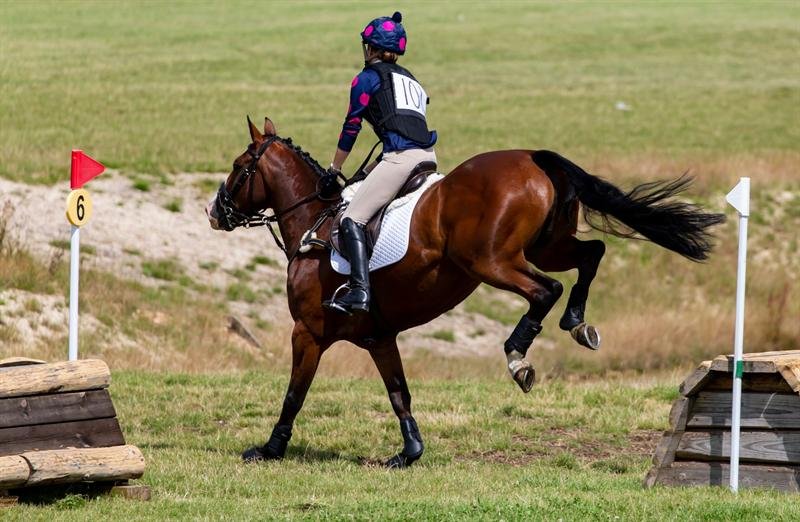
To start eventing, build solid flatwork, jumping and cross-country schooling at small heights, then try an unaffiliated event or hunter trial before moving to British Eventing's lower levels. Eventing combines dressage, show jumping and cross-country in one competition, testing the all-round partnership between horse and rider.
What is eventing?
Eventing is often described as the triathlon of the horse world. A horse and rider complete three tests, usually over one day at lower levels, and the combined score decides the result. It rewards versatility: you need a calm, accurate dressage test, a bold and balanced cross-country round and a careful show jumping round, all on the same horse.
It is demanding but accessible. Many riders begin at unaffiliated one-day events, with fences kept small and welcoming, and gradually work up as horse and rider gain experience.
The three eventing phases
| Phase | What it tests |
|---|---|
| Dressage | Obedience, suppleness and accuracy in a set test |
| Cross-country | Boldness, fitness and judgement over natural fences |
| Show jumping | Carefulness and stamina over a course of coloured fences |
Scoring uses penalties, so the lowest score wins. Dressage marks convert to penalty points, and cross-country and show jumping add penalties for refusals, knockdowns and, in some classes, time. At some events the horse must also pass a veterinary inspection (trot-up). Order of phases and scoring details can differ between organisers, so read the schedule for each event.
Dressage
Tests are set sequences of movements ridden in an arena. Accuracy, rhythm and a relaxed, obedient horse earn the best marks. Good flatwork also makes the other two phases safer; see dressage.
Cross-country
A course of solid fences over natural terrain, ridden at a forward pace. See cross-country for fence types and technique.
Show jumping
A course of coloured, knockdown fences, ridden when the horse may already be tired. It tests rideability and fitness; see show jumping.
British Eventing levels
British Eventing offers a ladder of levels, which typically start with introductory classes and progress through BE80, BE90, BE100, then Novice, Intermediate and Advanced. At the lower levels the number generally refers to the fence height in centimetres. Rules, qualifying requirements, fence dimensions and membership details are updated from time to time, so always check the current British Eventing rulebook. Our guide to eventing competitions covers entry and membership information.
There is no need to rush up the levels. Many riders enjoy the lower levels for years, and it is better to be confident and well within your horse's ability than to be over-faced.
How to start eventing: step by step
- Build your basics. Comfortable flatwork, jumping over small courses and cross-country schooling at small heights.
- Find a trainer. A coach who knows the sport will help you spot gaps and plan your build-up.
- Try a hunter trial, pairs class or unaffiliated event first. A friendly, lower-pressure introduction.
- Get fit. A fit horse has fewer injuries; plan a fitness programme over several weeks.
- Check kit and rules. A safe body protector and hat, correct tack and numbers; see competition rules.
- Learn the courses. Walk cross-country and show jumping with a coach and decide your plan, including where you could take a safer option.
- Plan transport and timing. Arrive early, allow time to warm up and leave plenty of time between phases.
Eventing fitness for horse and rider
Cross-country is the most physically demanding phase, so fitness is crucial. Build it gradually through steady hacking, hill work and interval canters, always checking that legs stay cool and tight. A horse that is not fit is more likely to tire, make mistakes and injure himself. Ask your vet for a pre-season check if you are unsure.
Rider fitness matters just as much: stamina and balance help you stay secure at the end of a cross-country course and effective in the show jumping. Core strength, leg strength and cardiovascular fitness all help. See rider fitness.
What sort of horse suits eventing?
Ideally a sound, brave, athletic horse with a willing attitude, a good gallop and the ability to settle for dressage. Thoroughbred types and sport horses are common, but good native and cob types compete successfully at lower levels. Temperament and soundness matter more than pedigree, and a sensible horse that enjoys the work is a joy.
Costs and planning
Entry fees, travel, membership, lessons, shoeing and kit all add up, and costs vary a lot by region and level. Check venues' entry fees, work out transport costs and budget for regular training and cross-country schooling. A season of lower-level events is far cheaper than higher levels, but it is wise to include a margin for vet and farrier bills.
Safety and horse welfare
Eventing carries inherent risk, so wear a hat to current standards and a body protector at competitions, and use a medical armband. Check the governing body's current rules for the kit required. Withdraw if the going is poor or the horse is not fit, and never ask a horse to jump beyond his experience. Strong flatwork and good horse control make everything safer. See also riding safety.
A simple build-up plan for your first season
Rather than rushing, plan your first season in stages. Early in the year focus on flatwork and grids, and build fitness steadily. Then add cross-country schooling, practising ditches, water and small combinations. Next, enter a few show jumping and dressage competitions to gain experience of the arena, and try a hunter trial or unaffiliated one-day event. Only when your horse feels confident and relaxed should you consider a first affiliated class at the lowest level.
After every outing, review the day honestly: did the horse finish happy and sound, and did you ride the plan? Notes help you spot patterns and decide when to step up or to consolidate.
On the day: what to expect
Arrive in good time, collect your numbers, check your times and walk the courses with your trainer. Allow plenty of time to warm up for dressage, and have a groom or helper if you can. Keep your horse calm, offer water and give him a breather between phases. A well-organised day takes pressure off both of you, and good preparation makes the whole experience far more enjoyable. See horse transport if you need help getting there.
FAQs
What is eventing?
A competition combining dressage, cross-country and show jumping, testing a horse and rider across three different skills.
What are the three phases of eventing?
Dressage, cross-country and show jumping. Penalties from each phase are added together, and the lowest total wins.
Can a beginner start eventing?
Yes, with sensible preparation. Start with small fences, take lessons and try unaffiliated events before affiliated levels.
What sort of horse suits eventing?
A scopey, brave, sound horse with a good attitude. Thoroughbred types and sport horses are common, but good native and cob types compete successfully at lower levels.
How much does eventing cost?
Entries, travel, membership and training all add up, and costs vary a lot by region and level. Check venues' entry fees and budget for lessons and transport.
How fit does my horse need to be?
Fit enough to complete cross-country comfortably and still jump a show jumping round. Build fitness gradually over several weeks with your trainer or vet's advice.
Useful official resources
- The Highway Code: rules for horse riders (gov.uk) Rules 47 to 58 for riding and leading horses on the road.
- The British Horse Society Riding, safety and access advice.
- British Riding Clubs Training and competition for adult riders.