
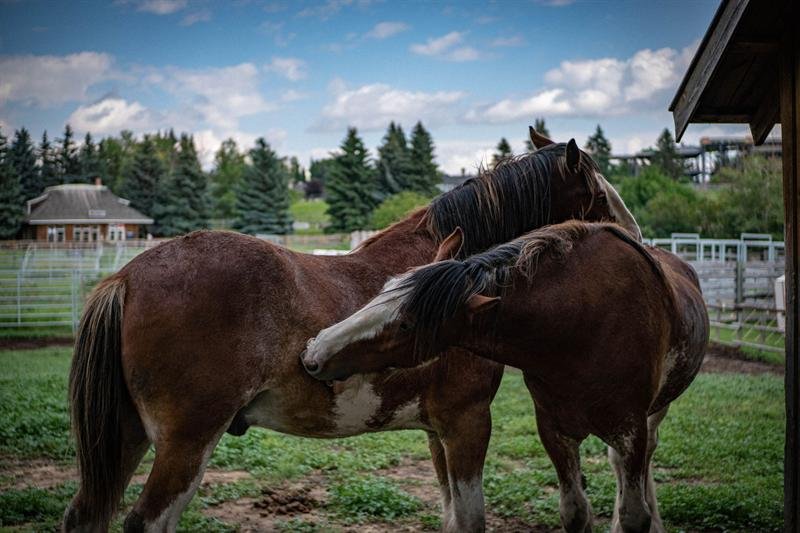
The Clydesdale horse is Scotland's great heavy horse: tall, flashy, high-stepping and famously gentle. It suits owners with space, strength and time for the extra care that feathered legs and a big frame demand.
| At a glance | |
|---|---|
| Height | 16.2 to 18 hands |
| Typical weight | Roughly 700 to 900 kg |
| Temperament | Kind, willing, steady |
| Common colours | Bay, brown, black, roan, often with white face and leg markings |
| Best for | Driving, showing, heavy riders, confident handlers |
| Origin | Lanarkshire, Scotland |
Clydesdale horse size
Clydesdale horse size is impressive but varies. Most stand between about 16.2 and 18 hands, and a mature horse can weigh roughly 700 to 900 kg. Stallions and geldings are often larger than mares. Compared with some other heavy breeds, the Clydesdale tends to be a little more elegant, with a longer neck, cleaner shoulder and more upright, flashy action. The feathering on the lower legs is silky and often white.
Size has practical effects on everything: feed bills, farriery, tack, trailers, stables and handling. A foal can be large and strong from early on, so training starts sooner than owners expect. A large frame also means more stress on joints, so keep weight in check.
History of the breed
The breed takes its name from the Clydesdale district of Lanarkshire, where farmers in the 18th century crossed local mares with imported Flemish stallions. It pulled coal wagons, ploughs and city drays and was exported widely. Mechanisation sharply reduced numbers in the 20th century, and numbers remain small, so check the current status with the breed society.
Clydesdale temperament
Clydesdale temperament is typically calm, patient and affectionate, with a strong wish to please. Size is the issue, not attitude: a young one that leans, barges or fidgets is a lot of horse, so manners must be taught early and kindly. Teach good leading, standing and tying habits before the horse is fully grown. See groundwork.
They are generally slow to mature physically and mentally. Rushing a young Clydesdale into work can cause joint and behavioural problems later, so allow time. Most are very forgiving, but they are still large animals that can cause injury through a careless step or push, so handlers should wear hard hats and sturdy footwear.
What are Clydesdales used for?
- Showing, in-hand and in harness, where the high action is prized.
- Driving and promotional teams.
- Riding for larger riders who want a comfortable, solid mount.
- Light forestry and traditional farm work.
- Crossing with lighter horses to create heavier sport or riding types.
Clydesdale lymphoedema (CPL)
Chronic progressive lymphoedema, usually shortened to CPL, affects feathered heavy breeds and causes progressive swelling and skin thickening in the lower legs. Clydesdale lymphoedema often begins as small skin changes, scabs or thickening around the pasterns, and can progress to deep folds, infection and lameness. It is regarded as a lifelong condition. There is no cure, but early veterinary advice and good management help.
Signs to look for include:
- Thickened, crusty or warm skin on the pasterns or fetlocks.
- Swelling in the lower legs that does not settle with exercise.
- Persistent scabs, cracks or folds under the feather.
- Heavy itching, stamping or rubbing of the legs.
Heavy feather also traps moisture, increasing the risk of mud fever and mite infestation. Joint wear and obesity are further concerns, so keep a close eye on weight.
Clydesdale feather care
Good Clydesdale feather care is largely about keeping legs clean, dry and checked. Run your hands through the feathers daily and look at the skin underneath.
- Pick out feet and look for cracks or heat.
- Brush off dry mud with a soft brush. Avoid rubbing wet mud into the skin.
- Wash only when needed, using a gentle product, and rinse completely.
- Dry legs thoroughly with towels, then check for scabs, swelling or sore patches.
- Keep the horse off deep mud and standing water where you can, and use well-drained turnout.
Some owners clip or trim feather to make skin easier to inspect. Ask your vet first, particularly if CPL is suspected.
Clydesdale care guide
- Feet: large feet need regular trimming by a registered farrier. Book early, because big horses take longer and not every farrier has the equipment. See hoof care.
- Feeding: many are good doers, so base the diet on forage and measure food by condition rather than habit.
- Space: large stables, wide doors, strong fencing and a big trailer or lorry are all needed.
- Tack: expect to buy larger or custom-made items, and keep a close eye on fit.
- Vet care: routine vaccinations, worm management and dental care as for any horse.
Clydesdale horse for sale UK: buying guide
Costs depend on age, training and registration, and vary by region. As a guide, a well-bred, trained Clydesdale is likely to cost more than a general riding horse, though older or unregistered horses may be less. Running costs matter even more than the purchase price.
Look carefully at the legs for swelling, scabs or skin changes, ask about CPL history in the family, and see the horse moved on a hard surface. A vetting is essential. Budget for transport, feed and farriery, which are all larger than for a lighter horse. See also cost of owning a horse.
Checklist before you buy
- Registration papers and passport that match the horse.
- Clean, cool legs with no thickened skin, scabs or odour.
- Good manners to lead, stand, tie and load.
- Suitable stabling, fencing and transport arranged in advance.
- A farrier and vet who are happy to work with heavy horses.
Clydesdale or Shire: which heavy horse?
Many people comparing heavy breeds wonder how the Clydesdale differs from the Shire. Both are gentle, feathered giants, but the Clydesdale usually has a more upright, high-stepping action, a slightly lighter frame and the distinctive white markings on the face and legs. Both breeds are affected by feather and skin problems, so careful leg management matters for each. If you are thinking of riding rather than driving, spend time with both types and let an experienced instructor help you judge comfort, training and tack fit. Do not choose on looks alone: temperament, soundness and the cost of keeping a very large animal should drive the decision.
FAQs
How big is a Clydesdale?
Most stand between about 16.2 and 18 hands and weigh roughly 700 to 900 kg.
Can you ride a Clydesdale?
Yes. Many are ridden, and they can be comfortable for heavier riders, although tack must be made to fit a broad back.
Are Clydesdales bigger than Shires?
They are similar, though Clydesdales are often slightly lighter in build, with more flashy action.
Are Clydesdales good for beginners?
Many are gentle, but their size and strength mean they suit beginners only with proper support and a well-schooled horse.
What is CPL in Clydesdales?
CPL is chronic progressive lymphoedema, a lifelong condition causing swelling and skin thickening in the lower legs of feathered heavy breeds. Ask your vet about management.
How should I look after Clydesdale feathers?
Keep legs clean and dry, check the skin daily, wash only when needed and seek veterinary advice if you find scabs, swelling or heat.
Useful official resources
- The British Horse Society Owning and caring for horses of every type.
- World Horse Welfare Rehoming and welfare charity.