
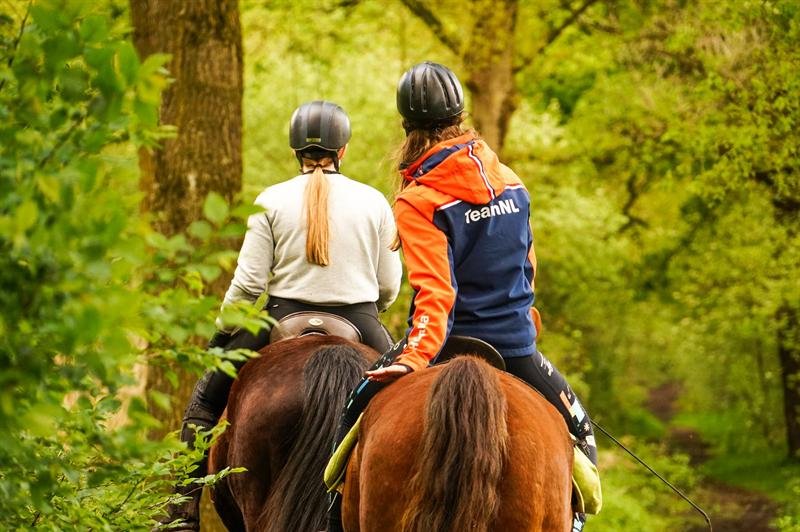
Hacking a horse means riding out in the countryside, and for many riders it is the best part of owning a horse. In England and Wales you can ride on bridleways, restricted byways, byways open to all traffic and most quiet roads, but not on footpaths or pavements, so knowing where you can ride your horse in the UK, and how to stay safe there, matters.
Where can I ride my horse in the UK?
- Bridleways: open to walkers, cyclists and horse riders. Marked with blue waymarks.
- Restricted byways and byways open to all traffic: also open to riders; byways may carry motor vehicles.
- Roads: allowed on most public roads except motorways; see the road section below.
- Permissive routes: some landowners and organisations allow riders on specific tracks, with conditions that may change.
- Footpaths: riding is not permitted unless the landowner has given permission.
- Pavements: not for horses, and the Highway Code advises riders not to use them.
Scotland has a different system: the Land Reform (Scotland) Act 2003 gives a broad statutory right of responsible access, including for horse riders, guided by the Scottish Outdoor Access Code. Northern Ireland has its own, more limited, access arrangements, so check locally. Local authority definitive maps show rights of way in England and Wales, and Ordnance Survey maps mark them too. The British Horse Society and local riding clubs often keep route information, and access officers can help if a path is blocked.
Safety gear: hat, hi-vis and visibility
You cannot control other road users, but you can make yourself easier to see and better protected. Before every ride:
- Hat: wear a riding hat that meets a current standard, such as PAS 015 or VG1 01.040, ideally with an independent certification mark. Fit it properly, fasten the harness and replace it after any significant fall or knock, and in line with the maker's advice. Under the Horses (Protective Headgear for Young Riders) Act 1990, children under 14 must wear an approved hat when riding on a public road.
- High-visibility clothing: a fluorescent tabard, jacket or hat cover for daylight, and reflective items for the horse's legs, tack and your own arms and legs. Fluorescent shows up well by day and reflective by night or at dusk.
- Lights: if you must ride in poor light or darkness, which is best avoided, the Highway Code recommends a white light at the front and a red light at the rear, carried on the right-hand side, plus reflective gear.
- Body protector: consider one, especially on a young or excitable horse or when riding near traffic.
- Gloves, sensible boots with a heel and a phone to call for help. Consider a personal alarm or a tracking app.
Hi-vis does not make a horse safe, but it does give drivers more time to see you and slow down. See riding safety for more.
Riding on roads and the Highway Code
Horse riders are among the road users the Highway Code asks drivers to take particular care around. The Code's section on animals and riders (broadly rules 49 to 55, plus the guidance to drivers) sets out what you and drivers should do, and it is worth reading in full. Key points for riders:
- Make sure your tack fits and is in good condition, and that your horse is road-ready and used to traffic before you go out; see spooking.
- Wear a hat and light-coloured or fluorescent clothing in daylight, and reflective and fluorescent items when light is poor. Avoid dark clothing.
- Keep to the left, and ride in single file on busy, narrow or twisty roads. You can ride two abreast on quiet roads when it is safe, such as with a young or inexperienced horse or rider on the inside, but go back to single file when traffic builds.
- Do not ride on pavements, and take extra care at junctions, bends and hills.
- Use hand signals clearly, and thank drivers who slow down. A smile or a nod goes a long way.
- Avoid riding in the dark, fog or heavy rain if you can.
Drivers are asked to pass horses at no more than 10 miles per hour, giving at least two metres of space, and to be ready to stop, with no revving or hooting. If a driver does not slow down, stay calm, hold a firm position and move on; report dangerous behaviour with details of the time and place to the police, and consider reporting incidents to the BHS, which collects data.
Preparing for a ride out
- Warm up: start at a walk for the first ten minutes or so, especially if the horse has been stabled.
- Check your tack and your horse: girth tightness, bridle fit, and any stones in feet.
- Dress for visibility: hat to a current standard, hi-vis, and a body protector if appropriate.
- Tell someone your route and return time. Carry your phone, charged, with an ID or medical details.
- Choose a route suited to the horse: a young horse should do short, familiar loops first, ideally with a calm companion.
- Plan for fitness: build up gradually. A horse returning from time off should start with short walks.
Bridleway etiquette and the Countryside Code
A good hacker leaves a good impression for the next rider. Walk past walkers, cyclists and dogs and say thank you. Close gates behind you, and learn to open them from the saddle, a skill worth practising in a safe place. Keep to the path and avoid cutting across crops, and skip routes when the ground is waterlogged to avoid churning it up. Slow down for livestock, and leave gateways and verges tidy. Do not canter on narrow tracks where you cannot see ahead, and give way kindly to walkers with children and pets. Be mindful of the horse's droppings on shared routes if asked by the landowner or local custom.
If you meet something your horse finds scary, such as flapping plastic or a tractor, keep your horse moving forward and calm. Turn his head slightly away rather than staring at the object, and keep your leg on. Horses that nap or refuse to leave home need a patient plan: see napping.
Hacking alone or in company
Hacking alone offers peace and closeness to your horse but less back-up if something goes wrong. Share your location with a friend, take your phone and avoid remote routes if you are not confident. In company, ride with someone of similar experience and match the pace of the slowest horse. Agree beforehand where you will walk, trot and canter, and warn others before changing gait. Horses that kick should wear a red ribbon in their tail and be kept at a safe distance.
| Situation | Alone | In company |
|---|---|---|
| Safety back-up | Limited, so tell someone your route | Better, with help on hand |
| Young or nervous horse | Short, familiar loops once confident | Start here, with a calm lead horse |
| Pace and gaits | Your choice | Agree beforehand; match the slowest |
| Spooking risk | Handle calmly, move on | Spooks can spread, so stay alert |
FAQs
How do I find bridleways near me?
Your local authority holds a definitive map of public rights of way, and Ordnance Survey maps show them too. Local riding clubs and BHS access officers can help.
Do I have to wear hi-vis when hacking?
It is not a legal requirement for adults, but the Highway Code advises light-coloured or fluorescent clothing by day and reflective gear in poor light. It is strongly recommended.
Can I ride on the road?
Yes, on most public roads except motorways, keeping to the left and following the Highway Code. Children under 14 must wear an approved hat.
How long can I hack for?
It depends on your horse's fitness. A fit horse may enjoy a couple of hours, while a horse coming back into work should build up gradually from short walks.
Should I hack a young horse alone?
Not at first. Begin with a calm, experienced companion before going solo, once your horse is confident. See building confidence.
Is it safe to hack alone?
Many people do, but reduce the risks by telling someone your route, carrying a phone and wearing hi-vis and a good hat.
Useful official resources
- British Riding Clubs Training and competition for adult riders.