
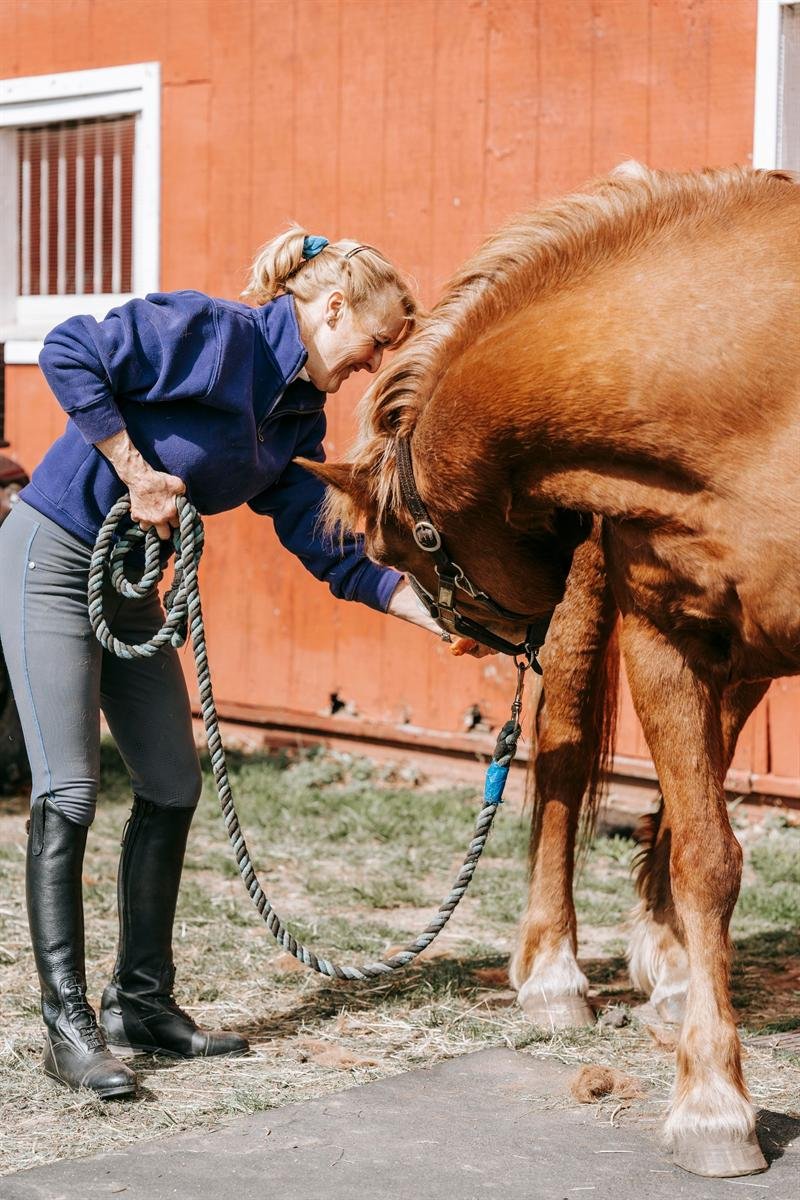
Good horse care is mostly a matter of doing ordinary things reliably: checking, feeding, moving, cleaning and noticing. This section is for anyone responsible for a horse or pony in the UK, whether you are on your first loan or have owned for decades, and it brings together practical, yard-tested advice on everything from hooves and teeth to winter mud and caring for a veteran.
Explore horse care
The foundations of good horse care
Horses are grazing, herd-living animals designed to walk many miles a day and eat small amounts almost constantly. Most welfare problems we see in domestic horses come from departures from that biology: long hours standing in a stable, big gaps between meals, isolation and low-fibre diets. The Five Welfare Needs in the Animal Welfare Act 2006 are a useful framework. Your horse needs a suitable environment, a suitable diet, the ability to behave normally, appropriate company, and protection from pain, suffering, injury and disease.
Translate that into practice and four things matter more than any gadget: constant access to forage, daily turnout with other horses where at all possible, clean and dry lying and standing areas, and a person who looks at the horse closely at least twice a day. Everything else in this section builds on those four.
Know what normal looks like
You cannot spot trouble if you do not know your own horse's baseline. Learn his resting temperature, pulse and respiration when he is well, and note his usual droppings, appetite, attitude and how he stands. Watch him loose in the field before you catch him and run a hand down each leg every day, feeling for heat, swelling or tenderness. Many serious conditions, from laminitis to colic, announce themselves subtly before they become emergencies, and the owner who says "he just wasn't himself" is usually right.
A routine that works through the year
The best routine is one you can keep up when it is dark, wet and you are tired. Build in a morning and evening check, daily hoof picking, regular poo-picking if you graze small paddocks, and a weekly deeper look at weight, skin, feet and tack fit. Then layer seasonal jobs on top.
- Autumn and winter: manage mud, check rug fit weekly, increase forage, keep water from freezing and look out for weight loss under thick coats. See winter care and mud fever.
- Spring: introduce grass gradually, watch native types and good-doers for weight gain and review rugs and clipping decisions.
- Summer: provide shade, fly protection, sun protection for pale skin and attention to hard ground. See summer care and fly protection.
Your professional team also works to a calendar. Most horses need the farrier every four to eight weeks, a dental check at least once a year, vaccinations kept up to date by your vet and a worm egg count based plan instead of routine blanket dosing. Ask your vet to help design a programme for your horse and your land.
A simple daily and weekly checklist
New owners often ask what they should actually be doing each day. The table below is a sensible starting point, which you can adapt to your own horse, your yard and your vet's advice.
| How often | Job | What you are looking for |
|---|---|---|
| Twice daily | Look over your horse | Appetite, attitude, droppings, water intake, any injuries or heat in the legs |
| Daily | Pick out hooves | Stones, thrush smell, loose or risen shoes, cracks |
| Daily | Check rugs, water and shelter | Rubbing, sweating or shivering, frozen or dirty troughs, broken fencing |
| Weekly | Thorough groom and skin check | Lumps, scabs, mud fever, rubbed patches, weight changes |
| Weekly | Weight-tape reading and tack check | Gradual loss or gain, saddle and bridle fit |
| Every 4 to 8 weeks | Farrier visit | Balance, wear and any hoof changes |
| At least yearly | Dental check and vaccinations | Sharp points, uneven wear and up-to-date protection |
Common mistakes to avoid
Most care problems come from good intentions applied without checking. Over-rugging a horse that does not need it, feeding more hard feed to a good-doer, leaving a field to be grazed to the ground, or putting off a dental check because the horse is eating well are all very common. Likewise, many owners wait to see whether a limp resolves itself when an early call would have been cheaper and kinder. When in doubt, check against the horse in front of you rather than against what other people on the yard are doing, because every horse has different needs. A quiet word with your vet or a trusted, qualified instructor is rarely wasted.
Caring across different life stages
A horse's needs shift over a lifetime. Youngsters need careful handling, balanced nutrition for growth and early foundations of good manners. Mares have particular needs around seasons, pregnancy and lactation. Stallions are a specialist responsibility. Veterans often need more feed, more warmth, more frequent dental work and more careful monitoring of joints, weight and hormonal conditions. The guides on foals, mares, stallions and senior horses explain what changes and why.
Knowing when to get help
Experienced owners are not those who never call the vet; they are the ones who call early. Any suspected colic, wound near a joint or tendon sheath, sudden severe lameness, eye injury, difficulty breathing or foaling problem should prompt an immediate call. For anything lesser, a photograph, a video of the horse trotting and your recorded temperature and pulse will help your vet decide how urgent it is. Our guide to first aid explains what to do while you wait.
Frequently asked questions
How much time does a horse need each day?
Even a horse at full grass livery needs checking at least once, ideally twice, daily. A stabled horse on do-it-yourself care typically needs two to three hours a day including mucking out, feeding, turnout, grooming and exercise.
How often should my horse see a vet if nothing is wrong?
At least once a year for vaccinations and a general check, which is also a good opportunity to discuss weight, worming strategy and any early signs of age-related change. Older horses benefit from a six-monthly review.
Do all horses need rugs?
No. Many healthy, well-fed horses with good shelter manage the British winter unrugged, and over-rugging causes its own problems. Clipped, elderly, thin or very fine-coated horses are the usual candidates. See our rugging guide.
How much grazing does a horse need?
A common rule of thumb is around one to two acres per horse for sustainable grazing without supplementary feeding, but soil, rainfall, stocking and management all change it. Many UK paddocks need rest periods and forage supplementation.
Who is legally allowed to trim or shoe hooves?
Shoeing is restricted to farriers registered with the Farriers Registration Council, or vets, and trimming is best left to the same professionals. Always ask to see registration.
How do I know if my horse is a healthy weight?
Feel for his ribs, which you should be able to feel easily without seeing them clearly, and look at the crest of the neck and the area over the tailhead. A weight tape gives useful trends over time, and your vet can give a body condition score.
What is a normal resting temperature for a horse?
Adult horses are generally around 37.5 to 38.5 degrees Celsius at rest, with a pulse of roughly 28 to 44 beats per minute. Learn your own horse's usual readings when he is well, and ask your vet to show you how to take them.
Useful official resources
- British Horse Society: horse care and welfare Advice from the UK's largest equestrian charity.
- World Horse Welfare: advice Practical welfare and care guidance.
- Code of Practice for the Welfare of Horses (gov.uk) The legal welfare standards for horse keepers in England.