
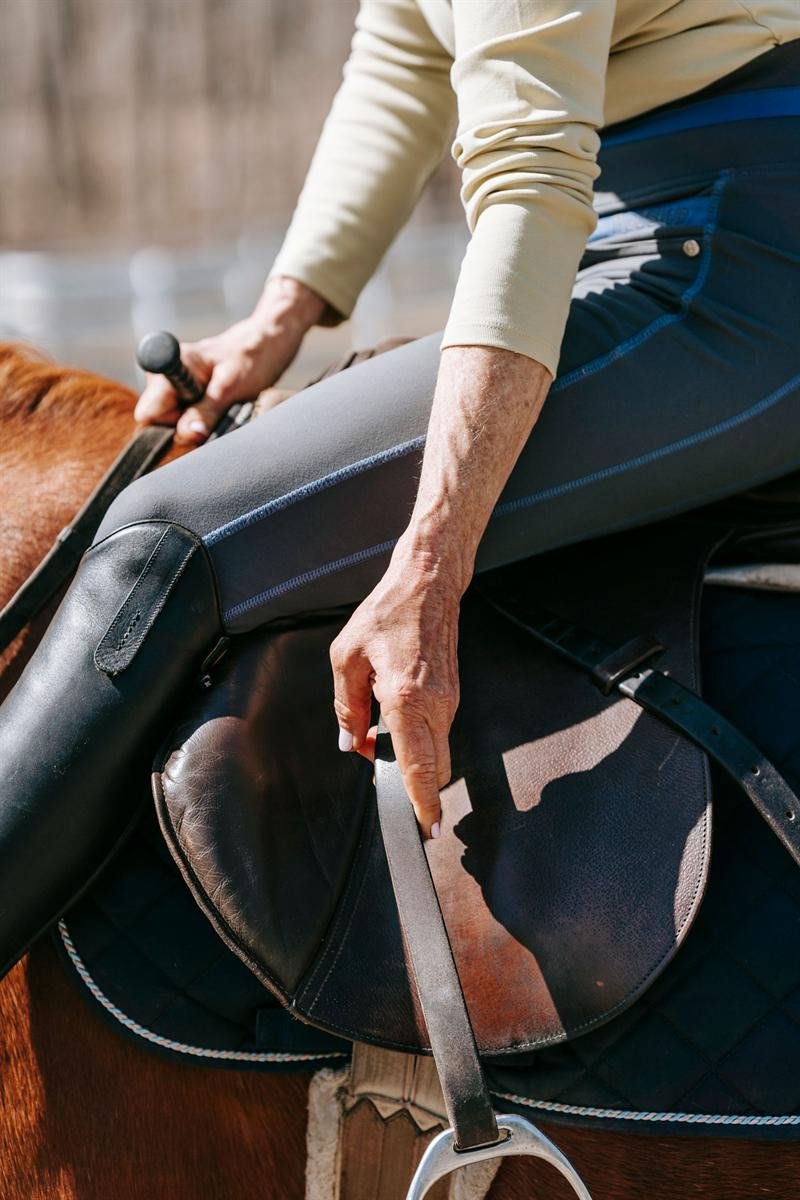
Horse reins are the straps that link your hands to the bit, so the best ones give you a secure, comfortable grip and are the right length and width for your hands and discipline. Rubber-covered, plaited, leather and web reins all suit different riders, and safe, well-kept stitching matters more than the style you choose.
Why reins matter more than you might think
Reins are the main way your hands talk to your horse's mouth, so they have to be strong, balanced and comfortable to hold. A pair that slips through wet fingers, is too thick for small hands or is too short to allow a following hand will make riding harder for you and less clear for your horse. Reins also take a lot of strain, and a broken rein at speed or near traffic is a serious safety risk, which is why regular checks are essential.
Types of reins
| Type | Grip | Typical use |
|---|---|---|
| Plain leather | Smooth, can be slippery when wet | Showing, dressage, traditional riding |
| Plaited leather | Textured, good in the wet | Hunting, eventing, general riding |
| Rubber-covered (rubber grip) | Very secure, even in rain | Jumping, cross-country, hacking, pony riders |
| Laced leather | Leather strips laced through, good grip with a smart look | Dressage, eventing, general use |
| Web or cotton | Light and grippy, may stretch or rot | Pony riding, schooling, budget option |
| Continuous or draw reins | Training aids, not ordinary reins | Specific training only, with professional advice |
For double bridles, two sets of reins are needed: a thinner pair for the bridoon and a pair for the curb. Our guide to bridles explains how they fit together.
Rubber reins vs leather reins
This is one of the most common questions. Rubber reins give a much better grip when wet or sweaty, are inexpensive and easy to wipe clean, so they are popular with jumping and cross-country riders and with children. They can feel thick for small hands, and rubber can wear, perish or become sticky over time. Leather reins feel supple and smart, last for years with care and suit dressage and showing, though plain leather can become slippery in the rain. Laced and plaited options sit in the middle, with a good grip and a smart look.
Competition rules may limit some types, particularly for dressage tests or showing classes, so check the current rulebook for your discipline.
How long should reins be?
Reins that are too long get caught on your knee, the stirrup or even your horse's legs, while ones that are too short restrict your arm and stop you following the movement. As a guide, with the reins fastened to the bit and held in a normal riding position, the buckle should sit roughly at the horse's withers or a little further back when your hands are in contact. They should be long enough to allow a loose rein on a long stretch, and to let you give the neck a full release over a fence.
Rein lengths are sold in inches or centimetres. Many adult reins are around 54 inches (roughly 137 cm), with shorter ones for ponies and longer ones for tall horses. Always check the maker's size guide, as they vary. Buckle ends, stud fastenings and hook-and-stud attachments differ, so choose the fastening that suits your bridle.
Width and thickness
Narrow reins, around 12 to 16 millimetres, suit smaller hands, dressage riders who want a delicate feel and double bridle bridoon reins. Wider reins, around 16 to 20 millimetres, suit larger hands and give more to hold on to. Hold them before you buy. The best width is the one that lets you keep a steady, relaxed grip without gripping hard.
Reins for jumping
Riders over fences need a grip that holds in wet, sweaty conditions, and a rein that is easy to let slip when needed. Rubber-covered, plaited and laced reins are all popular. Many jumping riders also use reins with stops, which are small markers at set points that show you where to hold. A pair of reins with a grip that lets you shorten and lengthen smoothly is more useful than a particular style.
- Check the reins do not twist over the withers or catch on the martingale rings.
- If you use a martingale, make sure rein stops are in place so the rings cannot slide up the rein and get caught on the bit.
- Wear gloves with a good grip in all weathers.
Holding and using your reins well
The best reins in the world cannot make up for an unsteady hand. Aim for a straight line from your elbow through your hand and the rein to the horse's mouth, with soft wrists and thumbs on top. Keep a light, elastic contact rather than pulling, and let your hands follow the movement of the head and neck in each pace. If you find yourself gripping hard or letting the reins slip, ask a qualified instructor to watch you ride, because the cause is often balance or position rather than the reins themselves. Young riders and nervous adults can also benefit from a neck strap on the saddle, to hold instead of the reins if they lose balance.
What to look for when buying
- Strong stitching at the billets and buckle ends, which are the most common failure points.
- A width and thickness you can hold comfortably for a full ride.
- A grip that suits the weather and discipline you ride in.
- Even, unblemished leather without cracks or splits.
- The right length for your horse's size and your seat, with enough adjustment holes.
- A fastening style that matches your bit and bridle.
- A colour that matches your bridle if you show.
A new pair of reins may cost roughly £15–£120 in 2026 depending on material and quality, varying by retailer and region.
Care and safety checks
Wipe leather reins after each ride, clean them thoroughly each week and condition them, avoiding any product that leaves a greasy surface on the grip. Rubber reins can be washed with mild soapy water and left to dry away from direct heat. Always look at the stitching, the buckle and the area next to the bit. Replace any pair that shows cracking or fraying. See leather care and tack care.
FAQs
What are the best reins for a beginner?
Many instructors suggest rubber-covered or plaited reins, because they are easy to hold in all weather. Ask your instructor which suits you.
How do I know when to replace my reins?
Replace them when you see cracks, thin or frayed stitching, stretched leather or a perished rubber grip. A weak rein is not worth the risk.
Can I wash rubber reins in a machine?
It is better to wash them by hand with mild soapy water, then rinse and dry them naturally. Heat and harsh cleaners can damage the rubber and stitching.
Why do my reins feel too thick?
You may have a pair that is too wide for your hands. Try narrower reins, or a style with a thinner grip, such as plain or laced leather.
Do I need two sets of reins for a double bridle?
Yes. A double bridle has two bits, each with its own rein, usually one narrower for the bridoon and one for the curb.
Useful official resources
- Society of Master Saddlers Find qualified saddle and bridle fitters.
- BETA The British Equestrian Trade Association.