
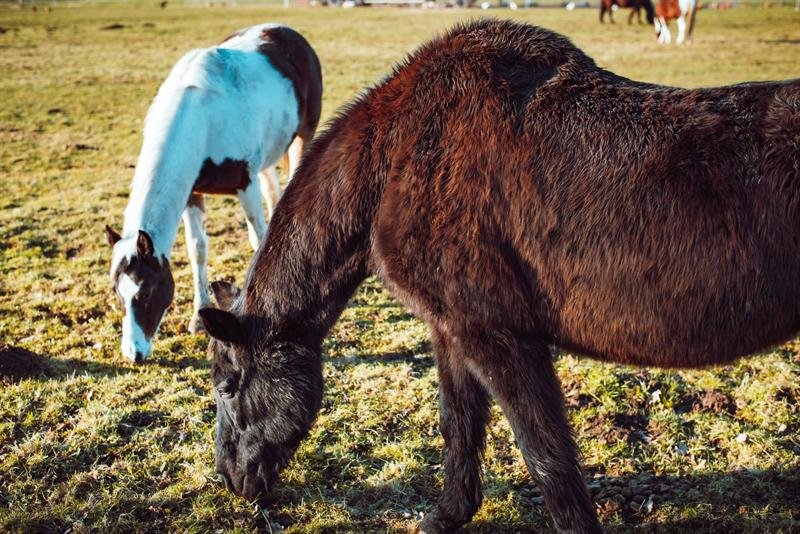
Pasture rotation for horses means dividing your land and moving horses between sections so each one can rest and regrow. Horses graze selectively, leaving some areas eaten to the ground ("lawns") and others left to grow tall ("roughs"), which over time makes grazing poorer and more parasite-laden. Resting fields in turn lets grass recover, helps break parasite cycles and reduces mud, and even a small holding can benefit from splitting land into two or three sections.
Why rotate horse pasture
- It allows grass roots to recover and thicken, so you get more grazing from the same land.
- It reduces the build-up of worm larvae on the ground, which can contribute to worm burdens; see worms.
- It prevents grass being grazed to the roots, where mud and weed invasion take over.
- It gives time for maintenance such as harrowing, reseeding and fencing repairs.
- It lets you manage how much grass each horse gets, which matters for good doers; see grass.
As a rough guide, many UK horse keepers aim for at least around 1–1.5 acres per horse where grazing is the main forage, but wet soils, small paddocks and heavy use change that. Rest periods depend on the growing season: grass hardly grows between late autumn and early spring, so resting then does less good than resting in spring and summer.
Rotational grazing for horses: a simple plan
- Divide land into at least two (ideally three or more) sections with sound fencing or electric tape.
- Graze one section until the grass is reduced but not to bare soil, typically leaving a few centimetres of leaf.
- Move horses and rest the section. Pick up droppings, harrow in dry weather, and top weeds.
- Allow the grass to regrow substantially before returning, usually a number of weeks in the growing season.
- Repeat through the season, adjusting to how quickly the grass grows in each field.
- Mixing with other species, such as sheep or cattle, can help break parasite cycles, as long as management is safe and suitable for your fencing and holding.
A small yard with one field can still rotate by using temporary electric fencing to split it into strips, so horses graze one area while another rests.
How long to rest a paddock
There is no single answer, because it depends on the season, weather, soil, grass type and how hard the field has been grazed. In the growing season it often takes several weeks for grass to recover properly. In winter, growth is minimal and a field mainly needs protecting from poaching rather than resting for growth. If you cannot rest a field for long, prioritise keeping grass at a reasonable height and removing droppings.
| Season | Grass growth | What to focus on |
|---|---|---|
| Spring | Rapid growth | Restrict rich grass for good doers; start rotation; harrow in dry spells |
| Summer | Good, then may slow in dry weather | Rest fields, top weeds before seeding, watch for ragwort |
| Autumn | Slowing | Last chance for tidying, repairs and reseeding if needed |
| Winter | Little or none | Protect wet ground; use a sacrifice paddock; keep up poo-picking |
Breaking the parasite cycle in fields
Worm larvae build up on pasture where droppings are left, and horses pick them up when they graze. Resting a field does not remove them overnight, as some can survive for a long time, so rotation works best alongside other measures. Remove droppings at least two or three times a week, and ideally daily, as this is the single most effective step to reduce parasites and sour patches. Avoid overstocking, and do not spread fresh horse muck on grazing land. Talk to your vet or an SQP (suitably qualified person) about a worm control plan based on egg counts.
Pasture maintenance
Harrow in dry weather to spread any remaining dung, ideally when the field is rested rather than when horses are on it, since harrowing can spread larvae. Top (cut) tall weeds and rank grass before seeds set, but only after removing livestock. Roll and reseed bare patches in the right season, and consider a soil test before adding any fertiliser.
Check for ragwort, which is poisonous both fresh and dried and is an "injurious weed" under the Weeds Act 1959, with DEFRA's code of practice setting out how to control it. Pull plants including roots, wearing gloves, and dispose of them properly. Also monitor for other hazards such as yew, oak seedlings, bracken and fallen branches. See pasture care.
Rotation in wet weather and on small acreage
Poached ground damages grass and risks conditions such as mud fever. Consider a sacrifice paddock with an all-weather surface for winter, taking horses off wet fields at the worst of the weather, and creating hard standing at gateways and troughs. If you only have an acre or two, use strip grazing, a sacrifice area and regular poo-picking, and consider supplementing forage so the grass is not overworked. A field shelter on hard standing helps keep horses on the sacrifice area comfortable.
Pasture rotation checklist
- At least two sections, each with sound fencing and a safe water supply.
- Droppings removed regularly from all grazed areas.
- Weeds, especially ragwort, checked for and dealt with.
- Fields rested in the growing season, not grazed to bare soil.
- A sacrifice area ready for wet weather.
- Worm control based on egg counts and your vet's advice.
Grass quality and weight management
Rotation also helps you control how much grass horses eat. Rich, fast-growing spring and autumn grass can be a problem for good doers, ponies and horses prone to laminitis. Restricting grazing time, using a grazing muzzle where your vet agrees, or keeping horses on shorter, more heavily grazed sections can help, but ask your vet for advice on individual horses. Never starve a horse or suddenly remove all forage.
Reseeding and improving worn pasture
Bare, weedy or very uneven fields may need renovating. Rest the area, harrow and roll in suitable conditions, then overseed with a seed mix designed for horses, and keep horses off until the new grass is well established. Take a soil test if you are unsure whether the pH or nutrients are limiting growth. Horse paddocks generally do best with a mix of hardy, lower-sugar grasses rather than rich agricultural ryegrass, but ask a reputable seed supplier or agronomist what suits your soil and your horses.
FAQs
How long should a field rest?
There is no single answer; in the growing season it often takes several weeks for grass to recover properly. Winter rest does less.
Does resting a field kill worms?
Not completely. Resting reduces larvae over time, but some survive for long periods, so combine rest with poo-picking and a vet-guided worm control plan.
Can I rotate on a small acreage?
Yes, even small paddocks benefit from being divided with electric fencing, and used alongside a sacrifice area.
Is harrowing worth it?
Yes in dry spells for aeration and spreading, but not while horses are grazing the same field.
How many acres do I need per horse?
Many keepers aim for around 1–1.5 acres per horse where grazing is the main forage, but it varies with soil, weather and how the land is managed.
Can sheep or cattle help my paddocks?
Mixed grazing can help reduce horse parasite burdens and tidy rough grass, but only if your fencing and set-up are suitable for the other animals.
Useful official resources
- Code of Practice for the Welfare of Horses (gov.uk) Legal standards for shelter, space and care.
- British Horse Society: horse care and welfare Yard and grazing advice.