
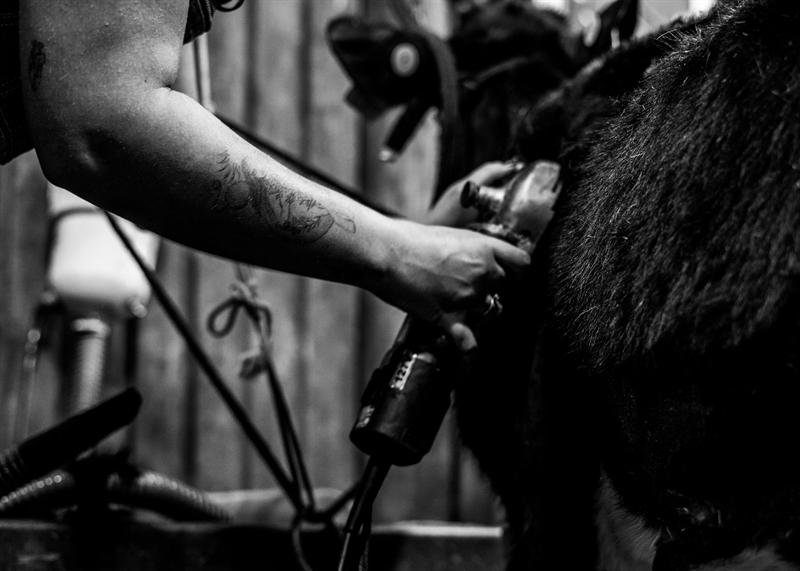
Horse clipping removes some or all of the winter coat so a horse in work stays comfortable, cools down faster and dries quicker. In the UK you clip when he starts sweating heavily and takes too long to dry, which usually means a first clip in October and further trims through the winter, with the type of clip matched to how much work he does.
Does my horse need clipping?
Not every horse does. A horse that is lightly worked, lives out and stays dry may be better with his full coat, which is his main protection. Consider clipping if:
- He sweats heavily in normal work and stays wet for a long time afterwards.
- He takes a long time to cool off, which can lead to a chill.
- He is in regular, fast or competition work through winter.
- He loses condition because he burns energy staying warm after sweating.
Clipping is not suitable for every horse, and it commits you to rugging and extra care for the rest of the winter. Pick the least clip that solves the problem.
Types of horse clip
The more of the coat you remove, the more rug and attention he needs.
| Clip | What is removed | Suits |
|---|---|---|
| Bib | Neck and chest only | Light work, outdoor living |
| Apron | Underside of neck, chest and belly | Light to moderate work, mostly living out |
| Trace | Underside of neck and belly, up to mid-body | Moderate work, may be turned out with a rug |
| Blanket | Neck and flanks, leaving a blanket over the back and quarters | Regular work, stabled at night |
| Hunter | Everything except saddle patch and legs | Hard work, stabled |
| Full | All of the body and often legs | Competition horses in heavy work, requires careful rugging |
Legs are usually left unclipped, since the hair offers some protection against mud, cold and scratches.
Trace clip vs blanket clip
These two are the most popular choices and they are often confused. A trace clip takes the hair from the underside of the neck and belly, roughly following the line where traces would run on a harness horse, and leaves the back, quarters and upper body covered. It suits horses that are worked moderately and still live out part of the time, because the coat that remains gives some natural warmth.
A blanket clip removes the hair from the neck and the lower body but leaves a patch over the back and quarters, shaped like a blanket. That patch keeps the loins and hindquarters warm, but the horse will still need a good rug, since so much has been taken off. It suits regular work and a stabled routine. If your horse sweats mainly around the neck, chest and belly, a trace clip is often enough. If he sweats right along his sides and flanks, a blanket clip is more suitable.
When to clip a horse in the UK
The first clip is commonly in October, once the winter coat has come through. Repeat every three to five weeks while the coat keeps growing, or as needed. Stop clipping around late January or February, because clipping too late in the season leaves a patchy, messy summer coat and can slow its arrival. Native types that depend on their coats usually need little or no clipping. If you are unsure, ask your instructor or vet for advice for your own horse.
How to clip a horse, step by step
- Wash or thoroughly groom the horse so the coat is clean and dry. Dirt blunts blades and causes tramlines.
- Mark the outline with chalk or a washable pen, using a straight edge for symmetry.
- Check blades are sharp, clean and lubricated, and that the cable is safe and the power supply protected by an RCD.
- Have rugs ready, a helper if possible and treats to hand.
- Work against the lie of the hair in long, smooth strokes with slight overlaps, starting on the shoulder where the horse is least ticklish.
- Stop every few minutes to brush hair from the blades, add oil if needed and check them for heat.
- When you finish, brush off loose hair, rug him straight away and check the lines for missed patches.
Wear close-fitting clothing, tie your hair back and stay at the shoulder so you can step away if he moves. Hold the skin taut, take extra care over loose skin around the elbows, flanks and girth, and reduce pressure on ticklish places. A nervous or sensitive horse often does better with short sessions over several days, or with veterinary-prescribed sedation if he is genuinely dangerous. If you are choosing new equipment, see clippers.
Clipping a nervous or difficult horse
Many horses dislike the noise, vibration and the feel of the clippers. Introduce them gradually: let him see and sniff the clippers switched off, then run them near him, then touch his shoulder with the blades off the skin. Build up over several short sessions. Use quieter, cordless clippers if the noise is a problem, and keep a calm helper at his head. Never punish fear. If he is dangerous, ask your vet about whether sedation is suitable, and do not attempt to clip a horse that could injure you or himself. Clipping a young or unhandled horse is best left to someone experienced.
Clipper safety and maintenance
Use an RCD on the power supply, keep cables out of reach of the horse and never clip a wet horse or in a wet area. Oil the blades regularly, clean them after each clip and have them sharpened by a professional when they start to pull or leave lines. Blunt blades pull the hair, overheat and irritate the skin. Let the clippers cool if they feel warm, and keep a spare set of blades to hand on a big job.
Looking after a clipped horse
He has lost much of his natural insulation, so you must replace it. Rug appropriately and check below the rug daily for warmth and dryness. Do not turn a clipped horse out without a suitable waterproof rug in cold, wet weather. See our guide to rugging for weights and fit. Groom daily so the skin stays clean, and make sure he has plenty of forage, as he will burn more energy keeping warm. Also see winter care for wider advice on the colder months.
FAQs
When should I clip my horse?
When he sweats heavily in work and struggles to dry. In the UK that is commonly from October onwards, repeating every three to five weeks as needed.
What is the difference between a trace clip and a blanket clip?
A trace clip removes hair from the underside of the neck and belly only. A blanket clip also removes the neck and flanks but leaves a patch over the back and quarters.
Which clip is best for a horse that lives out?
A bib, apron or trace clip, with a good waterproof rug. Less hair removed means less rug dependence.
Should veteran or Cushing's horses be clipped?
Some do need it, particularly horses with long, curly coats that do not shed, but they may need extra warmth and veterinary advice. See senior horse care.
Why did my horse get a rash after clipping?
Often it is from blunt or hot blades, dirty coats, or sensitive skin. Contact your vet if it persists or looks infected.
When should I stop clipping in the spring?
Usually around late January or February, so the summer coat comes through without a messy finish.
Useful official resources
- British Horse Society: horse care and welfare Advice from the UK's largest equestrian charity.
- World Horse Welfare: advice Practical welfare and care guidance.
- Code of Practice for the Welfare of Horses (gov.uk) The legal welfare standards for horse keepers in England.