
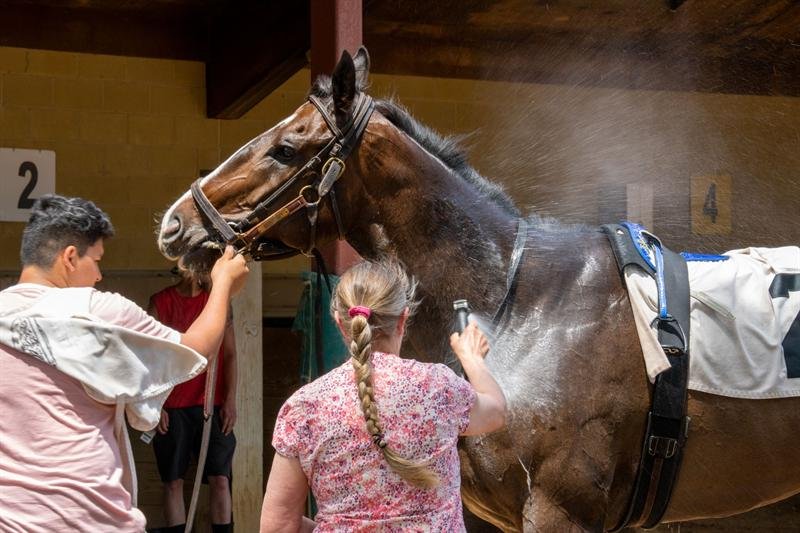
To wash a horse safely, choose a warm, dry day, use lukewarm water and a mild horse shampoo, rinse until the water runs clear and walk him dry afterwards so he does not get chilled. Most horses need a full shampoo only a handful of times a year, while spot-washing and rinsing off sweat are what you will do far more often.
Should you wash your horse today?
Wash only when your horse can dry fully before temperatures drop. In summer that means a warm, dry day with time for a long walk in the sun. In winter, a full wash is rarely sensible unless you have a heated wash box, a thermostatic hose and a horse that can be rugged and walked dry. Clipped horses lose heat quickly, so use warm water on the sweaty areas only and avoid soaking them.
- Wet, cold or windy weather: sponge off sweat or use a damp towel instead.
- Very old, thin or unwell horses: avoid unless your vet advises otherwise.
- Unfit horses after exercise: let him cool gently and stop blowing before washing.
- Horses with skin conditions: ask your vet before using any shampoo.
How often to bath a horse
There is no set schedule. A horse’s coat produces natural oils that keep it waterproof and healthy, and too much washing strips them away, leaving dry, flaky skin and a dull coat. Many horses are fully shampooed only before shows, after a muddy or sweaty spell in warm weather, or to treat a skin problem on veterinary advice. Daily grooming removes most dirt, and rinsing off sweat with plain water after work is usually enough.
| Situation | Best approach |
|---|---|
| Sweaty after summer work | Rinse with lukewarm or cool water, scrape and walk dry |
| Grass or dung stains | Spot-wash with a sponge and a little diluted shampoo |
| Before a show | Full wash a day or two before, with the plait and tack prep on the day |
| Cold, damp weather | Damp towel, brush when dry, no full wash |
| Skin problem or rain scald | Only as your vet advises |
What you need to wash a horse
A hose with a gentle spray or buckets of lukewarm water, a horse shampoo, two or three sponges (one for face, one for body, one for the dock area), a sweat scraper, a clean bucket and several dry towels or a cooler rug. A non-slip surface, such as a wash bay with rubber matting, makes everything safer. Avoid washing-up liquid or household detergents, which can strip the coat and leave residue.
Choosing a horse shampoo
A good horse shampoo is mild, rinses out easily and suits your horse’s skin. Pick a gentle formula for everyday use and avoid products with strong perfumes if your horse has sensitive skin. Medicated shampoos are for specific problems and should be used only as the label or your vet directs. Whatever you choose, dilute it properly and rinse more than you think you need to.
How to wash a horse step-by-step
- Tie your horse in a non-slip area and introduce the water slowly, starting at the lower legs and working upwards, so he is not startled.
- Wet the body thoroughly. Tepid water is best. Hot water can be uncomfortable and cold water can shock.
- Mix a small amount of shampoo in a bucket of water and sponge it on, working with the lie of the hair. Wash the mane and tail separately.
- Rinse until the water runs completely clear. Residue is a major cause of itchy, flaky skin.
- Wash the face last with a damp sponge only. Never spray water into ears or directly into the face.
- Squeegee water off with a sweat scraper, working with the lie of the coat.
- Walk him in hand in the sun, or rug with a wicking cooler, until he is completely dry, including between the hind legs and under the belly.
Washing a horse in winter
Most owners wisely avoid full baths between autumn and spring. If your horse is dirty or has sweated under a rug, use a bucket of warm water and a sponge on the affected patches, towel them dry and use a breathable cooler or quarter rug until the coat is dry. A well-groomed winter coat is also warmer, so brush mud off once it has dried rather than washing it. Never leave a wet horse in a cold stable. If you have to wash a horse in cold weather, for instance after a sweaty hunt or competition, do it in a draught-free area and keep him moving or rugged until dry.
Legs, tails and trouble spots
Wet legs that are not dried are a classic start to skin problems. Dry heels thoroughly with a towel, particularly in wet weather, and read our guide to mud fever if your horse has feathers or pink skin. For a grubby tail, wash only the skirt and dock occasionally, then condition lightly. Over-washing a tail causes brittle hair and may worsen rubbing. Never use anything abrasive on a sheath or udder, and ask your vet about cleaning if you have concerns.
White socks and grey coats show stains easily. Use a gentle shampoo, a soft cloth and plenty of rinsing rather than harsh whitening products, which can irritate skin.
Safety when washing a horse
Wear sturdy boots and stand to the side rather than directly in front of or behind him. Use a quiet area, avoid slippery concrete, and keep hoses and cables out of the way so nobody trips or gets tangled. Tie with a quick-release knot, and never leave him unattended. Ask a helper to hold him if he is unsure, particularly during a first wash, and stop if either of you is getting stressed.
Introducing a nervous horse to bathing
A horse that is frightened of the hose has usually had a bad experience or has never been introduced to water properly. Start with a damp sponge on the shoulder, then move to a bucket, and only then to a very gentle hose spray on the legs. Stop while he is still relaxed, reward him and finish before he worries. Never force a horse into water, and ask an experienced confidence-building trainer if he stays scared. For a horse that panics, keep to sponging rather than risk an accident.
FAQs
How often should I bathe my horse?
Only when it is needed. Many horses are washed a few times a year, while spot-cleaning and daily grooming handle the rest.
Can I wash my horse in winter?
It is best avoided unless you can keep him warm and dry afterwards. Use a damp cloth and warm water for stains instead.
What shampoo should I use on a horse?
Use a mild shampoo made for horses, diluted as directed and rinsed thoroughly. Avoid washing-up liquid and household cleaners.
What if my horse is scared of the hose?
Introduce water gradually with a bucket and sponge, using a calm handler and plenty of rewards. If he stays fearful, keep to sponging.
Should the water be hot or cold?
Lukewarm is best. Hot water is uncomfortable and can dry the skin, while very cold water can shock a horse and make him tense.
How do I dry a horse after a bath?
Scrape off excess water, towel the legs and body and walk him in the sun or under a breathable cooler until the coat is completely dry.
Useful official resources
- British Horse Society: horse care and welfare Advice from the UK's largest equestrian charity.
- World Horse Welfare: advice Practical welfare and care guidance.
- Code of Practice for the Welfare of Horses (gov.uk) The legal welfare standards for horse keepers in England.