
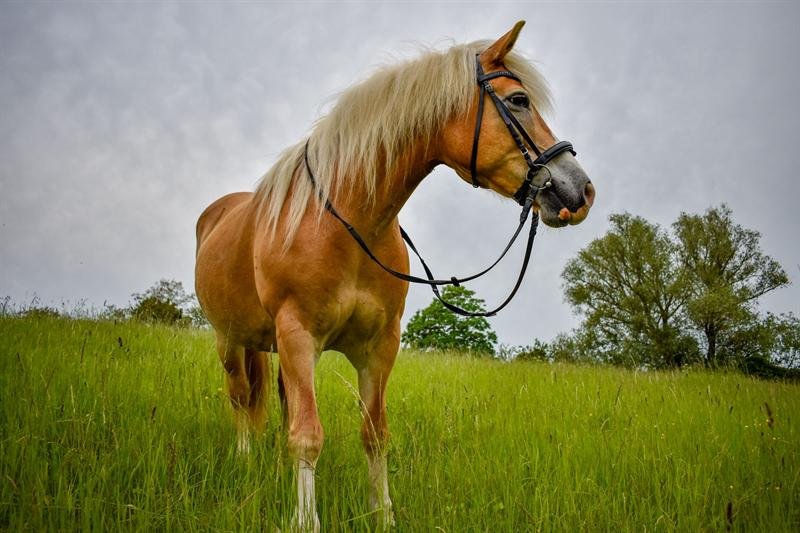
The Haflinger horse is a small, strong mountain breed from the Austrian Tyrol, instantly recognised by its golden chestnut coat and flaxen mane. Sociable and steady, it makes a useful family horse and driving partner, but it will happily eat itself into trouble, so weight and laminitis need constant attention.
| At a glance | |
|---|---|
| Height | 13.2 to 15 hands |
| Typical weight | Roughly 350 to 500 kg |
| Temperament | Friendly, steady, willing, sociable |
| Common colours | Chestnut with flaxen mane and tail |
| Best for | Family riding, trekking, driving, smaller adults |
| Origin | Tyrol, Austria and northern Italy |
Haflinger history
The breed takes its name from the village of Hafling in the South Tyrol. It was developed for mountain work, carrying loads and pulling carts on steep ground. All modern Haflingers trace back to a foundation stallion called 249 Folie, born in 1874. The breed spread across Europe and is now widely used for leisure, driving and light competition. In the UK, breed societies and registers record Haflingers and promote them for riding and driving.
Haflinger height: horse or pony?
People often search for "Haflinger pony" and "Haflinger horse" interchangeably. Haflinger height usually falls between about 13.2 and 15 hands, which straddles the line between large pony and small horse. The breed is stocky, with a broad chest and short legs for its size, so it often carries adults easily. Many riders find it feels bigger than the measurement suggests. That is why you will see Haflingers described both ways: in competition terms, those under 14.2 hands are ponies, while taller individuals are classed as horses.
Haflinger temperament
Haflinger temperament is one of the breed's biggest draws. Most are friendly, willing and sociable, enjoy human company and are usually steady in the yard, in traffic and on the road. They learn quickly, which cuts both ways: they pick up good routines and also bad habits. Some can be cheeky or pushy if handled inconsistently, and a bored Haflinger can become a clever one. Fair, firm, consistent handling and plenty of varied work suit them best. They generally do better with company than alone.
What is a Haflinger used for?
- Family and leisure riding, including quiet hacking and trekking.
- Driving, either single or in pairs.
- Light competition, such as local dressage, showing and trail classes.
- Riding for smaller adults and for older children who have outgrown a small pony.
- Therapeutic and riding school work, where a sturdy, kind horse is valued.
Haflinger laminitis and weight management
Haflingers are hardy mountain horses that evolved on sparse alpine grazing, so most are efficient at storing energy. On modern UK pasture, that makes them prone to obesity, and laminitis is a genuine concern, along with insulin dysregulation and equine metabolic problems in some individuals. Some of the key points are:
- Check body condition regularly, feeling for ribs and watching for a cresty neck and fat pads over the tail head and shoulders.
- Restrict access to lush grass, especially in spring and autumn, with a track system, strip grazing, or a grazing muzzle where advised.
- Feed mostly low-sugar hay or haylage, weighed rather than guessed, and keep hard feed to a minimum.
- Keep the pony working. Regular exercise helps weight control.
- Ask your vet about blood testing if your Haflinger has a cresty neck, recurring foot soreness or difficulty losing weight.
Our guides to weight loss and pasture care include practical ideas.
Haflinger care guide
A Haflinger usually does well living out, with good shelter, sound fencing and a managed amount of grass. The thick coat and flaxen mane need regular brushing, and the feathering around the heels should be checked for mud fever in wet weather. Many Haflingers are good in all weathers, so watch for over-rugging. Feet are strong but should be trimmed regularly by a farrier registered with the Farriers Registration Council. Routine vaccination, dental checks and worm management apply as for any horse. They are sociable, so keeping them with companions makes for a happier animal. Since they are often quick learners, include variety in their routine.
Haflinger for sale in the UK: what to look for
If you are searching for a Haflinger for sale in the UK, expect good-quality animals to attract interest, so be prepared to wait for the right one. Look for:
- A calm, willing attitude when handled, tacked up and ridden, ideally seen with more than one person.
- A healthy weight and no history of laminitis or recurring foot problems; ask directly.
- Sound conformation, especially in the legs and feet, and a smooth, even stride.
- Correct registration papers, passport and microchip, in line with DEFRA rules.
- A pony or horse that suits your size and experience; some are strong-willed.
Arrange a full vetting before you commit, and use our buying checklist. Prices vary widely with age, training, breeding and region, so compare several and avoid rushing a purchase.
Training and riding a Haflinger
Haflingers are generally straightforward to train, but their sturdy build and intelligence mean they respond best to a clear, consistent system. Start young horses with calm groundwork, and bring them into work gradually, because the breed can be slow to mature. Build up fitness steadily, particularly for a pony that has been lightly worked, and vary the routine with poles, hacking and schooling so they stay interested. See our guides to groundwork and beginner riding if you are new to either.
Because Haflingers are compact with a short back and a broad, flat-ish withers, saddle fitting can be tricky. Take advice from a qualified saddle fitter, and check the fit again if the horse gains or loses weight. A saddle that slides forward or rocks can cause discomfort and behaviour you might mistake for naughtiness.
Haflinger driving
Driving is one of the breed's traditional jobs. Haflingers are strong enough to pull a carriage or cart, steady enough in harness and usually willing workers. Many enjoy a mix of ridden and driven work. If you want to try driving, find a qualified instructor, have harness and vehicle professionally fitted, and train the horse in stages. Weight matters in harness too, as an overweight horse works harder and is more prone to injury.
FAQs
Is a Haflinger a horse or a pony?
Both, depending on height. Many stand between 13.2 and 15 hands, so some are ponies and some are small horses.
Are Haflingers good for beginners?
Many are steady and friendly, but they can be strong-minded, so a beginner needs a well-trained individual and good instruction.
Are Haflingers prone to laminitis?
They are generally efficient at gaining weight, which can raise laminitis risk. Careful grazing, weight control and regular exercise help.
What colour is a Haflinger?
Chestnut, ranging from pale gold to dark liver, with a flaxen mane and tail.
How tall is a Haflinger?
Typically about 13.2 to 15 hands.
Can a Haflinger carry an adult?
Yes, they are strong and compact, and many suit small to medium adults. Ask your vet or trainer about suitability for a particular rider.
Useful official resources
- The British Horse Society Owning and caring for horses of every type.
- World Horse Welfare Rehoming and welfare charity.