
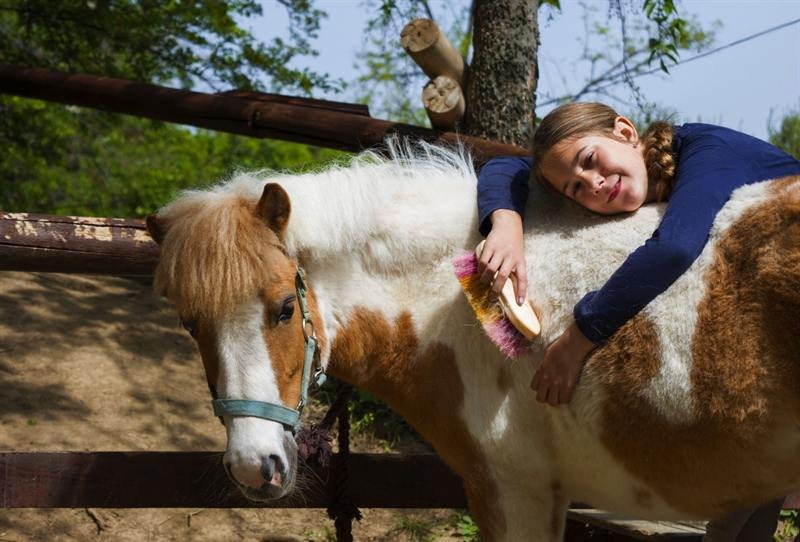
The best pony games at home are simple solo challenges such as pole patterns, cone accuracy tests, riding a letter shape and halting on the spot, plus hacking games, enrichment for your pony and stable activities for wet days. They keep riding fun when it's just you and your pony, and every one quietly builds a real skill, as long as a responsible adult is around and the rules below are followed.
Safety first: the at-home rules
Playing on your own does not mean riding on your own. Home and yard games are lower key than group games, but the same basics apply.
- Always have an adult on the yard who knows what you are doing, and never ride when nobody else is there.
- Wear a correctly fitted riding hat to a current standard with the chinstrap done up, proper riding boots and gloves. A body protector is a good idea for younger riders. See safety for young riders.
- Use an enclosed arena or a flat, fenced paddock with good footing, and close the gate.
- Warm your pony up properly first, and keep each challenge short.
- Stop if your pony is tired, sore, fizzy or worried. Ending on a good note is part of the game.
Ridden games to play on your own
These challenges turn schooling into a game. Score yourself, time yourself or keep a tally in your pony diary so you can see yourself improving. Start everything in walk and only move up to trot when you and your instructor or adult helper are happy.
Pole pattern challenges
Ground poles are brilliant for solo games because they give you a clear target. Lay them flat on the ground (never propped on anything for these games) and space them to suit your pony's stride. Ask an adult to help you set them out, as poles can be heavy.
| Pattern | How to set it up | Skill it builds |
|---|---|---|
| Straight line | Three or four poles in a row on a straight track | Rhythm, straightness and looking ahead |
| Fan | Three poles spread like a fan on a curve, touching at the inside end | Steering on a bend and changing stride length |
| Serpentine over poles | A pole on each loop of a three-loop serpentine | Planning turns and changing direction smoothly |
| Clover leaf | Four poles in a cross with gaps between, ridden in a looping clover pattern | Accurate turns both ways and suppleness |
| Box | Four poles forming a square to walk into, halt and walk out | Precision, halting and patience |
| Zig-zag | Poles set at angles in a zig-zag line | Riding straight over the middle of each pole |
Score a point for every pole crossed cleanly in the middle, and try to beat your score next time.
Cone accuracy challenges
Set two cones a little wider than your pony and see if you can ride through the gap without touching either. Each time you succeed, move them a bit closer, or set up three or four gates around the arena and ride a course through them. Bending through a line of cones in walk, then trot when ready, is a solo version of a classic gymkhana race. For the group versions, see gymkhana games and mounted games.
Ride a letter
Use the arena letters, or cones with letters written on them, as a test. Ask your helper to call out a letter and ride straight to it, or plan a route that spells a shape: a square from corner to corner, a figure of eight across the middle, or a diagonal from one letter to another. You get a point for hitting each letter exactly as your knee passes it. You can practise the letters off the pony first with the arena letters game.
Halt on the spot
Put a cone or a pole on the ground as your marker and try to halt with your shoulder exactly level with it. Score three for spot on, two for within a pony's length and one for a halt that is square and still but a little out. It teaches you to plan ahead and use your seat, legs and hands together.
Circle in time
Ride a 20 metre circle in trot while your helper counts or times it. Can you make every circle take the same time, with the same rhythm, on both reins? Even, steady circles show you and your pony are balanced, which matters more than speed.
No-stirrups balance challenge
Only try this if your instructor has said it is safe for you and your pony, and with an adult watching. Cross your stirrups over in front of the saddle, start in walk and see how many laps you can do while staying balanced and soft. Stop as soon as you feel tired or wobbly. For a refresher on a secure seat, read riding position.
Hacking games
Hacking is a lovely change for both of you. Children should only hack with an adult, and everyone should wear hi-vis on both rider and pony, whatever the weather. The BHS publishes road-safety advice and runs training for riders who use the roads, so it is worth reading their guidance as a family. See hacking for more.
- Spot-the-thing bingo: before you go, make a card with things to spot, such as a red door, a tractor, a postbox, a sheep, a bridge or a dog walker. Tick them off as you go, but keep your eyes up and your hands on the reins.
- Counting strides: pick a landmark ahead, such as a gate or a tree, and count your pony's strides in walk until you reach it. Next time, see if you get the same number. It helps you feel your pony's rhythm.
- Quiet hands challenge: on a safe, quiet track, see how long you can keep a soft, even contact without your pony changing pace.
Always say thank you to drivers who slow down, stay together in single file when needed, and never play games near traffic. Your adult decides when it is time to concentrate rather than play.
Enrichment ideas for your pony
Ponies enjoy fun too, but their idea of fun is mostly about eating, moving and being with friends. Good enrichment copies natural behaviour.
- Companionship: this matters most of all. Ponies are herd animals and need the company of other horses or ponies. No toy replaces a friend. See separation anxiety.
- Forage scatter and slow feeders: splitting hay into small piles around the field or stable, or using a small-holed haynet or slow feeder, makes eating last longer, just as grazing would.
- Treat balls made for horses: these release small bits of food as your pony rolls them. Count the treats into your pony's daily ration and keep them in moderation.
- Scratching posts: a sturdy, smooth post or a fixed brush gives your pony somewhere safe to scratch itchy spots.
- Horse football: some ponies enjoy pushing a large, robust ball made specially for horses. Introduce it gently, at a distance at first, and never use a small or soft ball they could bite or get stuck on.
- Varied grazing: safe hedgerow-style browsing, turnout in different paddocks where possible and plenty of time out keep life interesting.
Ponies who seem bored or restless in the stable may need more turnout and company rather than more toys. See stable vices.
Make a pony diary and set goals
A pony diary turns home riding into a project. Use a notebook to record what you did each day, your scores in the challenges above, how your pony felt and anything you want to work on. Add drawings, rosettes, and notes about your pony's feet, weight and health that you can share with your adult.
Set small goals, such as "halt on the spot three times in a row" or "ride a clean clover leaf in trot". If you are a member, Pony Club offers a range of badges on riding and pony care topics, and practising at home is a great way to work towards one. Ask your branch which badges are available. See Pony Club.
Wet-day games in the stable
When the arena is waterlogged, you can still have fun on the yard. Always tie your pony up safely or have an adult hold them.
- Grooming spa day: give your pony a full groom, from body brush to mane and tail, and finish by checking hooves. See grooming.
- Plaiting practice: practise plaiting the mane or tail. Take them out gently afterwards so they do not rub.
- Tack cleaning race: time how long it takes to clean your bridle properly and put it back together correctly. Speed only counts if every buckle is right, so ask an adult to check.
- Points of the horse labelling: stick removable labels on a quiet pony (or a poster) for the withers, hock, fetlock, poll and so on. Have a go at the young riders quiz afterwards.
Safe kit and supervision checklist
- Riding hat to a current standard, fitted and fastened
- Riding boots with a small heel, and gloves
- Body protector where appropriate
- Hi-vis for rider and pony on every hack
- Tack checked for fit and wear before riding
- Poles on the ground and plastic cones only, with no sharp or heavy objects
- An adult on the yard for all ridden games, and with you on every hack
- Someone who knows where you are and when you will be back
- A mobile phone carried by the adult
A sample week of pony games
Mix ridden days, ground days and rest so neither of you gets bored. Adjust to your pony's age, fitness and workload.
| Day | Activity | Focus |
|---|---|---|
| Monday | Rest day, grooming spa and diary update | Bonding and care |
| Tuesday | Pole patterns: fan and clover leaf | Steering and rhythm |
| Wednesday | Groundwork games in hand | Manners and trust |
| Thursday | Ride a letter and halt on the spot | Accuracy |
| Friday | Points of the horse and tack cleaning race | Knowledge |
| Saturday | Hack with an adult and spot-the-thing bingo | Confidence outside the arena |
| Sunday | Cone accuracy and circle in time, then turnout | Balance and control |
For more ideas on the ground, see groundwork games and handy pony.
FAQs
What games can I play with my pony on my own?
Pole patterns, cone gates, riding to arena letters, halting on a marker and timed circles all work well solo, with an adult on the yard.
Can I ride on my own at home?
Children should never ride with nobody else around. An adult should always be on the yard, and with you on every hack.
Do ponies get bored?
Ponies kept with friends and plenty of forage and turnout are usually content. Company matters more than any toy.
Are horse toys safe?
Use toys designed for horses, introduce them gently and check them regularly for damage. Never use small balls a pony could bite or swallow.
What treats are safe for ponies?
Small pieces of carrot or apple, or treats made for horses, given in moderation. Ask your vet if your pony is overweight or prone to laminitis.
What can I do with my pony on a rainy day?
Grooming, plaiting practice, tack cleaning and labelling the points of the horse are all fun under cover.
Should I try riding without stirrups?
Only if your instructor says it is safe for you and your pony, starting in walk with an adult watching.
Useful official resources
- The Highway Code: rules for horse riders (gov.uk) Rules for riding on the road.