
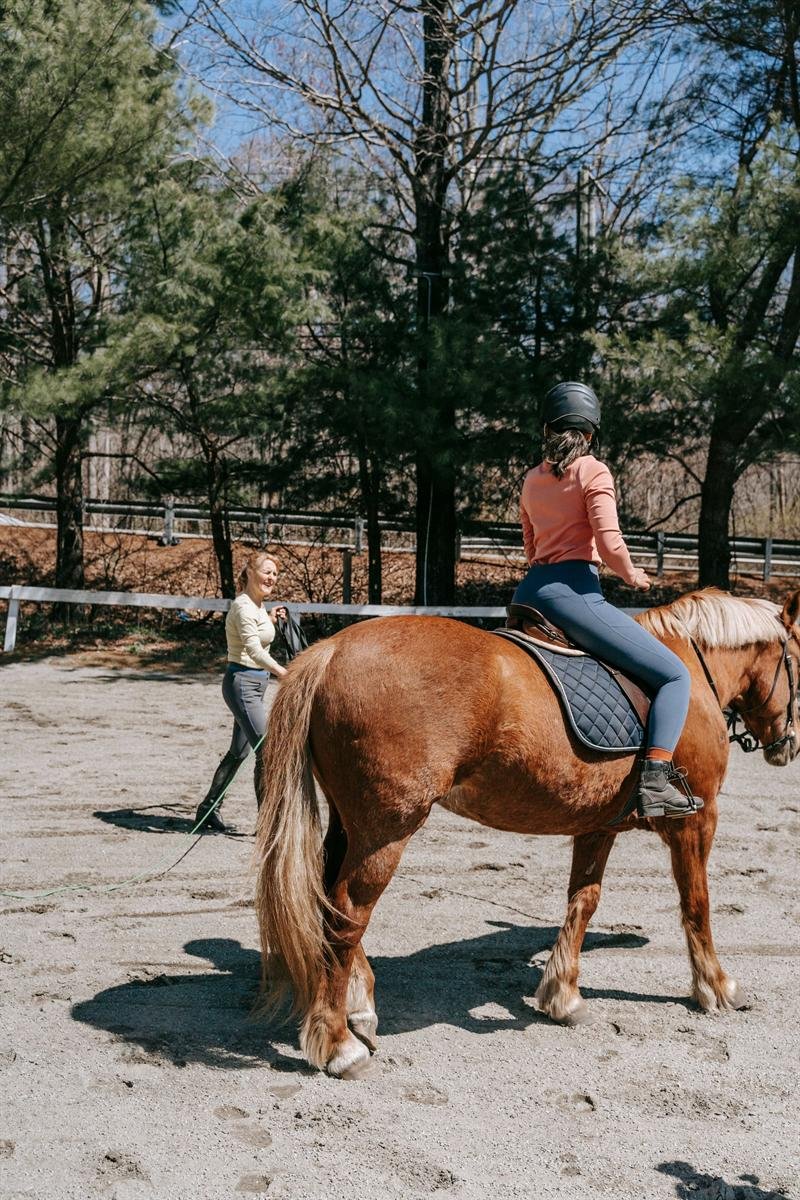
The correct riding position is a balanced one: if the horse vanished, you would land on your feet. Aim for a vertical line through ear, shoulder, hip and heel, with soft elbows and a relaxed lower back, so that you move with the horse rather than being bounced by it.
Why riding position matters
Your position affects everything: how clearly the horse understands your aids, how comfortable he is, how secure you feel and how safe you are if he spooks. A balanced rider is easier for the horse to carry and can use the aids independently, so hands stay quiet and legs stay still. Many problems with control, jumping and confidence trace back to balance; see horse control.
How to sit on a horse: the balanced seat
Looking from the side, you should be able to draw a line from your ear through your shoulder and hip to your heel. Check each part from the ground up.
- Feet: the ball of the foot on the stirrup, heels slightly lower than toes (but not forced down), toes pointing roughly forward.
- Lower leg: resting lightly just behind the girth, ready to ask for more.
- Knees: softly bent, not gripping.
- Seat: weight evenly on both seat bones, pelvis upright and neutral.
- Back and shoulders: tall but not stiff, shoulders level, chest open.
- Arms and hands: elbows bent and by your sides, forming a line from elbow through hand and rein to the horse's mouth.
- Head: looking up and ahead, not down at your horse's neck.
This is often called the classic dressage seat, and it is the foundation for every discipline. Even western and jumping positions are variations on the same principle of staying balanced over your own feet.
A step-by-step position check
- Sit in the middle of the saddle, feeling both seat bones equally.
- Let your legs hang long and relaxed, then rest them lightly against the horse.
- Grow tall through your spine as if a string were lifting the crown of your head.
- Soften your elbows, keep your hands level and a little apart, and your thumbs on top.
- Breathe out and let your shoulders drop.
- Ask a friend or instructor to check the line from ear to heel.
Horse riding position for jumping
For jumping and fast work, riders shorten their stirrups and fold slightly forward from the hips into a two-point or jumping position. The weight goes into the heels, the seat hovers just out of the saddle and the hands follow the horse's mouth over the fence. The same principle applies: the lower leg must stay under you, or your balance will tip forward. See show jumping and cross-country.
Riding position faults and fixes
| Fault | Likely cause | What helps |
|---|---|---|
| Tipping forward | Stirrups wrong length, tight hips, nerves or a saddle that tips you forward | Check stirrup length and saddle fit; stretch hip flexors; ask for lunge lessons |
| Leaning back | Fear of falling forward, weak core | Work on core strength; practise a light forward seat |
| Gripping with knees | Insecurity, stiff hips | Lunge work without stirrups; breathe out; open the hips |
| Heels up | Stiff ankles, gripping | Stretch calves; let weight drop through the leg, not push down |
| Collapsing at the hip | Weak core or crooked habits | Core exercises; mirror work; instructor feedback |
| Hands bouncing | Unsteady seat | Improve balance first; hold a neckstrap |
| Looking down | Nerves or habit | Pick a point ahead; ride to a target |
Many faults trace back to saddle fit as well as the rider. A saddle that tips you forward or backward will undo the best exercises, so see saddles and have your fit checked. The length of your stirrups also matters.
Rider asymmetry is common too. Most of us are stronger or stiffer on one side, and the horse may carry himself crookedly as a result. A regular instructor will spot this early. If your horse seems uneven or reluctant, remember that a sore back or lameness can also be the cause; see lameness.
Exercises to improve your riding position
- Lunge lessons: having someone control the horse lets you focus entirely on your balance, with or without stirrups. A good instructor is invaluable.
- Stirrupless work: short periods at walk and trot, never to the point of tension. It deepens your seat and loosens your legs.
- Arm circles and shoulder rolls: release tension in the upper body.
- Off-horse practice: pilates, yoga or core work help hugely; see rider fitness.
- Position checks: ask a friend to photograph or film you and compare with the ideal. It is humbling and very instructive.
- Poles and transitions: riding over poles on the flat and through many transitions improves balance and feel.
Common questions beginners ask
If you are just starting out, do not worry about getting everything right at once. Concentrate on sitting tall, relaxing your legs and breathing. A good instructor will build your position gradually, and regular lessons are the quickest route to improvement; see riding lessons and beginner riding.
Position at walk, trot and canter
Your position should stay fundamentally the same in all three paces, but how you absorb the movement changes. In walk, let your hips follow the gentle swing of the horse's back. In rising trot, rise from the hips and knees using the horse's movement rather than pulling on the reins, and keep your lower leg still. In sitting trot, let your lower back soften and your pelvis move with the horse. In canter, the three-beat rhythm asks you to stay tall and allow your seat to follow the motion, with your hips supple rather than rigid.
Rise on the correct diagonal in trot, which means rising as the outside shoulder moves forward. It helps the horse stay balanced on turns and circles, and your instructor can show you how to feel it.
How often to check your position
A quick mental check at the start of each ride is a good habit: feet, legs, seat, shoulders, hands, eyes. Then ask yourself again at the end of each school session. Little and often works far better than trying to correct everything at once, and your instructor will help you prioritise one or two things at a time. Be patient: a secure, independent seat takes months and years to develop, even for talented riders.
FAQs
What is the correct riding position?
A balanced seat with a straight line from ear through shoulder and hip to heel, soft elbows, relaxed legs and your weight evenly on both seat bones.
How long should my stirrups be?
For flatwork, your stirrup bar when you hang your leg should sit roughly at your ankle bone, though preferences vary. Your instructor can help you fine-tune.
Why do I feel unbalanced in canter?
Often it is gripping or leaning forward. Relax your hips, sit tall and let your seat follow the three-beat rhythm.
Why do my heels keep coming up?
Usually stiff ankles or gripping with the knee. Stretch your calves, relax your thighs and let the weight drop through the leg naturally.
Can I improve my position without a horse?
Yes. Core, hip and leg strength, flexibility and balance work such as pilates or yoga all carry over into the saddle.
Does saddle fit affect my position?
Very much. A saddle that does not suit horse or rider can tip you forward or back. Ask a qualified saddle fitter to check it.
Useful official resources
- The Highway Code: rules for horse riders (gov.uk) Rules 47 to 58 for riding and leading horses on the road.
- The British Horse Society Riding, safety and access advice.
- British Riding Clubs Training and competition for adult riders.