
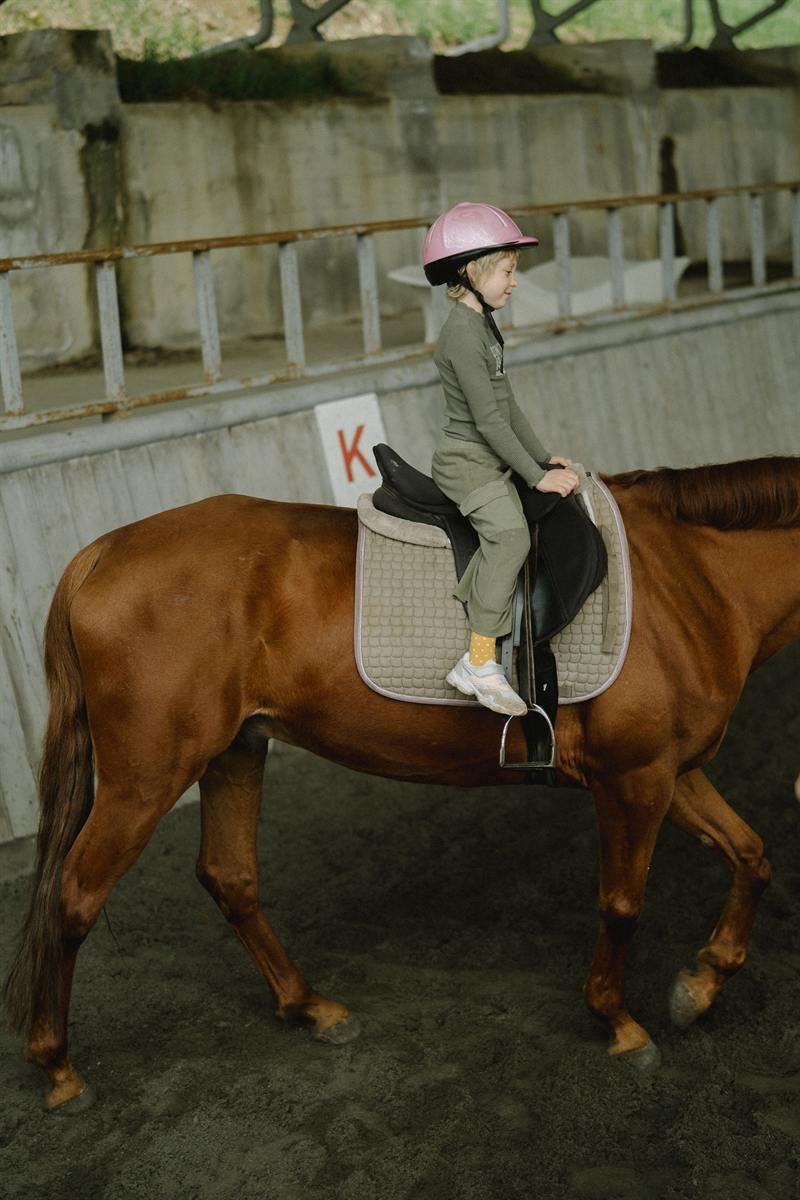
Mounted games are fast team relay races on ponies, where riders weave, vault, pick up, carry and hand over everyday objects such as flags, mugs, socks and balls, with speed and accuracy both counting. They are a much-loved part of Pony Club in the UK and are a brilliant way to build balance, quick reactions, teamwork and a genuine partnership with your pony.
If you are after gentle games for lessons and parties, our guide to riding games for children covers walk and trot ideas. This page goes deeper into competitive mounted games: the classic races, how teams work, the kind of pony that thrives, how to train, what to wear and how to get started.
What are mounted games?
In mounted games, teams of riders race against each other in relays up and down a set of lanes in an arena or field. Each race has a task: weaving through poles, carrying a flag to a holder, dropping an item into a bucket, or dismounting to run a short leg on foot before vaulting back on. The first team to finish all its legs correctly wins the heat, and mistakes usually have to be put right before a rider can carry on, so a careful rider often beats a reckless one.
Mounted games sit somewhere between gymkhana games and a team sport. At competitive level they are practised hard and judged to a published rulebook, with riders honing one-handed riding, leaning down from the saddle and clean handovers at speed.
Classic mounted games races
There are many races, and the list used changes between competitions and seasons. The table below describes some well-known ones in general terms only. Exact rules, equipment and layouts vary by competition and organiser, so always check the current rulebook for the event you are entering.
| Race | How it works (in general) | Skill it trains |
|---|---|---|
| Bending | Weave in and out of a line of upright poles, turn at the end and weave back | Steering, balance and rhythm through tight turns |
| Sack race | Ride to a sack, dismount, step into it and jump or shuffle to the line while leading the pony | Leading, dismounting and keeping hold of the pony |
| Flag race | Carry a flag and place it into a holder, or collect one from a holder, at speed | Accuracy and one-handed riding |
| Ball and cone | Pick a ball up from a cone or place one on top of a cone without knocking it over | Leaning safely from the saddle and steady hands |
| Mug race | Move mugs from one upright pole to another while riding past | Hand-eye coordination and riding straight lines |
| Stepping stones | Dismount and run across a row of upturned "stones" while leading the pony, then remount | Footwork, leading and vaulting |
| Sock race | Lean down to pick socks up from the ground and drop them into a bucket | Secure lower leg and balance when reaching down |
| Two flag | Collect a flag from one holder and put it in another, usually as part of a relay | Turning tightly and accurate placing |
| Five flag | Carry flags one at a time between a holder and a container, several times over | Repeated quick turns and stamina |
| Pyramid | Build or take apart a stack of tubs or cones as the team works through the relay | Care and accuracy under pressure |
| Hoop race | Handle a hoop on the move, often passing it between team-mates | Clean changeovers and teamwork |
| Litter race | Use a stick to pick up "litter" from the ground and drop it into a bin | Reach, aim and pony control while concentrating on a task |
Many races also involve a changeover, where an item such as a baton or flag passes from the incoming rider to the next rider in the team. Clean changeovers win more races than flat-out speed.
Team format and roles
Mounted games are a team sport. A team is made up of several riders and ponies, often with a reserve, and the riders take turns to complete each leg of a relay. The exact team size, how many ride in each race and how scoring works are set by the competition rules, so check the current rulebook rather than relying on memory.
Within a team, riders tend to find natural roles:
- Fast, reliable starters who set the team up with a good first leg.
- Specialists who are particularly neat at certain skills, such as vaulting or picking items off the ground.
- Steady finishers who stay calm under pressure and rarely make a mistake on the last leg.
- A trainer or team manager, usually an adult, who decides the running order and keeps the ponies' welfare at the centre of every decision.
Helpers on the ground matter too, holding ponies between races, checking tack and making sure everyone has a drink and a rest.
What kind of pony suits mounted games?
The best games pony is handy, not just fast. A pony that stops, turns and stands when asked will beat a speedy one that runs past the bucket every time. Smaller ponies are often popular because riders can reach the ground and vault on more easily, but sensible temperament matters far more than height. Our guide to the handy pony explains what that means in practice.
- Sensible and generous: happy among other ponies, crowds and flapping equipment.
- Responsive: quick to stop, turn and move off from light aids.
- Sound and fit: games involve tight turns and sudden stops, which are demanding on legs and feet.
- Tolerant of being led: trots beside the rider calmly on foot.
- The right size for the rider: so the child can sit securely and is not overfaced.
Many native types and crosses make good games ponies. See pony breeds and choosing a first pony for more help.
Training your pony for mounted games
Good games ponies are made, not born. Train calmly and at walk first, only adding speed when both pony and rider are relaxed and accurate. Short, regular sessions beat long ones, and ordinary schooling and hacking keep a games pony sane. For home practice ideas, see pony games at home, and for work on foot, groundwork games.
- Desensitise to the equipment. Let your pony see, sniff and hear flags, sacks, buckets, hoops and rustling litter from the ground first. Then introduce them mounted at walk, letting the pony relax before moving on.
- Get used to noise and busyness. Games are noisy, with cheering, whistles and other ponies racing beside you. Practise with friends in a safe, enclosed space so this becomes normal.
- Practise leading at speed. Teach your pony to lead calmly in walk and then trot alongside you, staying level with your shoulder and stopping when you stop. This is essential for races with a leg on foot.
- Work on stops and turns. Bending poles and turns around a cone at walk and trot build the handiness every race needs.
- Learn to vault on only with instruction. Vaulting means springing up onto a moving or standing pony without stirrups. It is a skill to learn step by step from a qualified instructor, on a quiet pony, with proper supervision. Never try it alone or copy it from videos.
- Build accuracy before speed. Neat pick-ups and placements at walk are worth more than sloppy fast ones.
Kit, safety and pony welfare
Mounted games are exciting, so safety kit and sensible rules are non-negotiable. Competitions set their own tack and dress rules, so check them before the day.
- Riding hat: a correctly fitted hat to a current recognised standard, with the chinstrap done up, every time you ride. Competitions often require a hat check or tag.
- Body protector: wear one where the rules require it or your instructor advises.
- Footwear and clothing: suitable riding boots or footwear with a small heel, and close-fitting clothing that will not snag on equipment.
- Tack: well-fitted, safe and in good repair, within the rules of the competition. Have your tack checked if unsure.
Your pony's welfare comes first. Only compete on a sound, fit pony, and do not ask for tight turns and fast stops on slippery, rock-hard or deep ground. Give plenty of rest between races and between competitions, offer water regularly, especially in warm weather, and watch for signs of tiredness, stress or lameness. If something does not seem right, stop and ask for help. For lameness worries see lameness, and for general rider safety see safety for young riders.
How to get involved in mounted games
For most children, the starting point is their local Pony Club branch. Branches often run games rallies and training, and many enter teams into competitions. Some members progress through area competitions, and the most famous Pony Club mounted games final is the Prince Philip Cup, held at the Horse of the Year Show. For the wider competition side of Pony Club, see Pony Club competitions.
For riders beyond Pony Club age, or anyone who wants more mounted games, the Mounted Games Association of Great Britain runs competitions for a wider range of ages, including team, pairs and individual formats. Check their current rules and membership details directly.
Before you start, talk to your instructor or branch about whether you and your pony are ready, join a training session to watch and try, and start with the simpler races at a relaxed local event.
FAQs
What are mounted games?
Mounted games are fast team relay races on ponies, where riders complete tasks such as bending, carrying flags and picking up items, with speed and accuracy both counting.
Do I need a fast pony for mounted games?
No. A handy, sensible pony that stops, turns and stands well usually beats a fast pony that is hard to control.
What size pony is best for mounted games?
Smaller ponies are popular because riders can reach the ground and vault on more easily, but temperament and suitability for the rider matter more than height. Check any size rules for your competition.
Is vaulting on dangerous?
It carries risk if done badly, so learn it only from a qualified instructor, on a quiet pony, with supervision and the right kit.
What safety kit do I need?
A correctly fitted riding hat to a current standard, suitable footwear and close-fitting clothing, plus a body protector where required or advised. Competitions publish their own kit rules.
How do I start mounted games if I am not in Pony Club?
Look at joining a local Pony Club branch, or, if you are beyond Pony Club age, the Mounted Games Association of Great Britain, which runs competitions for a wider range of ages.
Where can I find the official rules?
Each organisation publishes a current rulebook, and rules change, so always check the latest version for the competition you are entering.
Useful official resources
- The British Horse Society Riding safety and approved centres.
- The Highway Code: rules for horse riders (gov.uk) Rules for riding on the road.