
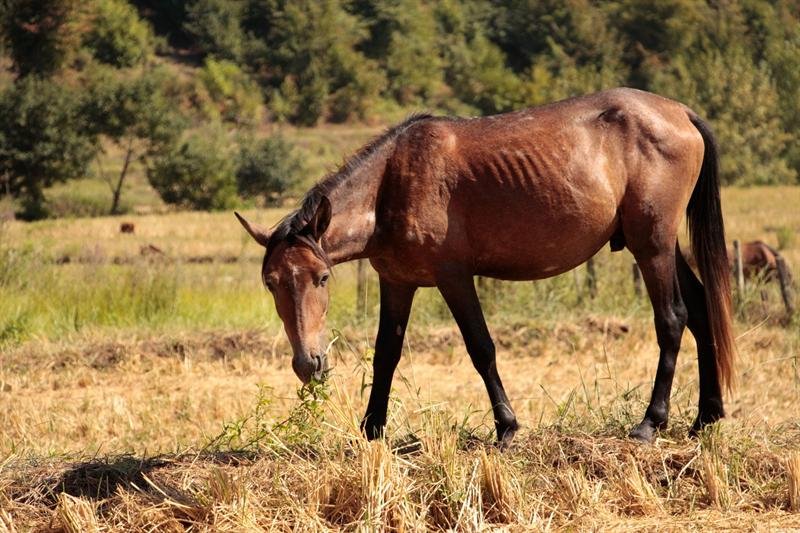
To slim down a fat horse safely, cut calories mainly by restricting rich grazing and concentrates, keep weighed forage coming little and often, and add exercise gradually. Never starve a horse, and do not cut forage below around 1.5% of bodyweight in dry matter without veterinary guidance. Obesity is one of the biggest welfare issues in UK horses and ponies: it raises the risk of laminitis, insulin dysregulation and joint strain.
Is my horse overweight?
Many owners get used to seeing a round horse and think it is normal. Look and feel for:
- A cresty neck, with a firm, fatty bulge along the top.
- Fat pads over the rump and at the tail head.
- A gutter down the back, or a flat, broad back.
- Ribs you cannot feel without pressing hard.
- Fat behind the shoulder and in the flanks.
Ask your vet or an experienced professional to show you how to body condition score. Overweight and obese ponies, including natives, cobs and good-doers, are the most affected, but any horse can become overweight.
Measure first
Weigh tape and body condition score now, and photograph. If the horse is a native type with recurring foot soreness, or has an unusually cresty neck, ask your vet to test for insulin dysregulation or PPID before dieting, as the plan may need to be different. Set a realistic goal, say 0.5-1% of bodyweight a week in a typical plan, and recheck every two weeks. Slimming can take months, so use photographs and measurements to keep yourself motivated.
A safe weight loss plan for an overweight horse
- Cut the extras: stop treats, mixes, molasses chaff and unnecessary supplements. Replace with a low-calorie balancer in a small amount so vitamins and minerals remain covered.
- Control grass: restrict by time, use a muzzle, a track system, strip grazing or a bare paddock with hay. See grass.
- Weigh forage: feed by weight, using a net or slow feeder, and keep it going most of the day. Lower-sugar, mature hay is usually better than rich haylage. Soaking can lower sugar and calories but also washes out nutrients, so use the balancer.
- Do not fast: long gaps are bad for the gut and can drive behaviours such as bolting food, ulcers and, in ponies and donkeys, hyperlipaemia.
- Exercise: build up slowly. Walk work, hacking, lungeing and schooling all help, but avoid sudden hard work with a horse that has foot soreness.
- Rugging: avoid over-rugging. Letting a horse feel mild cold uses extra energy; see rugging.
Overweight horse diet: what to feed and what to avoid
| Usually helpful | Usually best avoided |
|---|---|
| Weighed, lower-sugar mature hay | Unlimited rich, lush grass |
| Small-holed nets or slow feeders | Long gaps with no forage |
| A low-calorie ration balancer | Sugary mixes and molasses chaff |
| Straw in the ration, if your vet or nutritionist agrees | Frequent treats and bucket feeds |
| Muzzle, track or strip grazing | Stable confinement with no movement |
Daily amounts should be worked out from your horse's target weight, not his current one. See feeding charts for example forage amounts, and hay for choosing a suitable type.
Weight loss for obese ponies and laminitis risk
Obese ponies are at particular risk of laminitis, so weight loss is often part of a vet-led plan. Many have underlying insulin dysregulation, which can make even modest amounts of rich grass or sugary feed risky. Keep sugar and starch low, restrict grass carefully, and watch the feet daily for heat and a bounding pulse. A pony that has had laminitis before needs a long-term management plan agreed with the vet, not a quick diet.
Common mistakes
- Cutting forage too hard instead of cutting concentrates and grazing.
- Using a muzzle but not weighing hay or adding exercise.
- Only judging by the weigh tape, when condition scoring and neck measurements tell you more.
- Giving up after two weeks. Real change takes months, and maintaining a lean horse is a permanent job.
- Forgetting that one horse in a group on a strict diet might steal from another horse's bucket.
Exercise ideas for an overweight horse
Build up slowly and start with what he is already fit enough to do. A few weeks of regular walking on the lead or ridden hacking, gradually lengthened, is a good base. Add short trot sets once he is moving comfortably, and use hill work, poles and varied schooling to burn more calories. Lungeing and long-reining can help if riding is not suitable. Ask your vet before starting any programme if he has sore feet, a history of laminitis or joint problems. Overweight horses overheat easily, so exercise in the cooler parts of the day in summer.
Managing a group and shared grazing
Slimming one horse in a field of others can be tricky. Use a muzzle on the one that needs it, or separate him with a strip of grazing or a track system, but avoid isolating a herd animal completely. Make sure other horses do not bully him away from his hay, and feed each horse its own forage in separate nets or piles. Talk to your yard manager so that others do not slip him treats.
How long does horse weight loss take?
Expect months rather than weeks. A horse that is carrying a lot of excess fat may need several months of consistent management to reach a healthy condition, and the final stretch is often the slowest. Progress can stall when grass surges, the weather turns or exercise drops, so check the tape, condition score and photographs on the same day every fortnight. If there is no change after four to six weeks, review the plan with your vet or an equine nutritionist rather than simply cutting forage further. Slow, steady progress is safer and far more likely to last.
Keeping the weight off
Once he reaches a healthy condition, the aim is to hold him there. Keep weighing and scoring monthly, adjust the grazing as the seasons change, and stay alert in spring and autumn when grass growth can surge. Keep exercising, and review the plan whenever his work or the weather changes.
FAQs
How do I slim down a fat horse?
Restrict rich grass and concentrates, feed weighed, lower-sugar forage little and often, and increase exercise slowly. Use a vet's help if he has foot soreness or an unusual crest.
How much hay does a horse need on a diet?
Not less than about 1.5% of bodyweight in dry matter unless your vet directs otherwise.
How fast should a horse lose weight?
Gradually. A typical aim is around 0.5-1% of bodyweight a week, checked every two weeks.
Is a muzzle cruel?
Not when well-fitted, comfortable and used sensibly for limited periods; it is often kinder than laminitis.
Can I starve a fat pony to slim him down?
No. Starving can cause a dangerous condition called hyperlipaemia and upset the gut. Always keep forage coming.
Can overweight horses still compete?
Yes, with weight managed; extra weight affects soundness and performance.
Useful official resources
- World Horse Welfare: advice Body condition scoring and feeding guidance.
- British Equine Veterinary Association The professional body for equine vets.
- Code of Practice for the Welfare of Horses (gov.uk) Legal standards for feeding and care.