
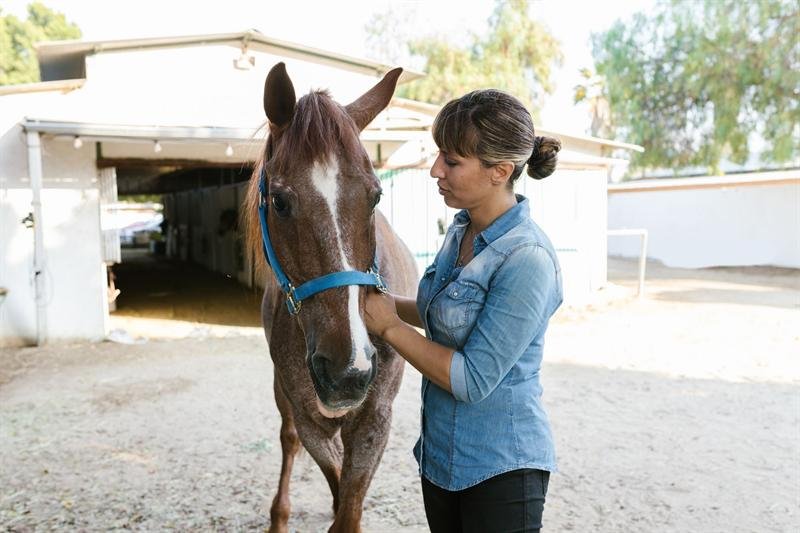
A good daily horse care routine means checking your horse at least twice a day, giving him constant access to forage and fresh water, daily movement and regular contact with other horses. The checklist below shows how that fits into a typical day, whether he is stabled, out full-time or something in between.
What do horses need every day?
Whatever your set-up, every horse needs the same basics each day. Understanding them helps you build a routine that works for your horse and your life.
- Forage: grass, hay or haylage available for most of the day, because a horse’s digestive system is designed to eat little and often.
- Clean water: available at all times and checked daily, as a blocked or frozen trough is dangerous.
- Movement: turnout, exercise or both, so joints, gut and mind stay healthy.
- Company: contact with other horses, ideally including touch, as horses are herd animals.
- Shelter: protection from wind, rain and sun, plus rugs when they are needed.
- Observation: a daily health check by someone who knows what is normal for him.
A sample daily horse care checklist
| Time | Job |
|---|---|
| Morning | Look at him before touching: is he bright, eating, moving normally? Check legs, rugs and water. Feed, pick out feet, muck out and turn out. |
| Midday | Exercise or ride, groom afterwards, check and refresh water and forage. |
| Evening | Bring in or check in the field, adjust rug, pick out feet, feed, fill haynets and check water. |
| Late check | Many yards do a final look around 9 to 10pm, especially for older horses, sick horses or foaling mares. |
The morning and evening health check
These checks take two minutes and catch problems early. Ask yourself:
- Is he alert, interested and eating normally?
- Is he standing and moving comfortably? Any limping, stiffness or reluctance to move?
- Are the droppings normal in amount, consistency and colour? Any change in water consumption?
- Any heat, swelling, wounds or lumps? Run a hand down each leg.
- Are eyes and nostrils clean and clear?
- Is he sweating, shivering or rugged appropriately?
- Are his rug, headcollar and fencing safe, with nothing rubbed, loose or broken?
If anything is off, take his temperature, pulse and respiration and consider calling your vet. See first aid for what is normal.
Feed, forage and water
Feed little and often, with forage as the foundation. Feed at regular times, make any changes gradually over seven to ten days, and provide clean water at all times. A 500kg horse often drinks around 25 to 55 litres a day depending on weather, work and diet. If he suddenly drinks much more or less, tell your vet. Our feeding charts can help structure rations, and our hay guide explains how to choose good forage.
Turnout, exercise and company
Daily turnout with a companion is the best thing you can do for his mind and body. If turnout is limited, offer a variety of forage, a safe view of other horses and regular exercise or hand-walking. Boredom shows up as stable vices, so treat repetitive behaviours as a sign to review his management rather than a naughty habit. Exercise should match his age, fitness and any veterinary advice, building up gradually after time off.
Grooming, hooves and tack
Allow time for grooming and hoof care every day. Picking out feet before and after work lets you spot stones, thrush, cracks or a lost shoe early. A quick brush over also lets your hands find cuts and lumps your eyes may miss. Check that tack fits and is clean where it touches the skin, and keep rugs dry and correctly fitted. Our rugging guide explains how to choose the right weight for the weather.
Stabled, grass-kept and combined routines
A stabled horse needs the most hands-on time: mucking out, forage, exercise and often several visits. A horse living out needs fewer chores but still needs seeing at least once or twice a day, with fences, water, shelter and field condition checked regularly. Many owners use a mix, stabling at night in winter and turning out by day. Wherever he lives, stable cleaning and pasture care keep the environment healthy.
Daily care through the seasons
Your routine needs to flex with the weather. In winter, daylight is short, fields are wet and rugs need checking more often, so allow extra time for drying legs, breaking ice on troughs and making sure he has enough forage to keep warm. In summer, check that he has shade, water and fly protection, and watch for sunburn on pink noses. Spring grass can bring a risk of weight gain and laminitis for some horses and ponies, so keep an eye on condition and talk to your vet if he is prone. Autumn is a good time to review rugs, worming plans and winter feed before the weather turns. See our guides to winter care and summer care.
Daily care for a first-time owner
New owners often worry about doing it all perfectly. Start simple: look at your horse twice a day, write down what you see, ask questions at the yard and learn his normal. A horse that is bright, eating, drinking, passing droppings and moving freely is usually fine. If something changes, make a note of when it started, and ring your vet early rather than late. A friendly, experienced yard mentor is worth their weight in gold, and our first-time owners guide covers the wider picture. If you share the work with others, agree who does what so nothing is missed or doubled up.
Weekly, monthly and yearly jobs
- Weigh tape or body-condition score weekly, and photograph to compare.
- Check tack fit and condition, wash rugs as needed.
- Review fencing and poo-pick fields.
- Book farrier visits roughly every four to eight weeks depending on your horse.
- Arrange dental checks, vaccinations and a worm egg count plan with your vet.
- Record dates of everything so nothing gets forgotten.
FAQs
How long does daily care take?
For a stabled horse, expect several hours a day including mucking out, feeding, exercise and grooming. A horse at grass needs less, but should still be seen at least once or twice daily.
How often should I check my horse?
At least twice a day, morning and evening, with a closer look at legs, feet, eyes and droppings. Elderly, sick or pregnant horses may need more frequent checks.
Can I leave my horse for a day?
Only with a competent person looking in on him, and with clear written instructions. Never leave a horse unchecked for long periods.
Does my horse need exercise every day?
He needs daily movement, which turnout can provide. Ridden work depends on his age, fitness and health, and rest days are fine if he gets moving time.
How much water does a horse need?
Often around 25 to 55 litres a day for an average-sized horse, depending on weather, work and diet. Always provide clean water and tell your vet about sudden changes.
What records should I keep?
Note vet, farrier and dental visits, vaccinations, worm egg counts, weights, injuries and any medication. Keep his passport safe and up to date.
Useful official resources
- British Horse Society: horse care and welfare Advice from the UK's largest equestrian charity.
- World Horse Welfare: advice Practical welfare and care guidance.
- Code of Practice for the Welfare of Horses (gov.uk) The legal welfare standards for horse keepers in England.