
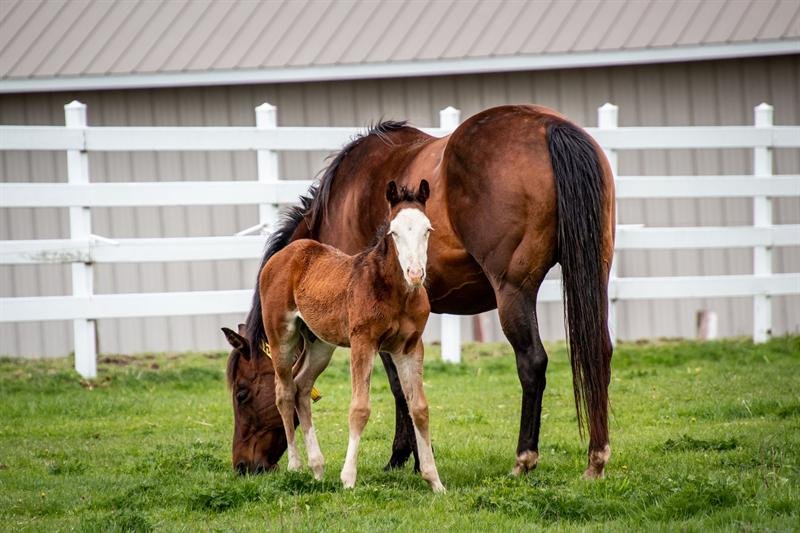
Good foal care starts before birth and carries on well beyond weaning. A healthy foal should stand within about an hour, suckle within two to three hours and pass its first dung within a day or so, and the first 24 hours are the most critical, so it pays to have your vet involved in the plan before the mare foals.
Preparing for the birth
A calm, clean foaling environment makes a real difference. Most owners bring the mare into a large, well-bedded box (or a clean, sheltered paddock in good weather) in the weeks before her due date. Gestation in mares averages around eleven months, but normal foaling dates vary by a couple of weeks either way, so be prepared early.
- Talk to your vet well in advance about vaccinations, worming, the foaling plan and who to call out of hours.
- Keep the box clean, deeply bedded with straw (or a clean bedding your vet is happy with) and free of anything the foal could catch itself on.
- Make sure the passport, breeding paperwork and emergency numbers are somewhere easy to find.
- Have a clean bucket, towels, a torch and a way to contact help ready. Your vet can advise on what else belongs in a foaling kit.
Newborn foal care: the first hours
Most mares foal at night, often quickly. Leave them to it unless there is a problem and watch from a distance, as a disturbed mare may delay or become anxious. After the birth, work through a simple checklist:
- Is the foal breathing and alert? Clear any membranes from the nose if they are still covering it.
- Is the umbilical cord intact? Do not pull or cut it unless your vet has told you to, and ask them how they want the navel treated.
- Has the mare passed the placenta, usually within a few hours? If it is retained for more than around three hours, call your vet and keep the placenta for them to examine.
- Has the foal stood and nursed? Colostrum, the first milk, contains antibodies that the foal can only absorb in its first hours of life, so early suckling matters.
- Has the foal passed its first dung (meconium) and urine within the first day?
Many vets recommend a check within the first day, often including a blood test to confirm that the foal has absorbed enough antibodies from the colostrum. This is sometimes called an IgG test. It is a simple way to catch a problem early, before the foal becomes ill.
Milestones to expect
| When | What to expect |
|---|---|
| Within 1 hour | Stands, usually after a few wobbly attempts |
| Within 2 to 3 hours | Finds the udder and nurses |
| Within 24 hours | Passes first dung (meconium) and urine; vet check advised |
| First days | Sleeps flat out for short spells, nurses often, stays close to the mare |
| First weeks | Starts nibbling hay and grass, plays and explores |
| By 6 months | Passport and microchip legally required (see below) |
| 4 to 6 months | Usually weaned, though timing varies |
Foals vary, and a slightly slow start is not always a crisis, but if a foal misses a milestone it is much safer to ring the vet than to wait and see.
Feeding, nursing and growth
For the first weeks a healthy foal gets almost everything it needs from the mare's milk. The mare, in turn, needs good-quality forage and a diet balanced for lactation, which your vet or an equine nutritionist can help you plan. Foals begin to nibble forage and the mare's feed within a few weeks, and many owners introduce a foal-suitable feed gradually, taking advice on what and how much.
Avoid overfeeding. Rapid growth and excess weight are linked to developmental problems in young horses, and slow, steady growth is the aim. Check the foal's body condition and legs regularly, and ask your vet to look at conformation and any swollen joints, turned limbs or uneven growth. Our foal feeding guide covers diet in more detail.
Turnout, handling and early training
Gentle turnout with the mare is good for a foal's bones, muscles and confidence, as long as the paddock is secure, free of hazards and the fencing has no gaps a small foal could slip through. Introduce short spells at first, in good weather, and watch how mare and foal behave together.
Early handling should be calm and short. Teach the foal to accept a soft headcollar, to be touched all over, to have its feet picked up and to walk beside its mare on a lead. The aim is a confident foal that is polite around people, not one that is constantly fussed over. Avoid rough play, hand-feeding titbits and letting the foal rear or nip at you, as habits that seem cute in a foal are dangerous in a 500 kg adult. Our guide to training young horses picks up from here.
Worming, vaccination and routine health care
Young foals are particularly vulnerable to some parasites, especially roundworms, so do not guess at a worming plan. Ask your vet or a suitably qualified person (SQP) to set up a programme suited to the foal's age and your yard, and follow it. Foals also need a vaccination course starting at an age your vet will advise, and the mare may need booster vaccines before foaling to pass on protection through the colostrum. See horse vaccinations and worms for background. Farrier visits can begin early too, as foals' feet often need trimming from a few weeks old to keep limbs straight.
Weaning
Most foals are weaned at around four to six months, though the right time depends on the foal, the mare and your set-up. The calmest methods remove as much stress as possible: weaning a foal alongside a calm companion, keeping it in familiar surroundings, and making sure its feed and forage are well established first. Ask your vet or an experienced breeder to talk you through the method that suits your yard, and plan for the mare's milk to dry up gradually.
Legal requirements: passports and microchips
Under DEFRA rules all horses need a passport and a microchip. In England a foal must be passported and microchipped by 31 December of the year it was born or within six months of birth, whichever is later. The passport is issued by an authorised passport-issuing organisation, so contact the breed society or organisation for the foal's parentage and details well before the deadline. Rules differ slightly across the UK nations, so check the current requirements. Our passports and microchipping guide has the full picture.
FAQs
When should a foal be weaned?
Most foals are weaned between four and six months, but there is no single right age. A well-grown, eating foal with a calm companion usually copes best. Ask your vet for advice about your own foal.
How soon should a foal drink after birth?
A healthy foal usually stands within an hour and suckles within two to three hours. If it has not nursed by about three hours, call your vet, because the antibodies in colostrum are absorbed best in the first hours of life.
Can I handle a foal too much?
Yes. Short, calm, consistent handling builds confidence, but constant fussing, hand-feeding or rough play can teach a foal to be pushy. Always handle in a way you would be happy with when the foal is fully grown.
Does a foal need a passport and microchip?
Yes. In England a foal must be passported and microchipped by 31 December of its birth year or within six months of birth, whichever is later. Contact the relevant passport-issuing organisation early.
Do foals need worming?
Yes, but the plan should be set by your vet or an SQP, as young foals have different parasite risks from adult horses. Do not use adult products without advice.
What does a normal foal look like?
A healthy foal is bright, curious and active between sleeps, nurses frequently, has a clean navel and passes soft dung. Listless behaviour, repeated lying down or a hot, swollen joint all deserve a vet's attention.
Useful official resources
- British Horse Society: horse care and welfare Advice from the UK's largest equestrian charity.
- World Horse Welfare: advice Practical welfare and care guidance.
- Code of Practice for the Welfare of Horses (gov.uk) The legal welfare standards for horse keepers in England.