
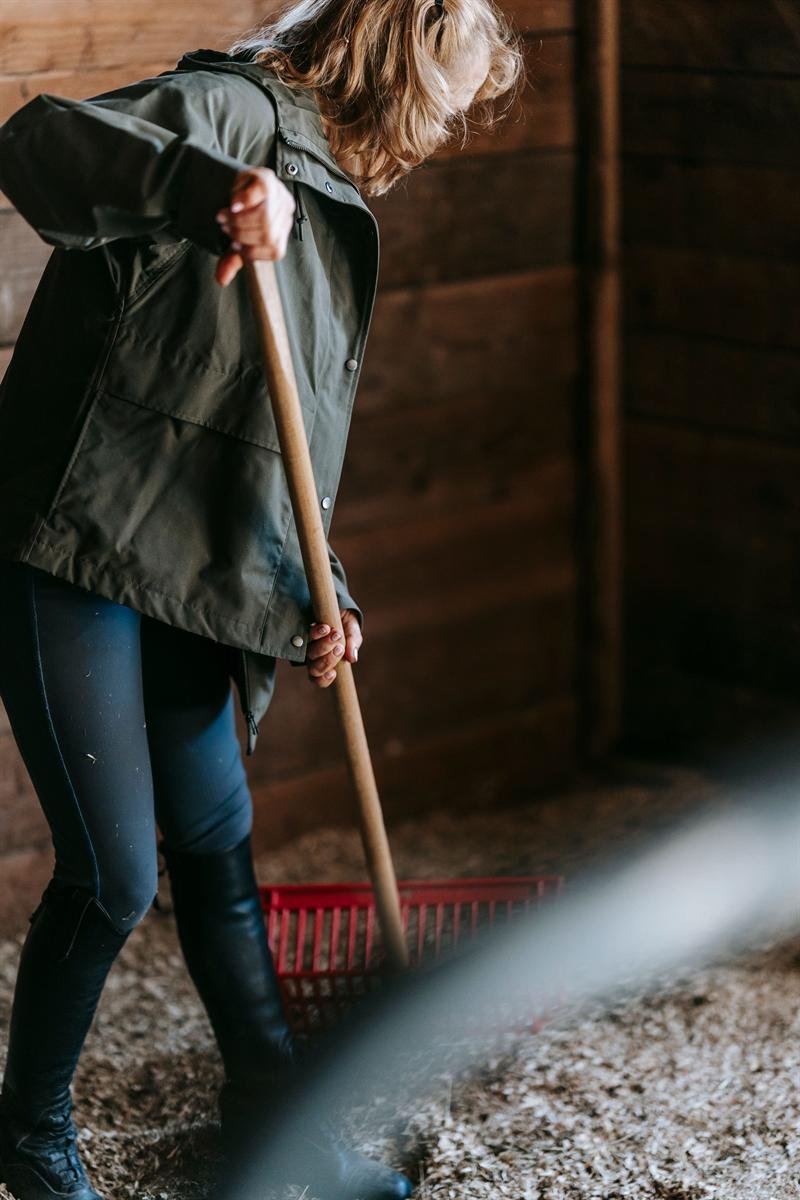
To muck out a stable, remove droppings and wet bedding every day, sweep and tidy the rest, and strip the whole box and disinfect it on a regular schedule. A clean stable protects your horse's lungs and feet, and a good system saves you time and money.
How to muck out a stable: step by step
Mucking out is quicker and safer when you follow the same order each time. Ideally, muck out with your horse out of the stable, but if he is staying in, tie him safely or work calmly around him.
- Prepare: bring a barrow, fork or skip, shovel and brush. Wear gloves and sturdy boots.
- Remove droppings: skip them into the barrow, being careful to shake clean bedding back through the fork.
- Take out wet bedding: remove soiled patches, usually along the walls and in the corner where he stales.
- Sweep the floor: brush the exposed floor and let it dry, ideally with the door open for air.
- Rebuild the bed: bank the clean bedding up the walls, level the floor and top up with fresh material.
- Tidy and check: empty and refill water, check the box for hazards and clear the doorway and yard.
- Take the waste to the muck heap and sweep up after yourself.
Skip out droppings at least twice a day. If you can only muck out once, remove all wet and soiled bedding then, and skip out again whenever you are on the yard.
Daily or deep litter?
There are two main systems, and neither is right for everybody. The best choice depends on your horse, your bedding, your time and your facilities.
| Daily muck out | Deep litter | |
|---|---|---|
| Method | Remove soiled bedding every day and rebuild | Remove droppings and the wettest patches daily; add fresh bedding on top and strip out completely every few weeks or months |
| Pros | Cleaner, drier, easier to monitor, generally better for horses with respiratory problems | Warm, can save time in the short term, can suit some horses and bedding types |
| Cons | Takes more time, uses more bedding | Can build up ammonia and bacteria, can harm hooves and lungs if poorly managed, needs a big clear-out |
Deep litter is not automatically bad, but it needs careful management, because soaked bedding at the base can be unhealthy. Many owners and yards, especially with horses prone to coughs or thrush, prefer a daily system. See our bedding guide for how different materials behave.
Hygiene and deep cleaning
Even with daily care, a full clean-out helps keep the stable healthy. A regular deep clean might look like this:
- Take your horse out and remove all bedding down to the floor.
- Scrape and sweep off dirt, then wash the floor, walls, feeders, water buckets and kickboards.
- Use a disinfectant suitable for stables and follow the label for dilution and contact time. Rinse if instructed, and make sure it is fully dry before bedding down.
- Leave the box open and aired. Sunlight and fresh air help.
- Check for damage: splintered wood, protruding nails, loose fittings and worn rubber mats.
Frequency depends on your system, from a few times a year for a daily-mucked stable to more often with deep litter, or after illness. After any infectious disease, ask your vet about disinfection. See stable hygiene and rubber mats for tips.
Dust, ventilation and respiratory health
Stables are often the most dusty and ammonia-heavy environment a horse lives in. Ammonia comes from urine, and dust and mould spores come from hay, straw and bedding. Both irritate the airways, so good practice matters:
- Keep the top door open whenever possible and make sure the stable has good airflow without draughts. See stable ventilation.
- Do not muck out, sweep or shake bedding with your horse breathing the dust in a closed space. Ideally he should be out.
- Choose low-dust bedding and good-quality forage. Soaking or steaming hay, or switching to haylage, can help dust-sensitive horses.
- If you smell strong ammonia when you open the door, the bed needs attention.
A horse with a persistent cough, nasal discharge or laboured breathing needs veterinary advice. See respiratory problems.
Feet, thrush and bedding
Standing in wet or dirty bedding can lead to thrush and foot problems. Pick out feet daily, look for a bad smell, black discharge or soreness, and tell your farrier or vet if you see any. A clean, dry bed is one of the simplest ways to protect the feet.
Muck heap and waste
Build the muck heap well away from the stable, water supplies, watercourses and boundaries, and keep it tidy and squared off so that it composts and is easy to manage. Check local rules and any rules for your location on storage and disposal, because requirements vary. Many yards arrange collection or sell rotted manure, but do not spread fresh manure on grazing. See pasture care for field hygiene.
Saving time and effort
- Use the right tools: a lightweight fork or skip, a wide barrow and a good brush.
- Keep your bedding consistent so it is easy to remove and top up.
- Teach your horse to stale in one spot where possible.
- Muck out in a set order each day so nothing is missed.
Choosing bedding that suits your system
Your bedding affects how quickly the bed gets wet, how dusty the air is and how much waste you produce. Straw, shavings, paper, hemp, pelleted and rubber-matted options each behave differently, and what works for one horse can irritate another. Horses with respiratory problems usually do best on low-dust bedding, while horses that eat their bed may need a type they cannot overeat. Ask your vet if in doubt, and compare materials on cost, absorbency, dust and disposal before committing, because it also changes how often you will need to muck out. The bedding guide and rubber mats pages go into more detail.
Mucking out kit and safety
Look after your own back as well as your horse. Use a barrow that is not overloaded, keep your hands and feet protected, and take care when lifting. Never leave forks and tools where a horse could step on them, keep the barrow out of the doorway while your horse is in the box, and keep gates and doors secure. Wash your hands afterwards, especially if you have handled a sick horse.
FAQs
How often should a stable be mucked out?
Droppings should be removed at least twice daily, and wet bedding should be taken out every day. Do a complete strip and clean on a regular schedule.
Is deep litter bad for horses?
Not if it is well managed with regular removal of wet patches, but poorly managed deep litter can build up ammonia and bacteria. A daily system suits horses with respiratory or foot issues.
What disinfectant should I use?
Choose a product designed for stables and follow the label. Ask your vet if you are not sure, especially after illness.
How long does mucking out take?
Many people take 15 to 30 minutes per stable, depending on bedding, size and skill. A regular system speeds things up.
Can I muck out with my horse inside?
Many people do, but dust and ammonia are better avoided. Where you can, put him out and keep him away from the dust.
Where should I put my muck heap?
Away from stables, water supplies and watercourses, on suitable ground, and tidy. Check local rules.
Useful official resources
- British Horse Society: horse care and welfare Advice from the UK's largest equestrian charity.
- World Horse Welfare: advice Practical welfare and care guidance.
- Code of Practice for the Welfare of Horses (gov.uk) The legal welfare standards for horse keepers in England.