
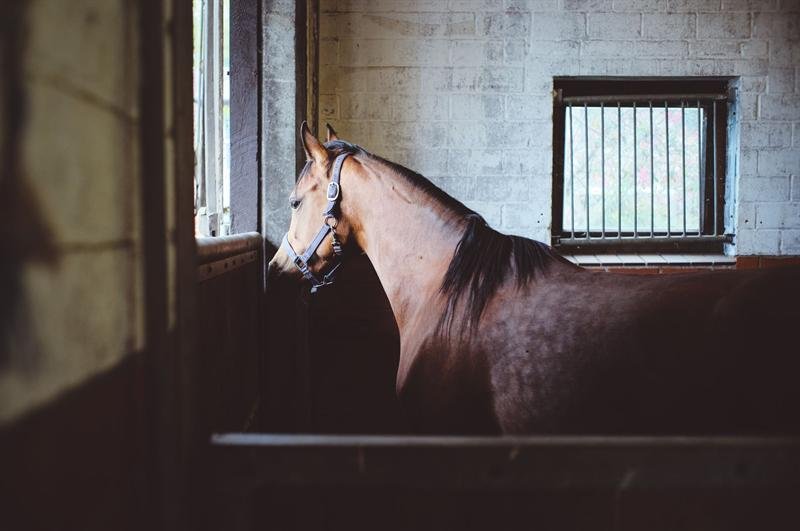
Box walking in horses is when a stabled horse walks repeatedly around its stable, often in a fixed pattern. It is a stereotypic behaviour that signals stress, frustration or an unmet need to move, graze and socialise. It can cause weight loss and wear on the legs, so it is worth addressing early, starting with a check for pain.
What box-walking looks like and why it matters
A box-walker circles the stable continuously, often wearing a track in the bedding and sometimes arriving at the door to look out before going round again. It is particularly common at stress points: when other horses leave, at feed times, or when the horse is newly stabled. Horses that box-walk can burn a lot of energy and struggle to maintain weight, can sweat up, and may churn bedding into a mess that is hard to keep clean. The repetitive turning can also place strain on joints, and the horse may find it hard to settle and rest.
It is one of the behaviours grouped under stable vices, though behaviour scientists call them stereotypies, because they are coping behaviours rather than bad habits. They are not naughtiness and should not be punished.
Why do horses walk round the stable?
- Insufficient turnout and exercise for the horse's temperament and energy level.
- Separation from companions, or a new stable and yard. See separation anxiety.
- Limited forage, with long gaps between meals. Horses are built to graze for much of the day.
- Stress from changes in routine, travel, competition or box rest.
- Anticipation of feed or turnout, especially in a yard where horses are fed at set times.
- Pain or discomfort, such as ulcers or colic signs, which may cause restless pacing.
- Past experience: horses weaned early or kept in poor conditions earlier in life can be more prone, and once a habit forms it can persist.
Step one: rule out pain and illness
A horse that suddenly starts pacing could be in pain, uncomfortable with gastric ulcers, or showing early colic. Look for sweating, looking or biting at the flanks, pawing, lying down and getting up repeatedly, or going off its food. If any of these are present, call your vet at once. For a horse that has paced for months, a vet check is still sensible, because dental problems, ulcers and a sore back can all add to a horse's stress. Behaviour change is often the first sign of a physical problem, so the vet comes before the behaviourist.
How to stop box-walking: a step-by-step plan
- Check for physical causes. Ask your vet for advice, particularly if the behaviour is new.
- Turnout. Maximise it, ideally with a friend. If the horse is on box rest, discuss options with your vet, such as small-paddock turnout or companion access, and what is suitable for the injury.
- Company. Stable next to a friend, with a grille or partial wall, and ensure the horse can see others.
- Forage. Offer plenty in multiple small piles or slow-feeders to keep the horse busy and mimic grazing. See hay and haylage.
- Routine. Keep feeding and exercise times predictable, and avoid last-minute changes.
- Stable size and layout. A larger stable or one with a view of activity can help. See stable design.
- Work. Appropriate daily exercise, such as hacking, schooling and groundwork, helps release energy.
Avoid anything that restricts movement, such as placing obstacles in the stable, without addressing the cause, since the horse will usually find another outlet and may become more frustrated.
Changes that make the biggest difference
| Change | Why it helps | Practical example |
|---|---|---|
| More turnout | Meets the need to move and graze | Extra hours out, even in a small paddock |
| More forage | Reduces hunger and gives the horse something to do | Several small-holed hay nets at different heights |
| Company | Reduces isolation and anxiety | Stable next to a friend, or share a field |
| Predictable routine | Lowers anticipation | Feed and turnout at set times |
| Better view | Gives mental stimulation | Open door or window with a view of the yard |
| Veterinary check | Finds hidden pain | Back, teeth and gastric health review |
Box-walking on box rest or at competitions
Horses on enforced box rest after injury or surgery often start pacing, and movement may be the last thing they should do. Talk to your vet about the plan: keep a companion in view, use hay nets in several places, add safe enrichment, and ask whether calming support is appropriate. At competitions and when travelling, horses can pace in a strange stable. Allow time to settle, bring familiar hay and bedding, stable the horse near others where possible, and keep walks in hand for some light movement. See recovery.
Managing the stable itself
Small details in the stable can make a real difference. Keep the floor non-slip and well bedded so that pacing does not injure the legs, and check that the bedding stays clean and dry because a box-walker churns it up quickly. Make sure the stable is well ventilated and light, with an open view where possible. Avoid placing the water and feed in positions that force the horse to turn tightly in a corner, and remove anything that could trap a leg. See stable hygiene for keeping a busy stable clean.
Is box-walking harmful and will it stop?
It is a welfare signal rather than a dangerous act in itself, but it can lead to weight loss, tired joints and a horse that struggles to relax. Many horses improve a great deal when their daily life is changed, particularly with more turnout and company. Some long-term walkers continue at lower levels when stabled, especially when excited. The aim is a horse that is calmer and happier, with the behaviour reduced to a minimum, rather than a guarantee that it will stop for good.
Frequently asked questions
Will box-walking stop if I turn the horse out?
Often it reduces significantly, though some long-term walkers continue at lower levels when stabled.
Why does my horse walk round the stable all night?
Night is a long time without forage or company. Ensure there is plenty of hay, a companion nearby, and check with your vet that there is no pain or ulcer issue.
Is box-walking a vice I must declare when selling?
Yes, an honest description protects both you and the buyer. See selling a horse.
Does box-walking cause weight loss?
It can, because the horse burns extra energy. Offer more forage and ask your vet or a nutritionist for advice if your horse is losing condition.
Can I stop a horse box-walking with a barrier?
Barriers may stop the pattern but usually leave the stress in place, so the horse often finds another outlet. Change the management first.
Can a horse that box-walks still compete?
Many do, but the behaviour is a welfare flag. Work on turnout, company and forage, and plan travel and stabling to keep stress low.
Useful official resources
- World Horse Welfare: advice Behaviour and welfare guidance.
- RCVS Find a Vet Rule out pain with an equine vet.
- British Horse Society: horse care and welfare Handling and behaviour advice.