
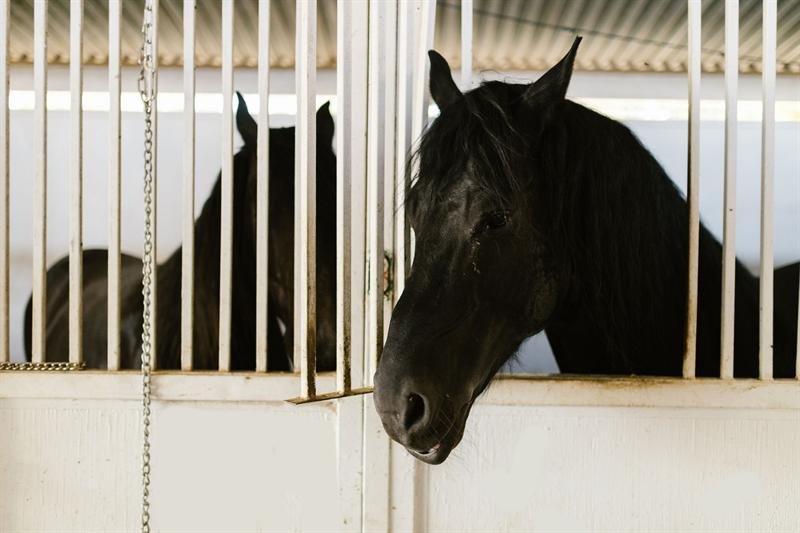
Crib biting in horses is when a horse grasps a fixed object with its incisors, arches its neck and gulps air with a characteristic grunt. Windsucking is the same action without the object. Both are stereotypic behaviours linked to management and, in some horses, to gut discomfort. Managing the horse's environment, diet and health is more effective than simply blocking the habit.
What is crib-biting and windsucking?
A crib-biting horse typically grips a stable door, fence rail, bucket rim or other edge, pulls back slightly and swallows air with a grunting sound. A windsucker does much the same without gripping anything, arching the neck and drawing air in. Both are known as oral stereotypies: repetitive behaviours with no obvious purpose that are thought to develop when a horse's needs are not fully met. They are different from ordinary chewing of wood, which is common in horses on low-forage diets and can occur without any air swallowing.
Why does it matter?
Crib-biting often starts in youngsters, particularly around weaning, or in stabled horses on low-forage, high-concentrate diets. Many people assume it is harmless, but research on crib-biting horses has associated it with gastric ulcers, dental wear to the incisors and certain types of colic, so a vet check is worth having. It may also affect condition in some horses and can damage fencing and woodwork, which is why it can be a concern when buying or selling. These are associations, not guarantees, and plenty of crib-biters live long, healthy lives.
Why do horses crib-bite?
- Low-fibre, high-starch diets and long gaps without forage. Horses are designed to eat for most of the day.
- Gastric discomfort or ulcers, which may be a cause or a consequence of the behaviour.
- Early weaning and stressful stabling or management.
- Boredom, lack of turnout or lack of company.
- Individual temperament, since some horses are more prone than others, and there may be an inherited element.
- Frustration or stress, for example around feeding time or when a companion leaves.
Often several factors combine, which is why one fix rarely works on its own.
Crib biting, ulcers and colic
The link between crib biting, ulcers and colic is worth understanding. Some horses crib after gastric discomfort develops; others may develop discomfort after they have been cribbing for a long time. Ulcers can only be confirmed by gastroscopy at a vet's practice. Signs that may point to gastric problems include poor appetite, girthiness, poor performance, changes in attitude, weight loss and recurrent mild colic, but these signs are not specific. Do not try to diagnose yourself: ask your vet. If your horse has any colic signs, treat it as an emergency. See colic.
How to stop a horse crib biting: a humane management plan
- Vet check. Ask about ulcer diagnosis (gastroscopy), dental health and any signs of colic or poor condition.
- Forage first. Provide near-constant access to good-quality hay or haylage, using small-holed nets if the horse needs to slow down. Feed small, frequent meals, and keep concentrate minimal and low in starch. See haylage and hay.
- Turnout and company. The more the horse lives like a horse, the fewer cribbing sessions you will see. Aim for as much turnout as possible with compatible companions.
- Remove the temptation where practical. Use electric fencing or post-capping, or paint chewing surfaces with a vet-approved, non-toxic deterrent, but only as support for better management, not as the only measure.
- Provide alternatives. Safe things to chew on, such as hay in nets, safe browse and foraging toys.
- Reduce stress. Keep routine consistent, avoid isolation, and plan feeding so the horse is not frustrated waiting.
- Monitor. Keep a note of when and where the horse cribs, because patterns can show what triggers it.
Management checklist
| Area | What helps |
|---|---|
| Forage | Long periods with access to hay, haylage or grazing; avoid gaps of several hours without food. |
| Concentrates | Keep to a minimum and low in starch; split into small meals. |
| Turnout | As much as practical, ideally with a group. |
| Company | Allow sight, sound and ideally touch of other horses. |
| Environment | Protect edges, use post-caps or electric tape, offer varied enrichment. |
| Health | Vet check including teeth and, if advised, gastroscopy. |
| Routine | Predictable feeding, turnout and work. |
Crib biting collars and surgery
A crib biting collar presses on the throat when the horse tries to arch its neck. It can stop the behaviour but is controversial: many welfare experts are concerned that it simply blocks a coping mechanism, can cause discomfort and may not address any gut problem. A collar must fit properly, be checked regularly for rubbing and be used only after speaking to your vet. Surgical procedures exist, but results are mixed, they carry risks and they are rarely recommended. Always look first at management and health, and be wary of any quick fix that promises to cure the habit.
Living with a crib-biter
For most owners the realistic goal is a comfortable, healthy horse that cribs less, not one that never cribs at all. Once a stereotypy is established it can become a habit in its own right, so it may continue even when conditions improve. Keep an eye on weight, front tooth wear and appetite, schedule regular dental checks, and discuss any changes with your vet. Many crib-biters do well in competition and everyday work when they are well managed, fed plenty of forage and given a good social life.
Will other horses copy it?
Many owners worry that crib-biting is "catching". Evidence for horses copying the behaviour is limited, and it appears more likely that horses kept in similar poor conditions develop similar problems. Even so, if you have a young or vulnerable horse nearby, good management will reduce the risk, and there is no need to isolate a crib-biter, which would add to its stress.
Buying or selling a crib-biter
If you are buying a horse, ask directly about stereotypic behaviour and see the horse in its stable at different times of day, because it is easy to hide briefly. Check front teeth wear and ask your vet to include it in a pre-purchase exam. See vetting and buying checklist. If you are selling, be honest in your description: it protects the buyer and you.
FAQs
Is crib-biting the same as windsucking?
They are closely related. Crib-biting involves gripping an object, while windsucking is done without one. Management approaches are very similar.
Can other horses learn to crib?
Evidence for copying is limited, but if you have a young or vulnerable horse nearby, good management will reduce risk.
Do crib-biting horses have to be stabled alone?
No. Isolation tends to increase stress. Good company and turnout are protective.
Does crib-biting reduce a horse's value?
It can, and it should be declared when selling.
Will a crib-biting collar cure it?
No. It may physically prevent the action but does not remove the cause, and many welfare experts have concerns. Look at diet, turnout and health first.
Can an adult horse stop crib-biting?
Many horses reduce the habit with better management, but long-established crib-biters often never stop completely. The aim is to improve welfare and health, not just to stop the sound.
Useful official resources
- World Horse Welfare: advice Behaviour and welfare guidance.
- RCVS Find a Vet Rule out pain with an equine vet.
- British Horse Society: horse care and welfare Handling and behaviour advice.