
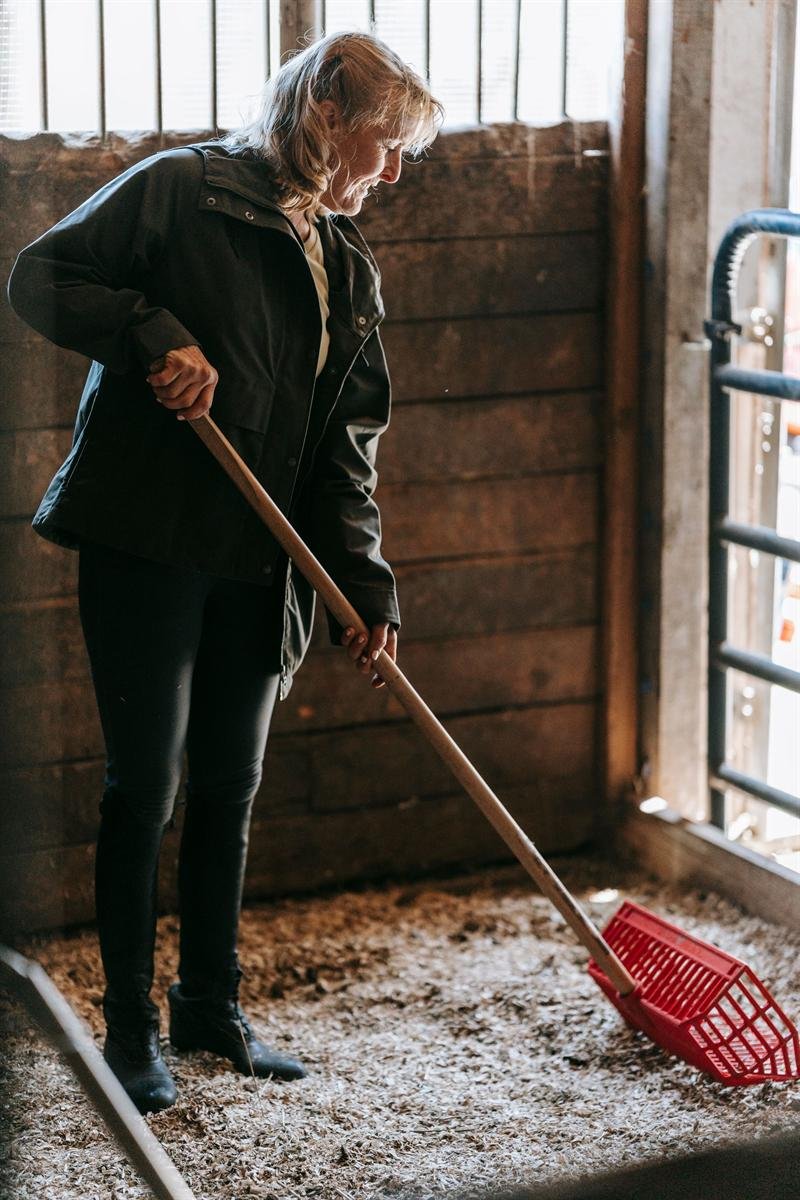
Stable hygiene is the set of cleaning habits that keep bacteria, fungal spores, ammonia and flies down in the place where your horse spends many hours. A routine that is quick enough to do every day will always beat a perfect clean done occasionally. Aim to remove droppings and wet patches daily, wash feed and water containers often, and deep clean on a set schedule.
Why stable hygiene matters
A stabled horse breathes, eats and lies down in the same small space. Wet, dirty bedding produces ammonia, which irritates the airways, and a damp, dirty environment encourages skin problems such as mud fever and rain scald, as well as thrush in the feet. Dirty feed and water containers can carry bacteria and moulds, and a messy yard attracts rodents and flies. On a shared yard, poor hygiene also makes it easier for infections to pass from horse to horse.
Good hygiene does not mean sterile. It means stopping the build-up of the things that cause trouble, and making the routine easy enough that it happens on busy days as well as quiet ones.
A yard hygiene routine: daily, weekly and seasonal
| How often | What to do |
|---|---|
| Twice a day, or at least daily | Skip out droppings and wet patches; refill water; clean feed bowls; sweep the yard |
| Daily or every few days | Muck out fully, bank the bed, and air the floor; check rugs and walls for damage |
| Weekly | Scrub water buckets or troughs; wash down floors; clear cobwebs; tidy tack and feed rooms |
| When a horse leaves, or after illness | Strip, wash, disinfect and dry the stable fully, then re-bed |
| Seasonally | Check roofs, gutters, drains and electrics; control pests; review the muck heap |
A stable cleaning schedule works best when it is written down and shared. On a livery yard, agree who does what and when, and keep a simple rota on the tack room wall. See stable cleaning for the mucking-out routine itself, and bedding for the pros and cons of different materials.
How to disinfect a stable
- Remove all bedding, droppings and loose material first. Disinfectant does not work on dirty surfaces.
- Sweep the floor and walls, and remove cobwebs and dust. Take horse, rugs and equipment out of the stable.
- Scrub floors, walls and fittings with hot water and detergent, then rinse.
- Apply a disinfectant suitable for animal housing, at the dilution and contact time on the label. Wear gloves, and keep horses out until surfaces are rinsed and dry.
- Allow to dry completely before re-bedding, with doors and windows open for good airflow.
- After infectious disease, such as strangles, follow your vet's advice on isolation and disinfection.
Choose products carefully and never mix them, because some release harmful gases when combined. Keep chemicals locked away from horses and children, and follow local rules on drainage so disinfectant does not enter watercourses. Wood is porous and hard to disinfect fully, so rubber mats or sealed floors are easier to keep clean; see rubber mats.
Preventing disease spread on yards
Many infections travel on hands, buckets, brushes, clothing and shared equipment, not just from nose to nose. On a livery or busy yard, a few habits make a big difference.
- Give each horse their own buckets, brushes, headcollar and tools, and never share them without washing and disinfecting.
- Wash your hands, especially after handling a horse with a cough, discharge, skin condition or wound.
- Isolate any horse that shows signs of infectious disease, and handle it last, using separate clothing or washing before moving to others.
- Quarantine new arrivals for a period agreed with your vet, and ask visiting horses to be up to date with vaccinations; see vaccinations.
- Keep water troughs clean and avoid shared drinking from communal containers where possible; see water systems.
- Do not let visitors, dogs and vehicles wander freely through stable areas.
Take your vet's advice if you suspect infectious disease, such as a high temperature, nasal discharge, swollen glands or a sudden cough. Early isolation protects everyone's horses.
Muck heaps and waste
Site the heap away from watercourses, ditches and boundaries, and downwind of the stables and neighbours. A tidy, square heap is easier to manage and keeps flies and smell down. Leaching liquids from heaps can pollute water, and in England rules apply to storage near watercourses, so check DEFRA guidance and your local authority. Many yards arrange regular collection or composting. Mixing manure with straw tends to compost faster than shavings, and a covered heap reduces run-off and flies.
Flies, rodents and fire
- Flies: remove manure, keep heaps covered and away from stables, empty standing water, and use fly traps or other controls. See fly protection.
- Rodents: store feed in lidded metal or hard plastic bins, clear spilt feed, and use pest controls safely away from horses and wildlife. Rodent droppings can contaminate feed and hay.
- Fire safety: no smoking, tidy electrics, hay stored separately from stables, extinguishers serviced and accessible, and an evacuation plan with headcollars to hand.
Feed rooms, tack rooms and shared spaces
Hygiene does not stop at the stable door. Feed rooms attract mice and rats, and mouldy scraps in the bottom of a bin can make a horse ill. Empty and wipe feed bins regularly, use up old feed before opening new bags, and never top up on top of stale feed. Keep hay and haylage dry, off the floor and out of the rain, and discard anything that smells musty or shows visible mould.
- Feed bowls and mangers: scrub daily with clean water, removing old feed and saliva, and rinse well.
- Grooming kit: wash brushes and hoof picks from time to time, especially after use on a horse with a skin condition. See grooming kits.
- Rugs and numnahs: wash and dry them regularly. Damp or dirty rugs encourage skin trouble.
- Wheelbarrows, forks and shovels: brush them down and store them under cover so they do not carry dirt from stable to stable.
- Yard surfaces: sweep daily, keep drains clear and fix puddles, which breed flies and spread mud.
Keeping the air clean
Dust and ammonia are the invisible side of hygiene. Remove wet bedding daily, damp or steam dusty hay, avoid sweeping with horses in the stable and keep forage stores outside the stable block where possible. Good airflow carries away what you cannot see; see stable ventilation.
Frequently asked questions
What is stable hygiene?
It is the routine of removing waste, cleaning feed and water containers, disinfecting when needed and controlling pests, so the stable stays healthy for the horse.
How often should I disinfect a stable?
Whenever a horse leaves or an infection has been present, and at regular intervals such as a seasonal deep clean. Routine daily cleaning removes most of the muck between disinfections.
Is it OK to muck out with the horse in?
Many people do it. Where possible, keep dust down by damping floors, and move horses out for deep cleans, which are dustier and involve chemicals.
How do I reduce ammonia smells?
Remove wet bedding daily, make sure there is good drainage under the bed, and improve ventilation. A strong smell at nose height means the air is not good enough.
Can I use household bleach to disinfect?
Choose a disinfectant intended for animal housing and follow the label. Never mix products, and rinse and dry surfaces before horses return.
How do I stop infection spreading on a shared yard?
Use separate equipment, wash hands, isolate sick horses, quarantine new arrivals and talk to your vet early.
Useful official resources
- Code of Practice for the Welfare of Horses (gov.uk) Legal standards for shelter, space and care.
- Ragwort code of practice (gov.uk) How to control ragwort on your land.
- British Horse Society: horse care and welfare Yard and grazing advice.