
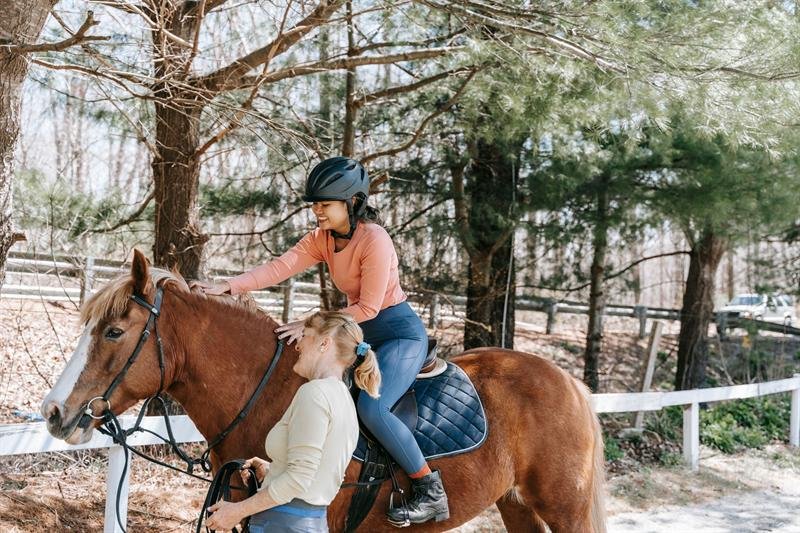
To control a horse, use clear, consistent aids and a balanced seat rather than pulling: your seat, legs, hands and voice work together to ask for forward movement, direction and stopping. A horse that understands the aids and is going forward willingly will turn and stop with very little effort, so your best safety tool is a reliable stop achieved through training rather than strength.
The principles of horse control
Control is a conversation, not a contest. The horse is far stronger than you, so no rider can win by force. Instead you teach the horse to respond to light signals and reward him the moment he does. Three things matter most: the horse must be going forward, he must be straight and balanced, and you must be consistent. If any of these slip, control suffers.
Your own balance underpins everything. A rider who is bouncing or gripping gives the horse confusing signals, so work on your riding position alongside your aids.
Riding aids: the natural aids
Riders use four main aids, working together.
- Seat: your weight and the movement of your pelvis influence pace and balance. Sitting deeper and slowing your seat helps to slow the horse.
- Legs: squeeze or press to ask for forward movement or bend; a leg behind the girth can ask the quarters to move over.
- Hands: a steady, elastic contact that guides and receives, never a tug. They direct the front end but should not do the stopping alone.
- Voice: useful for reassurance and for schooling, such as a clear "and walk".
Artificial aids, such as a whip or spurs, only reinforce the natural aids and are used sparingly under instruction. They are not substitutes for them. Learn the aids in lessons first; see riding lessons and beginner riding.
How to steer a horse
- Look where you want to go. Your head and shoulders guide the horse more than you might expect.
- Open the inside rein slightly, like opening a door, rather than pulling it back.
- Keep the outside rein steady to support the shoulder and prevent him from falling out.
- Use your inside leg at the girth to keep the horse bending round it, and your outside leg slightly behind to stop the quarters swinging out.
- Release the aid as soon as he responds.
Steering that relies on the inside rein alone pulls the horse's head round while his body drifts the other way. Think of turning the whole horse, not just his neck.
How to stop a horse
- Prepare. Sit tall and breathe out, so your seat becomes still and heavier.
- Close your legs gently. This asks the hind legs to step under you, so the halt is balanced rather than a lean on the forehand.
- Hold the reins steady. Resist briefly, do not haul. Think of closing your fingers on a sponge.
- Release. As soon as he stops, soften the reins to reward him.
If he does not respond, repeat the aid rather than increasing it, and ask your instructor to help refine your timing.
What is a half-halt?
A half-halt is a brief moment where you tighten your core, close your legs slightly and squeeze and release the reins. It rebalances the horse, warns him that something is coming and helps slow the pace without a full stop. Repeat it as often as needed rather than hanging on to the reins. It is one of the most useful skills in riding, and it takes practice and good instruction to get right.
A horse that falls onto the forehand or rushes needs better balance, not stronger hands. Work on circles, transitions and pole exercises; see schooling for riders and the horse-side guidance in schooling a horse.
First rule out pain
Before blaming a horse for poor control, rule out pain or discomfort. A horse that is tense, resistant, rushing, napping or suddenly explosive may be telling you something hurts. Common culprits include:
- Back pain or an ill-fitting saddle; see saddles.
- Sharp teeth or a mouth problem, which makes bit contact uncomfortable; see dental care.
- Foot problems, poor trimming or shoeing, or mild lameness; see lameness.
- Poorly fitted bridle, noseband or bit; see bits.
Ask your vet to examine the horse, and bring in a qualified saddle fitter, equine dental technician or physiotherapist where appropriate. A sudden change in behaviour is a strong clue.
Horse running away with you: what to do
Most loss of control has a cause worth finding.
- Excess energy: too much hard feed or too little turnout. Review the diet and exercise.
- Anxiety: unfamiliar places, other horses or something scary. Build trust with groundwork and slow exposure; see building confidence and spooking.
- Rider tension: a nervous rider grips and holds their breath, and the horse feels it.
- Training gaps: a horse that was never taught to slow from the seat may lean on the hands.
If a horse bolts or runs away, stay calm, sit deep and try a circle or turn to slow down, since pulling harder in a straight line often makes it worse. Breathe out and speak calmly. Patterns like napping need a calm, consistent plan and often professional help.
If a horse is dangerous, such as bolting repeatedly, bucking, rearing or refusing to be controlled, do not keep riding it alone. Seek a qualified professional, such as a BHS-qualified instructor or an experienced, reputable trainer, and get a vet check first. See problem horses.
Building control in everyday handling
Control starts on the ground. A horse that leads politely, stands to be mounted and halts when asked is far easier to control when ridden. Practise simple groundwork regularly, such as halting, backing up and turning in hand; see groundwork. Be consistent, because horses learn best from calm repetition and clear rewards.
FAQs
How do I control a horse without pulling?
Use your seat, legs and a steady, elastic contact. Ask clearly, release when he responds and rely on training and balance rather than strength.
Will a stronger bit give me more control?
Rarely. A harsher bit can make a horse tense or resist, and tends to mask a training gap. Seek advice before changing; see bits.
Why does my horse rush the canter?
Often from lost balance, tension, pain or too little preparation. Slow the trot first, use half-halts and ask again, and rule out discomfort.
What is the quickest way to stop a horse?
Sit deep, close your legs to engage the hindquarters and hold the reins steadily. If he is running, a circle is often more effective than a straight pull.
Should I hold the reins tighter on a spooky horse?
Keep a steady, soft contact and use your leg to keep the horse forward. Gripping the reins can make a spook worse.
When should I get professional help?
If the horse is dangerous, if you feel frightened or if the problem is not improving, ask your vet to rule out pain and then book a qualified instructor or trainer.
Useful official resources
- The Highway Code: rules for horse riders (gov.uk) Rules 47 to 58 for riding and leading horses on the road.
- The British Horse Society Riding, safety and access advice.
- British Riding Clubs Training and competition for adult riders.