
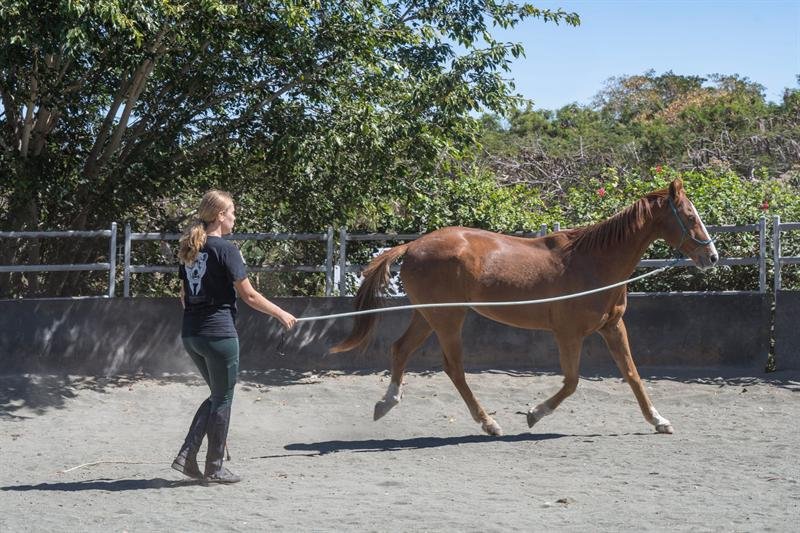
Problem horse training starts with understanding why, because there is rarely such a thing as a bad horse, only horses with an unmet need, an unnoticed pain or a gap in their training. When a horse naps, bucks, rears or will not load, work out the cause before you decide what to do about it.
Why is my horse misbehaving?
Difficult horse behaviour almost always has a reason, even if it is not obvious. Horses do not plan to be awkward; they react to discomfort, fear, confusion or frustration. The main causes tend to fall into four groups.
- Pain or ill health: the most important and most commonly missed cause.
- Management and lifestyle: too little turnout, company or forage, or too much energy-rich feed.
- Training gaps: the horse has never truly been taught what is being asked, or has been taught inconsistently.
- Rider, handler or equipment: a mismatch of ability, nerves, timing, tack or bit.
Work through them in this order. It is tempting to jump straight to training, but a horse in pain cannot learn properly, and training a sore horse to "behave" can make matters much worse.
Step one: rule out pain and health
Problem behaviour is often a horse's way of saying that something hurts. Common culprits include:
- Teeth and mouth problems, from sharp edges to hooks.
- A poorly fitting saddle or tack, or a sore back.
- Foot problems or lameness, which can be subtle; see lameness.
- Gastric ulcers, hormonal issues or other medical problems.
- Pain from earlier injuries, or arthritis in older horses.
- Sore hocks, stifles, or neck and back muscles.
Always involve your vet first, and have saddle, teeth and feet checked by suitably qualified people: a Qualified Saddle Fitter, an equine dental technician or vet, and a registered farrier. See veterinary advice. Many behaviour problems fade once the underlying pain is treated.
Step two: management and lifestyle
Horses are designed to move, graze and live with others. A horse that spends long hours stabled, with little exercise and a high-energy diet, may become wound up, with problems that look like disobedience. Review these points before blaming temperament.
- How many hours of turnout does he get, and with whom?
- Does he have access to forage for most of the day?
- Is his feed matched to his workload, and is he getting more energy than he uses?
- Is his routine consistent, with a calm, predictable day?
- Does he get enough varied work and mental stimulation?
See also horse behaviour for the roots of stable vices and stress behaviour.
Small changes can make a big difference. Adding more turnout, swapping rich feed for more forage, or giving a horse a companion often reduces tension within a few weeks. Make changes gradually and note the effect, rather than altering everything at once.
Step three: look at training and rider
- Gaps: has the horse really been taught what you are asking? Return to groundwork if in doubt.
- Consistency: do different riders or handlers ask in different ways?
- Timing: is the release coming at the right moment?
- Rider ability and nerves: mismatched horse and rider is a common cause of problems; see confidence.
- Equipment: check the bit, noseband and other tack; see bits.
Be honest about your own skills. A trainer or instructor who can watch you both in action is often the quickest way to spot what you cannot see yourself.
Behaviour problems under saddle and where to look
| Problem | Common causes to check | Start here |
|---|---|---|
| Refusing to go forward | Pain, fear, lack of understanding, herd attachment | Napping |
| Bucking under saddle | Back pain, ill-fitting saddle, excess energy, discomfort in canter | Bucking |
| Rearing | Pain, frustration, fear; potentially dangerous | Rearing |
| Difficulty loading | Fear, previous bad experience, poor preparation | Loading a horse |
| Spooking and anxiety | Vision, nerves, lack of exposure, high-energy diet | Spooking |
| Poor control | Training gaps, tack, rider balance | Horse control |
| Separation anxiety | Strong herd bond, lack of independence training | Separation anxiety |
Rehabilitating a problem horse: a practical plan
Rehabilitating a problem horse is a gradual process. A structured approach helps you stay calm and consistent.
- Stop and make it safe: if the behaviour is dangerous, stop riding or handling in that way until you have help.
- Get a vet check: including back, teeth, feet, saddle and tack. Ask your vet whether further investigation is needed.
- Review management: turnout, feed, company and routine.
- Go back to basics: simple groundwork, then simple ridden work he finds easy and rewarding.
- Change one thing at a time: so you can see what helps.
- Keep a diary: note when the problem happens, what came before and what happened after. Patterns often emerge.
- Build up slowly: reward calm behaviour, and finish sessions on a good note.
- Review after a few weeks: and bring in a professional if progress stalls.
Progress is rarely a straight line. Expect good days and bad days, and avoid the temptation to rush back to where you were before.
Finding a qualified behaviourist or trainer in the UK
Dangerous behaviour such as serious rearing, bolting or aggression needs experienced, qualified help. Ask your vet for a recommendation; in the UK, vets can refer you to a behaviourist, and some work with them directly. Look for a trainer or horse behaviourist who:
- Uses kind, evidence-based methods and can explain their plan in plain language.
- Works with your vet, instead of replacing the vet's advice.
- Has qualifications and experience that can be checked, such as relevant BHS qualifications or recognised behaviour training.
- Welcomes you to watch them work and can provide references.
Avoid anyone who relies on fear, force or promises a quick fix. In the UK the titles "trainer" and "behaviourist" are not tightly regulated, so check experience and ask questions. Costs vary by region and by practitioner, so ask for a clear quote before starting.
FAQs
Why is my horse suddenly misbehaving?
A sudden change is a strong sign of pain or illness, so call your vet. Changes in routine, feed, tack or rider can also play a part.
Can an older problem horse change?
Often yes, once pain, management and training gaps have been addressed. It may take time and consistency, and some horses need an experienced rider or trainer.
Should I sell a horse with problems?
Only after you have tried to understand the cause. If you do sell, be honest with buyers; see selling a horse.
What do I do about a horse that is dangerous?
Stop, keep yourself safe and ask your vet to rule out pain. Then get help from an experienced, qualified trainer or behaviourist before riding or handling the horse again in the same way.
Is punishment ever the answer?
Punishment tends to make fearful or painful horses worse and can damage trust. Calm, clear, consistent training that rewards the behaviour you want works better.
How long does it take to fix a problem?
It depends on the cause and the horse. Some problems fade within weeks once pain is treated; others take months of steady work. Beware anyone promising an instant fix.
Useful official resources
- The British Horse Society Training, coaching and qualifications.
- World Horse Welfare: advice Handling and welfare guidance.