
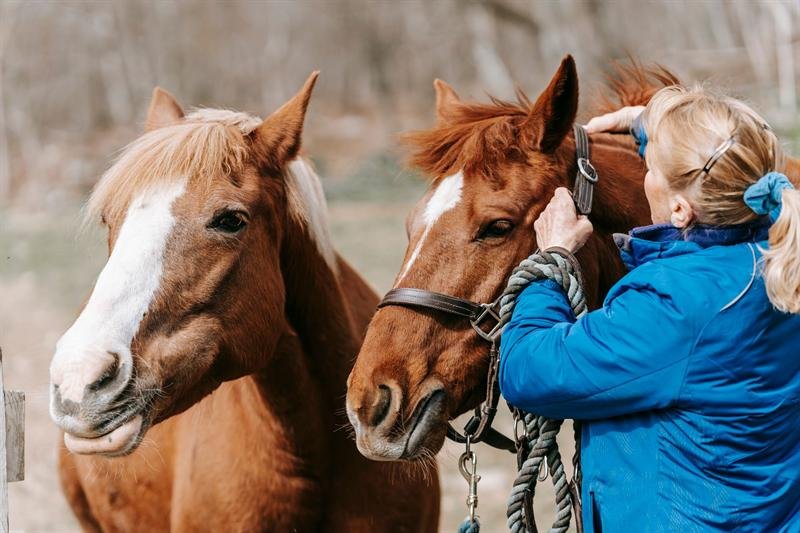
Building a horse's confidence happens through small, repeated successes, never by overfacing the horse or rider. A nervous horse needs trust, clear routines and gradual exposure to new things, while a nervous rider needs the right horse, the right support and the freedom to go at their own pace.
Understanding fear in horses
As prey animals, horses are hard-wired to flee from anything that might be a threat. A spook is not misbehaviour; it is a survival reflex. Fear can also grow from pain, poor handling, lack of experience or a nervous rider. Horses read body language very well, so a tense rider can make a worried horse worse. Understanding this helps you respond calmly, not with punishment. See spooking.
Rule out pain first
Before any confidence training, rule out discomfort. A sudden change in a horse's behaviour, such as new spooking, tension or reluctance, is often physical. Common causes include a poorly fitting saddle, a sore back, dental problems, hoof pain, eye problems and gastric ulcers. Fear may also come from a sight problem, because a horse that cannot see clearly may be startled easily. Ask your vet to check your horse first, and consider a saddle fitter, dental professional or equine physiotherapist. See veterinary advice.
How to build a horse's confidence, step by step
- Start with trust on the ground: calm handling, leading and yielding exercises. A horse that trusts you on the ground is far easier to reassure when ridden. See groundwork.
- Keep routines predictable: turnout, feeding and work at consistent times lower stress.
- Expose gradually: introduce new objects, such as tarpaulins, flags or plastic, at a distance. Let the horse look and sniff, and reward calm curiosity.
- Use approach and retreat: take a step closer to the scary object, then relax and move away, again and again, so the horse learns that calm gets him away from pressure.
- Stay below his threshold: work at a level where the horse notices but does not panic. If he starts to tense, increase the distance.
- Take a lead from a friend: a steady companion horse helps nervous horses, particularly when hacking.
- End on a good note: finish each session with something easy the horse can succeed at.
Desensitising a horse the right way
Desensitising means helping a horse get used to something until it no longer triggers fear. Done well, it is slow and kind. The key is to avoid flooding, where a horse is forced to endure something terrifying until he gives up. It may look like acceptance, but it often leaves him shut down and still fearful, and it can make dangerous reactions more likely later. Keep sessions short, reward relaxation and never rush. Common things to introduce include:
- flapping plastic, flags and tarpaulins;
- umbrellas, clippers and sprays;
- traffic and farm machinery, from a safe distance at first;
- puddles, ground poles and unfamiliar surfaces;
- new places, trailers and other horses. See loading a horse.
Common signs of a worried horse
| Sign | What it may mean |
|---|---|
| Raised head, wide eyes, tense neck | Alert or worried; slow down and give space |
| Spooking or shying | Fear response, or possibly pain or poor vision |
| Napping or refusing to go forward | Fear, confusion or discomfort; see napping |
| Sweating without work, trembling | Significant stress |
| Shutting down, standing frozen | Overwhelmed; reduce pressure and go back a step |
Building trust through everyday handling
Confidence is not only built in training sessions. Everyday handling shapes how a horse feels about people and the world around it. Be consistent in your cues, move calmly and give clear, fair responses. Reward the behaviour you want with a pause, a scratch or a release of pressure, and avoid punishment for fear, because it teaches the horse that the scary thing is made worse by you being there. Spend relaxed time with your horse with no demands, whether grooming, hand-grazing or simply standing together. Horses that have varied, calm experiences, plenty of turnout and good company usually cope better with new situations. Young horses and horses that have lived in one place for years are likely to need extra gentle introductions. See young horses.
Nervous rider confidence
- Choose a horse that suits your ability, calm and reliable rather than flashy.
- Ask your instructor to break problems into small steps, and to let you stop when you need to. See riding lessons.
- Practise in a safe, enclosed area with a helper at first.
- Use good safety kit, including a hat to current standard and a body protector, so that you feel protected. See riding safety.
- Learn breathing and relaxation techniques, and look at your own fitness. See rider fitness.
- Ride out with a calm friend to build up to hacking. See hacking.
- Celebrate small wins, and record your progress.
Loss of nerve is common, particularly after a fall or a change of horse, and plenty of riders get through it with patience and support.
Confidence on hacks and in new places
Many horses are confident at home and worried elsewhere. Build up gradually: lead the horse out in hand first, then ride short routes in company, increasing distance and difficulty slowly. Choose quiet times of day and familiar routes while you build trust, and have a plan for what to do if you meet something frightening, such as dismounting and leading past. Take a calm companion horse where you can, and let the nervous horse lead only when he is ready. Practise at small, low-stakes outings such as a quiet clinic or a short box trip before a busy event, so that new places become normal rather than a source of anxiety.
Knowing your limits
Confidence work should feel manageable. If either of you is panicking, go back a step. If you are unsure, involve a qualified professional, ideally someone experienced with nervous horses or riders, such as a good instructor or a qualified behaviourist. There is no shame in this, and it can save months of frustration and prevent accidents. Any dangerous behaviour, including bolting, rearing, violent bucking or aggression, should be handled with qualified help rather than tackled alone. See also problem horses.
FAQs
How do you build confidence in a nervous horse?
Rule out pain, build trust with calm groundwork, keep routines predictable and introduce new things gradually, rewarding calm behaviour. Never force a frightened horse.
What is desensitising a horse?
It is the gradual process of helping a horse get used to something that worries it, in small steps and at a distance where it stays calm.
Can a horse that has been frightened recover?
Often yes, though it may take time and patience. Consistent, kind handling and a good routine help rebuild trust.
Why is my horse suddenly spooking?
A sudden change can point to pain, poor vision, a diet or environment change, or a frightening experience. Ask your vet to check him first.
Should I stop riding if I lose my nerve?
Not necessarily. Many riders take a break or return to basics with lessons on a very safe horse. Talk to your instructor.
When should I get professional help?
If either of you is struggling to progress, if the horse is dangerous, or if you feel unsafe, bring in a qualified instructor or behaviour professional.
Useful official resources
- The British Horse Society Training, coaching and qualifications.
- World Horse Welfare: advice Handling and welfare guidance.