
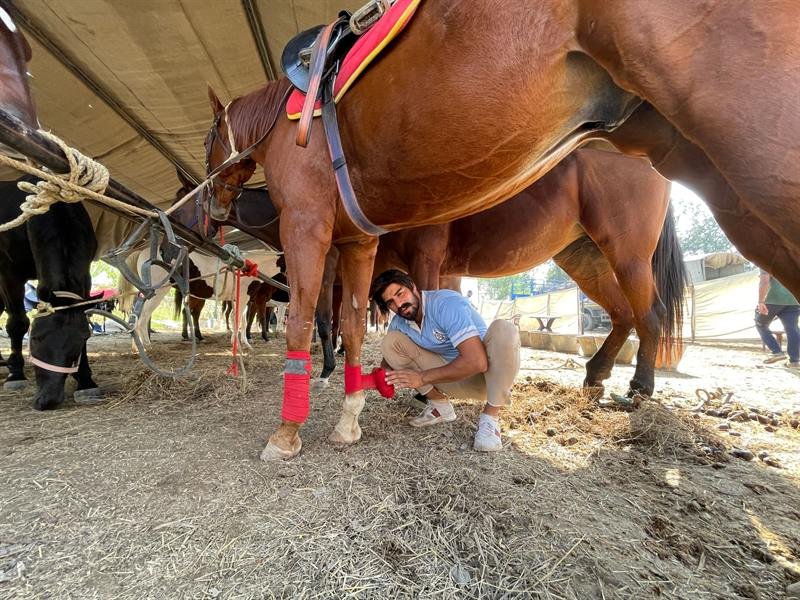
A horse first aid kit lets you clean a wound, support a leg and monitor your horse while you wait for the vet, and every yard, lorry and trailer should have one. Keep it in a clearly marked waterproof box, check it every few months, and learn how to use each item before you need it.
What to put in a horse first aid kit
The aim of a kit is to stabilise a situation and gather information, not to treat serious problems yourself. This equine first aid kit checklist covers the essentials most vets would expect to see on a yard.
- Digital thermometer: a horse's normal temperature is roughly 37.5 to 38.5 degrees C; know your horse's own baseline. Keep a spare battery, and tie a piece of string with a clip to the end so it cannot be lost.
- Wound cleaning supplies: sterile saline, clean water, cotton wool, gauze swabs and a clean bowl.
- Dressings and padding: non-stick dressings, gamgee or similar padding, conforming bandages and cohesive wrap.
- Bandage scissors and tweezers: blunt-ended scissors for safety.
- Hoof pick and poultice materials: for foot issues, to be used as directed by your vet.
- Disposable gloves and a clean towel: for your protection and for hygiene.
- Torch with spare batteries and a notepad: to record times, observations and your vet's advice.
- Vet's number and emergency contact card: including your out-of-hours vet and the yard address and postcode.
- Stethoscope (optional): only if you have been shown how to use it.
- Cold and heat packs or a cold hose access plan: for acute swelling, as advised by your vet.
Medication is for your vet to advise on. Do not stock prescription-only products without guidance, and never give anything without veterinary advice. Our first aid guide covers what to do step by step.
Yard first aid kit or lorry first aid kit?
Most owners benefit from two kits. A full yard first aid kit lives in the tack room or feed room, while a lighter horse lorry first aid kit travels with you. The lorry kit should hold the basics for a wound or leg injury at the roadside or at a show: saline, dressings, padding, bandages, scissors, gloves, torch, thermometer and the vet's number. Duplicating a few items is cheaper than taking things out of the yard kit and forgetting to put them back.
| Item | Yard kit | Lorry or trailer kit |
|---|---|---|
| Thermometer | Yes | Yes |
| Saline and swabs | Plenty | A smaller supply |
| Padding and bandages for four legs | Yes | At least two legs, ideally four |
| Scissors and tweezers | Yes | Yes |
| Poultice materials | Yes | Optional |
| Torch and notepad | Yes | Yes |
| Emergency numbers card | Yes, on the lid | Yes, plus your breakdown cover details |
Choosing a kit and a container
Ready-made kits suit new owners, but check the contents against your own list. You may prefer to build your own in a lidded, waterproof box labelled clearly. Pick a size that holds everything with room to add, and store it somewhere cool, dry and accessible to everyone on the yard. For travel, a smaller version should live in the lorry or trailer and be checked before each trip.
What to look for when buying
- A sturdy waterproof box with a secure lid and a handle.
- Sterile items in sealed packaging with expiry dates visible.
- Enough bandages and padding for all four legs.
- A reliable digital thermometer with a clip or string to prevent loss.
- Clear labels or a contents list on the lid.
- A pocket guide or card with basic instructions, if you are new to first aid.
What to do first in an emergency
- Keep yourself safe. An injured or frightened horse can behave unpredictably, so move calmly and ask for help.
- Call your vet early and describe what you can see. Do not wait to see if it gets better.
- Keep the horse as calm and still as possible, ideally in a safe, well-lit space with a companion nearby.
- For bleeding, apply firm, steady pressure with clean padding and do not keep lifting it to look.
- Do not remove anything embedded in a wound. Leave it for the vet.
- Take the temperature, pulse and breathing if safe to do so, and write down the times.
- Follow your vet's instructions exactly until they arrive.
Care and maintenance
Every three months, check expiry dates and replace anything used or out of date. Restock sterile items after any incident and wipe the box clean. Keep a list of what you have and where. Do not borrow from the kit for other jobs, or you will find it empty when it counts. Update emergency numbers whenever you change yards or vets. Check that anyone sharing your horse, including a groom or loaner, knows where the kit is.
Setting up your kit step by step
- Choose a waterproof, lidded box and label it clearly on the top and the side.
- Write a contents list and stick it inside the lid, with the date of the last check.
- Pack the items you use most, such as saline and gauze, where you can reach them first.
- Add a card with your vet's number, the out-of-hours number, the yard address and postcode, and your horse's passport details.
- Show everyone who helps with your horse where the box lives and what is in it.
- Put a reminder in your phone to check the contents every quarter.
Practising bandaging on a calm horse, with an experienced person or your vet watching, is far better than learning in a crisis. A badly applied bandage can do harm, so ask for a demonstration before relying on it.
Know your horse's normal
A kit is only useful if you can tell when something is wrong. Practise taking your horse's temperature, pulse and respiration at rest on several different days so you know his normal range. Learn what healthy gum colour, gut sounds and droppings look like for him. Your vet will ask for these numbers on the phone, and being able to give them quickly can speed up the right decision. Ask your vet or an experienced yard manager to show you, and consider attending a first aid course for horse owners.
FAQs
What should I put in a horse first aid kit?
A thermometer, saline, swabs, non-stick dressings, padding, bandages, blunt scissors, gloves, a torch and your vet's number cover the basics.
Do I need a separate kit for travelling?
Yes, ideally a compact kit in the lorry or trailer, so it is always there when you go out.
Should I keep painkillers in the kit?
Only if your vet specifically advises and prescribes them. Do not give medication without veterinary guidance.
Where should the kit be stored?
In an easy-to-find, clearly marked location that everyone on the yard knows about, away from heat and frost.
How often should I check the kit?
Every three months, and after every use. Replace anything out of date, damaged or used up.
Can I use human first aid supplies on a horse?
Some basics, such as sterile saline and gauze, are similar, but horses need larger bandages and padding. Ask your vet what suits your horse.
Useful official resources
- Society of Master Saddlers Find qualified saddle and bridle fitters.
- BETA The British Equestrian Trade Association.
- British Horse Society: horse care and welfare Care advice for horse owners.