
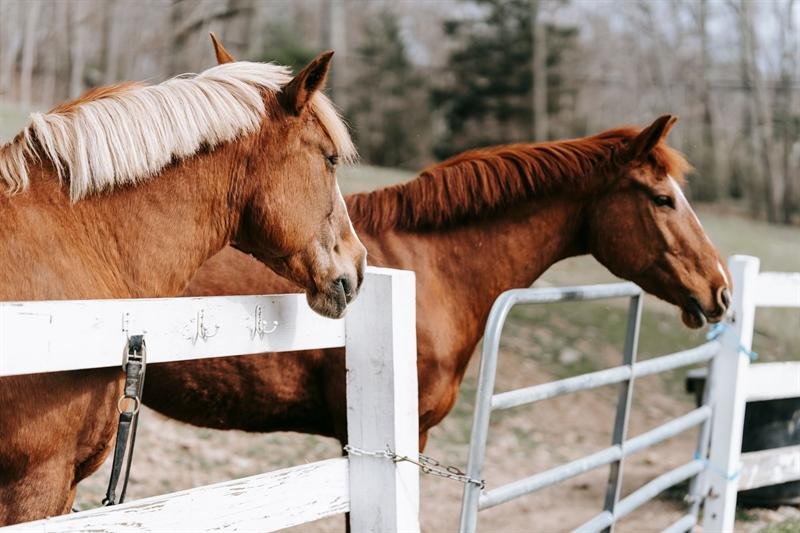
Good horse fencing is visible, strong enough to contain a panicking horse, and free from anything that can cut, snag or trap a leg. The most common safe options in the UK are post and rail, electric tape or rope, and horse-specific mesh, usually at roughly 1.2–1.4m (4ft–4ft 6in) high. Barbed wire, and any wire a horse cannot see, are poor choices for a paddock.
Best fencing for horses: the main types
The best fencing for horses is the one that is safe, visible and suited to your land, budget and horses. Many yards combine types, for example post and rail along a road with electric tape to divide the grazing.
| Type | Pros | Cons |
|---|---|---|
| Post and rail (timber) | Strong, highly visible and traditional; good for boundaries and paddocks | Costly to install; needs maintenance; horses may chew; rails can break and leave sharp ends |
| Electric tape, rope or braid | Visible, cheap, easy to move for rotation; good for dividing fields | Needs a reliable energiser, earthing and regular checks; vegetation reduces effect; may tangle if poorly tensioned |
| Horse-safe mesh | Keeps foals, ponies and dogs in; little chance of hooves catching when small-gauge | Needs a top rail or electric wire; poor-quality sheep mesh with large holes is dangerous |
| PVC or plastic rail | Low maintenance, visible, does not rot | Higher cost; can shatter in cold weather or when kicked |
| Hedges | Natural shelter and boundary | Needs a stock-proof inner fence; can hide gaps and contain toxic plants |
Avoid barbed wire, which can cause serious wounds, and loose or sagging wire strands. Large-hole sheep netting and stock netting can trap a hoof. Any wire fencing needs to be taut and fitted well.
Post and rail fencing
Post and rail fencing is a long-lasting choice that horses can see clearly and lean on without damage. Posts should be set deep and firm, with rails fixed on the inside of the posts, so a horse pushing against the fence pushes the rail onto the post rather than off it. Expect two or three rails depending on height and the size of horses or ponies. Costs vary by region and the timber used, and groundworks on stony or wet land can add to the bill. Horses that chew can be deterred by running a strand of electric tape along the inside of the top rail.
Electric fencing for horses
Electric fencing for horses is widely used because it is cheaper, quick to put up and ideal for strip grazing or rotation. It works because horses learn to respect it, so it needs to be visible, properly tensioned and always live. Key points:
- Use an energiser designed for horses and matched to the length of fence, whether mains, battery or solar.
- Earth the system properly, and keep vegetation from touching the lines.
- Use highly visible tape, rope or braid rather than thin wire a horse may not see.
- Fit insulators correctly, and keep lines taut so they cannot tangle round a leg.
- Test the fence regularly, and put up warning signs where the public can reach it.
- Introduce new horses and foals carefully, ideally with a physical barrier alongside at first.
Never run electric fencing as the only barrier beside a busy road. A physical outer fence is safer.
Horse paddock fencing height
- Aim for roughly 1.2–1.4m at the top rail for most horses, and higher if stallions or jumpers are kept.
- Keep the bottom rail high enough that a horse cannot catch a foot under it, or low enough to stop it rolling under.
- Leave a gap between the gate and the post narrow enough that a leg cannot be caught, or wide enough to pass through.
- Mark electric lines with tape that is highly visible and use insulators properly.
- Avoid sharp corners, especially in small paddocks, where a bullied horse could be trapped; rounding corners helps.
- Inspect regularly after storms, in spring and after tree work.
Fences along a public road or footpath may carry additional duties. If you own the land, consider liability for injuries or escapes, check your insurance, and see horse ownership and the law.
Gates, gateways and boundaries
Gates are a weak point on many yards. Choose strong, horse-height gates, hung securely, with latches a horse cannot lift or fiddle open and no sharp protruding parts. Put hard standing in busy gateways, because they churn up quickly. If you have more than one field, a layout with gates opening into a shared area reduces the number of times you lead horses through the mud. Check boundaries and rights with neighbours, and ask your local authority about any planning rules if you plan to put up tall or unusual fencing near a highway.
What to look for when buying
- Posts that are pressure-treated and thick enough, with rails of consistent quality (no splits, loose knots or sharp ends).
- For electric systems, an energiser matched to the length of fence, a good earthing system and warning signs.
- High-visibility tape or rope with strong conductors, rather than thin, hard-to-see wire.
- Mesh size small enough that a hoof cannot pass through.
- Fixings and gates with no protruding screws or snag points.
- A supplier or contractor with horse fencing experience, who quotes clearly for materials, labour and groundworks.
- Planning rules and boundary rights, if the fence is near a highway or neighbouring land.
- Future maintenance: how easy is it to repair or replace a damaged section?
Checking and maintaining fences
Walk the fence line regularly, looking for leaning posts, broken or loose rails, sagging wire, protruding nails and gaps. Check gates and hinges, and test electric fencing is live. After storms, check for fallen branches that may have damaged or flattened a section. Repair damage immediately, because a horse that learns a fence is weak will test it again. See first aid for what to do if a horse is injured by a fence.
Fencing for foals, ponies and stallions
Different horses call for different fencing. Foals and small ponies can roll under low rails or put a leg through wide gaps, so horse-safe mesh with a top rail or electric strand is often chosen for them. Stallions and strong or athletic horses may need taller, sturdier fencing, with double fencing between neighbours to prevent fighting over the fence. Take advice from an experienced fencing contractor and, where relevant, your vet, before deciding what suits your horses.
FAQs
Is electric fencing safe for horses?
Yes, if properly installed with a suitable, correctly earthed energiser and clear visibility. Horses quickly learn to respect it.
How high should horse fencing be?
Typically around 1.2–1.4m for most horses and ponies, with extra height for stallions or horses that jump.
Is barbed wire illegal?
It is not banned outright, but it is unsuitable and dangerous for horses and may put you at risk of liability.
What is the best fencing for a small paddock?
Post and rail, or sturdy posts with highly visible electric tape or rope inside, work well. Avoid sharp corners.
Can horses be kept in with electric fencing alone?
Many are, but a horse that is panicked or desperate to reach another horse may go through it. A visible physical barrier is safer on boundaries.
How much does horse fencing cost?
It varies widely by region, material, ground conditions and whether you fit it yourself. Get several quotes that separate materials, labour and groundworks.
Useful official resources
- Code of Practice for the Welfare of Horses (gov.uk) Legal standards for shelter, space and care.
- Ragwort code of practice (gov.uk) How to control ragwort on your land.
- British Horse Society: horse care and welfare Yard and grazing advice.