
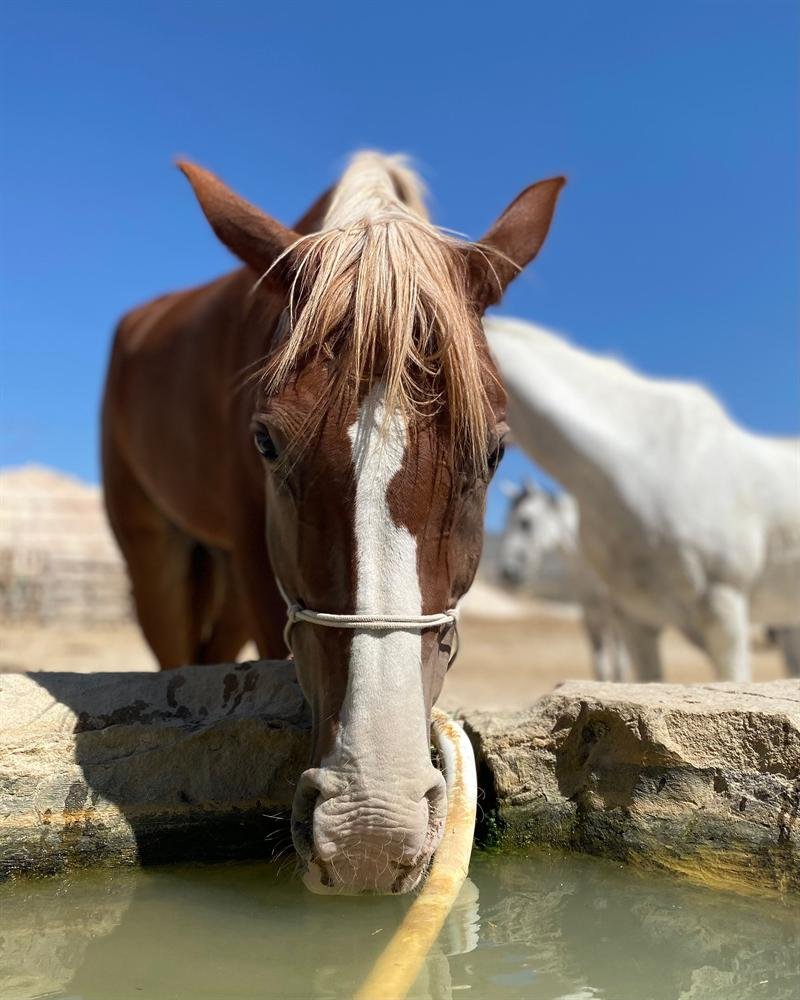
Horses need constant access to clean, fresh water, and the right horse water troughs or drinkers make that easy. A typical 500kg horse drinks roughly 25–50 litres a day, more in hot weather, hard work, lactation, or on dry feed. Whether you choose buckets, a trough or automatic drinkers, the priorities are the same: reliability, cleanliness, safe design and a plan for freezing weather.
How much water does a horse drink?
Most adult horses drink somewhere around 25–50 litres a day, but the real figure depends on size, diet, workload, weather and whether a horse is lactating. A horse eating mostly dry hay needs more than one on lush grass, which is itself high in water. Hot weather, sweating and hard work push intake up, and so does a diet rich in salt or fed with electrolytes; see electrolytes.
- Small ponies: need less than a large horse, but still have water available all the time.
- Working or sweating horses: can drink much more, and should be allowed to drink at intervals when cooling off.
- Mares in milk: have high needs and should never run short.
- Stabled horses on haylage or hay: rely entirely on the water you provide.
Water should be available at all times, and this applies in the stable, in the field and while travelling. Do not restrict water before or after exercise on the basis of old advice, unless your vet has told you to.
Water systems compared
| System | Pros | Cons |
|---|---|---|
| Buckets | Cheap and portable; easy to see how much a horse drinks | Labour-intensive; can be knocked over; need refilling at least twice daily |
| Fixed or tip-out trough | Large volume; suitable for fields; many horses can drink | Needs regular cleaning and, in winter, ice-breaking; can become dirty and algae-ridden |
| Automatic drinker (bowl) | Saves labour; constant supply | Needs a reliable supply, cleaning, checking for blockages and frost protection; hard to monitor intake |
| Mains-fed field trough with ballcock | Constant supply with minimal effort | Needs a mains or pipe run, frost protection, and fittings that horses cannot break |
Monitoring intake matters. A sudden fall in drinking can be an early sign of illness or colic, so with automatic systems consider a flow meter or simply watch the horse regularly.
Automatic drinkers for horses
Automatic drinkers fill a bowl or trough when the level drops, so the horse always has water. They save time and are popular on busy yards, but they are not a set-and-forget answer.
- Check each bowl daily for blockages, leaks, dirt and ice, since a failed drinker can leave a horse without water for hours.
- Clean bowls regularly. Feed and saliva build up quickly, and a dirty bowl may put a horse off drinking.
- Keep a spare bucket and know how to turn off the supply in a leak.
- Remember that some horses are wary of a new drinker. Introduce it gently and watch that the horse is drinking normally.
- Be aware that you cannot easily see how much a horse drinks. If you are worried, switch to buckets for a day, or fit a flow meter.
Installation should comply with water regulations in the UK, which exist to prevent contamination of the mains supply. Use a qualified plumber or installer, and ask them about backflow protection and approved fittings.
Frost protection for water troughs
Frozen water is a welfare risk, and a horse that cannot drink for a day or two is at greater risk of impaction colic. Plan for it before the first frost.
- Insulate pipes and bury supply lines below frost depth where possible.
- Use insulated or heated troughs, or ball floats that reduce ice formation, and cover troughs with a lid or insulated board overnight.
- Check and break ice on troughs at least twice daily in freezing conditions, and keep a spare bucket supply.
- Have electrical work done by a qualified electrician with RCD protection, particularly for outdoor and heated equipment, and keep cables out of horses' reach.
- Offer warm water to encourage drinking if intake falls in cold weather. Many horses prefer water that is not icy.
- Know where the stopcock is so you can shut off a burst pipe quickly.
Snow and ice are not a reliable water source, and horses must always have unfrozen water available. See winter care for the wider routine.
How to clean a water trough
- Empty the trough, using a drain plug or a bucket. Be careful where the water goes if you have used cleaning products.
- Scrub the sides and base with a stiff brush and plain water. Remove algae, slime, leaves and sludge.
- If you need to disinfect, use a product suitable for animal drinking containers, at the strength on the label, then rinse thoroughly until no smell remains.
- Check the ballcock, float, pipes and guarding for damage while the trough is empty.
- Refill and check the water runs clear and the float shuts off the supply.
Clean at least weekly, and more often in warm weather, when algae and slime grow quickly. Remove any dead animals, leaves or sludge promptly, since contaminated water risks digestive upset. Algae grow faster in sun, so consider siting troughs in partial shade. Stable water buckets also need regular scrubbing; see water buckets and stable hygiene.
Siting and safety
- Check that taps, floats and pipes are guarded, so a horse cannot chew, kick or catch a leg.
- Place troughs on firm, drained ground, with a hardcore or paved apron to prevent poaching and mud.
- Avoid sharp-edged containers or old baths, which can hurt legs. Do not use old chemical drums or containers.
- Position troughs where a timid horse can drink without being cornered, and add a second trough where several horses share.
- Keep troughs away from corners and gates where horses can be trapped.
What to look for when buying
- Capacity suited to the number of horses, with easy-clean smooth surfaces and a drain plug.
- Tough, UV-stable, rounded-edge materials that will not crack in frost.
- A fill rate that keeps up with peak use (a slow ballcock may leave a trough empty).
- For automatic drinkers: a bowl with a quick-clean design and a flow rate suited to horses, plus guarding to protect the pipework.
- Frost protection options, and electrical safety certification for any heated products.
- A supplier that provides spare parts and installation information, and compatibility with your supply and water pressure.
- Check water regulations and approved fittings for your supply, or use a qualified plumber.
Frequently asked questions
How much water does a horse drink?
Typically about 25–50 litres a day, depending on size, diet, workload and weather. Always allow free access to clean water.
Are automatic drinkers better than buckets?
They save labour and give a constant supply, but they must be checked daily and are harder to use for monitoring intake. Buckets are simple and easy to monitor but need more effort.
How do I stop a water trough freezing?
Use insulation, heated or insulated troughs and floats that reduce ice, cover troughs overnight, and still check and break ice daily.
Can horses eat snow instead of drinking?
No. Snow and ice are not a reliable water source, and horses should always have unfrozen water available.
How often should I clean a water trough?
At least weekly, and more often in warm weather or if the trough is dirty. Do not leave algae and sludge to build up.
Do automatic drinkers need checking?
Yes, daily. Blockages, leaks or freezing can stop supply without warning.
Useful official resources
- Code of Practice for the Welfare of Horses (gov.uk) Legal standards for shelter, space and care.
- Ragwort code of practice (gov.uk) How to control ragwort on your land.
- British Horse Society: horse care and welfare Yard and grazing advice.